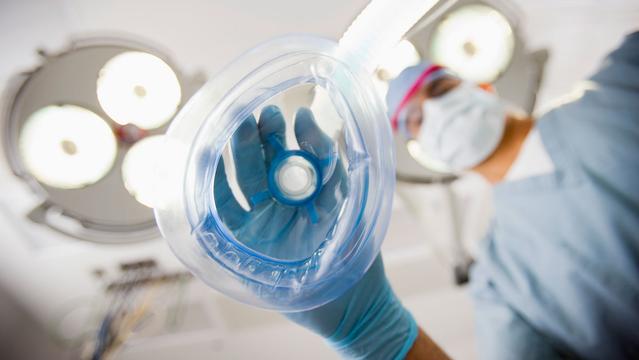
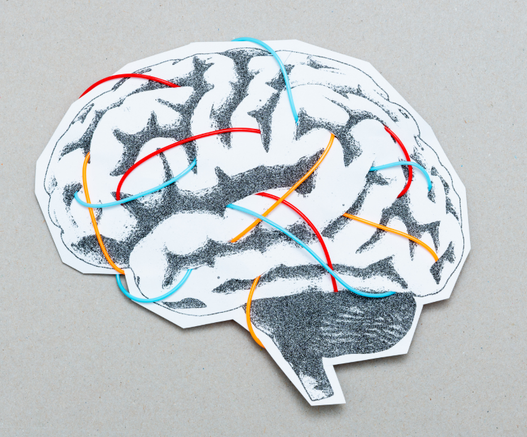
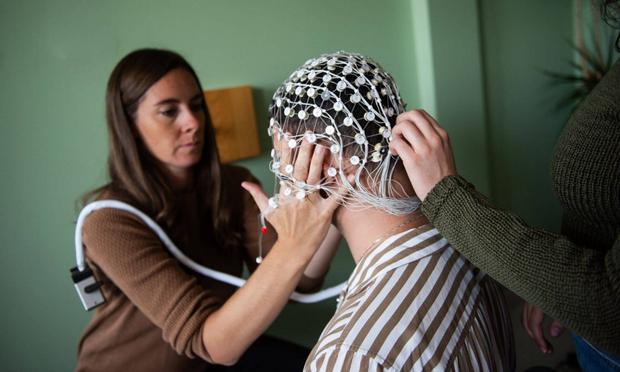
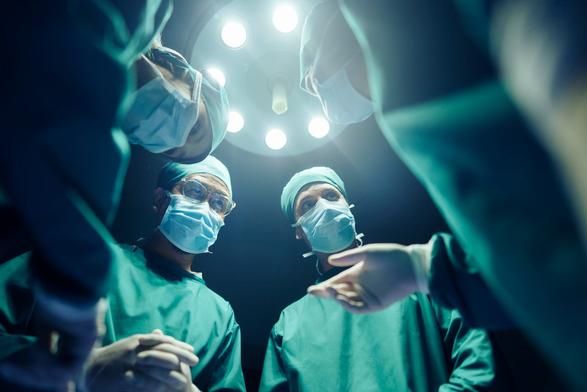
💁🏻‍♀️ TIL: Using ultra-thin Neuropixels probes, #Baylor College researchers found the #hippocampus processes #speech and predicts upcoming #words during #anesthesia. 🧠

Over 70% of #neurons distinguished unexpected #sounds from predictable ones. This challenges the idea that understanding #language requires consciousness. 😪

👉 https://www.sciencenews.org/article/brain-cells-listen-under-anesthesia

#neuroscience #brain #hearing #science #houston #nature #learning

A tiny part of your brain may still listen under anesthesia

Tones, oddball sounds and words can spark brain cell responses, hinting at nuanced processing without consciousness.

Science News

This is what we’ll see when #Betelgeuse goes #Supernova : Medium

#GenZ Is #Pioneering a New Understanding of #Truth : WIRED

The #Brain Processes #Language Even Under #Anesthesia, a New #Study Finds : Time

Latest #KnowledgeLinks

https://knowledgezone.co.in/resources/bookmarks

Using Pink Noise to Enhance Anesthesia by Modulating Delta Brain Waves

📰 Original title: 'Pink noise' can help make anesthesia work better during surgery

🤖 IA: It's not clickbait ✅
👥 Users: It's not clickbait ✅

View full AI summary: https://en.killbait.com/using-pink-noise-to-enhance-anesthesia-by-modulating-delta-brain-waves.html?utm_source=mastodon_world&utm_medium=social&utm_campaign=killbait.mastodon_world

#neuroscience #anesthesia #pinknoise #deltawaves

Using Pink Noise to Enhance Anesthesia by Modulating Delta Brain Waves

Researchers at the University of Montreal are exploring how auditory stimulation using pink noise can enhance the effectiveness of general anesthesia. Building on sleep research showing that delta waves are amplified by precisely timed sounds, the team led by Professor Catherine Duclos is testing closed-loop auditory stimulation in patients undergoing elective surgery. Pink noise—short bursts of sound with more energy in lower frequencies—are delivered through specialized earbuds in synchronization with real-time brainwave monitoring. Preliminary findings suggest that timing the sound just before delta wave troughs may maximize wave amplification, a pattern different from what is seen during natural sleep. Strengthening delta waves could stabilize unconsciousness, reduce the amount of anesthetic needed, and help manage nociceptive responses, or the nervous system's reaction to surgical trauma, even when the patient is fully unconscious. This approach has potential benefits for fragile patients, intensive care sedation, and patients with brain injuries, as it may reduce anesthetic-related complications and improve recovery. Beyond immediate clinical applications, the study raises questions about whether delta waves actively maintain unconscious states and whether their modulation could influence coma recovery or faster post-surgical recuperation. The study was published in Frontiers in Human Neuroscience.

KillBait

Using Pink Noise to Enhance Anesthesia by Modulating Delta Brain Waves

📰 Original title: 'Pink noise' can help make anesthesia work better during surgery

🤖 IA: It's not clickbait ✅
👥 Users: It's not clickbait ✅

View full AI summary: https://en.killbait.com/using-pink-noise-to-enhance-anesthesia-by-modulating-delta-brain-waves.html?utm_source=mastodon_social&utm_medium=social&utm_campaign=killbait.mastodon_social

#neuroscience #anesthesia #pinknoise #deltawaves

Using Pink Noise to Enhance Anesthesia by Modulating Delta Brain Waves

Researchers at the University of Montreal are exploring how auditory stimulation using pink noise can enhance the effectiveness of general anesthesia. Building on sleep research showing that delta waves are amplified by precisely timed sounds, the team led by Professor Catherine Duclos is testing closed-loop auditory stimulation in patients undergoing elective surgery. Pink noise—short bursts of sound with more energy in lower frequencies—are delivered through specialized earbuds in synchronization with real-time brainwave monitoring. Preliminary findings suggest that timing the sound just before delta wave troughs may maximize wave amplification, a pattern different from what is seen during natural sleep. Strengthening delta waves could stabilize unconsciousness, reduce the amount of anesthetic needed, and help manage nociceptive responses, or the nervous system's reaction to surgical trauma, even when the patient is fully unconscious. This approach has potential benefits for fragile patients, intensive care sedation, and patients with brain injuries, as it may reduce anesthetic-related complications and improve recovery. Beyond immediate clinical applications, the study raises questions about whether delta waves actively maintain unconscious states and whether their modulation could influence coma recovery or faster post-surgical recuperation. The study was published in Frontiers in Human Neuroscience.

KillBait
The brain processes overheard words under anesthesia, but it may not remember them

A study of people who underwent surgery to treat epilepsy suggests the hippocampus may process words and speech when people are under general anesthesia, even though the study participants didn’t remember them

Scientific American

Things I've learned after my recent surgery:

1. They know how to manage pain these days. I expected to be in agony and my pain is pretty much 2 out of 10.

2. Anesthesia can have a lingering effect on vision (blurriness, likely related to slow focus response). Definitely temporary.

3. Anesthesia can cause neuropathy. Hopefully this is temporary. I had my annual foot exam a few weeks ago and aced it. No loss of sensation and thanks to GLP-1 goodness all that tingling was gone. Emphasis on was. Good god I hope it's temporary.

4. Post surgical insomnia (after leaving the hospital) is a thing. I slept most of the first day and a half after discharge (2 hours sleep, 30-90 minutes awake, repeat) and I can't sleep even though it's been a few days since I was discharged.

The medical types undersell their progress with pain management, but they don't really tell you about the other three items.

It's made for a lot of interesting research.

#surgery #complications #anesthesia

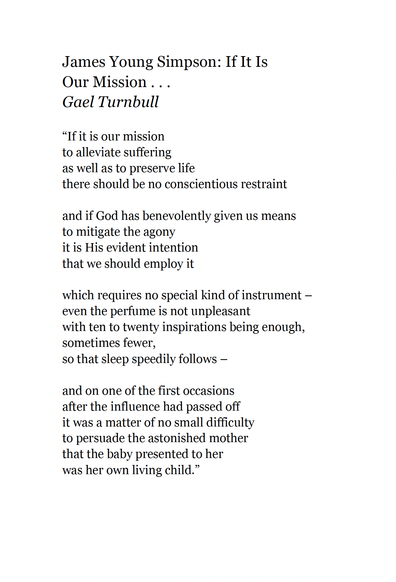
“If it is our mission
to alleviate suffering
as well as to preserve life
there should be no conscientious restraint…”

—Gael Turnbull, “James Young Simpson: If It Is Our Mission…”
from The Hand that Sees: Poems for the quincentenary of the Royal College of Surgeons of Edinburgh

James Young Simpson (1811–1870) pioneered the use of chloroform as an anaesthetic in childbirth

3/3

#Scottish #literature #poem #poetry #obstetrics #anaesthesia #anesthesia #WorldHealthDay #historyofmedicine

@PugJesus
RE
#anesthesia

Seems to me, #GeneralAnesthesia has always had problems (see the punch "lights out" image above)

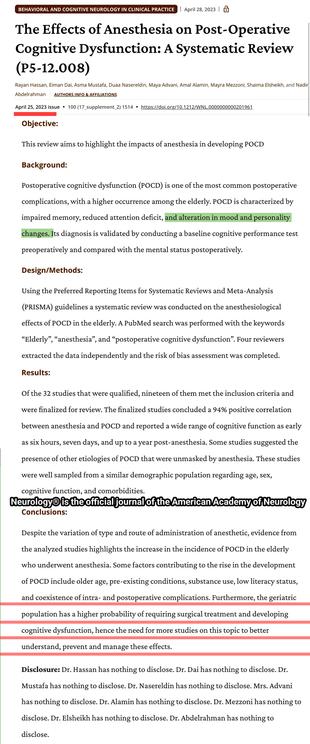
The Effects of Anesthesia on Post-Operative Cognitive Dysfunction: A Systematic Review
April 2023
https://www.neurology.org/doi/10.1212/WNL.0000000000201961

#POCD is characterized by impaired memory, reduced attention deficit, and alteration in mood and ⭕️personality changes.

...geriatric population... ⭕️requiring surgical treatment and developing cognitive dysfunction... (So more operations)

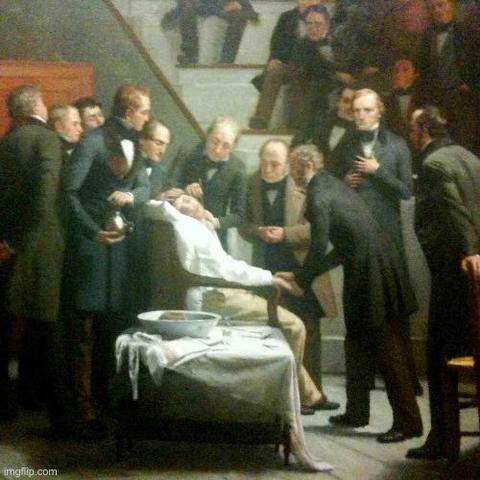
Too often people are seduced by rose-coloured glasses and romanticize the past; historians know it better as an unrelenting parade of horrors. On #ThisDayInHistory in 1842, ether #anesthesia was used for the first time in #surgery. Try to imagine what surgery was like before it.

A Major W For Men: Men’s Wearhouse Will Now Let You Have Your Suit Fitted While Under Anesthesia

https://fed.brid.gy/r/https://clickhole.com/a-major-w-for-men-mens-wearhouse-will-now-let-you-have-your-suit-fitted-while-under-anesthesia/