This BTW is very much in my research interests: I'm working on how (and if) #LLM s, preferably open ones, could be used responsibly to simulate human decision-making in various models and simulations. E.g. to test and improve policies. #AgentBasedModeling #ABM

For what I'm reading now the system I've independently developed is closest in spirit to Reservoir Computing, Artificial Life, and Agent-Based Modeling, and to a certain extent, to the broader field of Decentralised AI. It shares their focus on emergent behaviour from local interactions, but it's differentiated by its lack of explicit learning mechanisms, optimisation goals, and symbolic reasoning, making it a distinct kind of complex system simulation rather than a direct mapping to any AI technique.

The core idea is using dynamical systems, with their own complex local rules and interactions, to observe the system-level behaviour. It's a simulation model designed to explore a particular set of dynamics rather than a direct implementation of a learning model. This makes it a valuable tool in complex systems research, even if it is independently developed and not aligned with the mainstream of modern AI techniques.

The animation shows it's stable after 30000 cycles, with no new energy injected into the system.

#CellularAutomata #ai #ArtificialLife #AgentBasedModeling

New publication: DARTS: Modelling effects of shocks on global, regional, urban and rural #foodsecurity. #crops #agentbasedmodeling #urbanareas #humanmobility #systemstability #simulation
https://doi.org/10.1371/journal.pcsy.0000006
DARTS: Modelling effects of shocks on global, regional, urban and rural food security

Author summary Shocks like crop failure, cash loss (e.g. due to pandemic, war, financial crisis), hoarding and various types of trade shocks can cause hunger. Different groups (rich/poor, rural/urban) in different regions of the world (e.g. North/South, equatorial, city state) have different vulnerabilities. In a globalised world with continuous food trade within and between regions and with people’s differences in trade network connections and purchasing power, it is hard to understand the where, when and why of shock impact on different groups. Shock effects can be exported from one region to the other. Food stocks act as a buffer and more rapid depletion of food stocks due to a shock can cause delayed impact several months after a shock occurred. Shocks can be absorbed if food stocks are timely replenished. DARTS is a new agent-based model of local to global food supply chains (production, trade, consumption). DARTS was specifically developed to allow for modelling effects of shocks. A simulation example is presented for an imaginary world to which a range of shocks is applied and their impact and impact pathways is analysed. The simulation examples illustrate how a model like DARTS can help understand the dynamics of shock impacts. As a more stylised or conceptual model DARTS is designed less for accurate prediction and more for gaining insight in the mechanisms from a shock at one place and time to its ultimate effect on food security.

Ever wondered how to generate a universe? 🌌

Join @marimeireles when she talks about large language models and agent-based modeling to create a universe in which agents interact with each other, reflect on their day and accomplishments, and travel throughout the environment.

#PythonPizzaHH2023 #LLM #AgentBasedModeling #GenerativeAI

Of possible interest to other #AgentBasedModeling enthusiasts: John Baez et al are contemplating better abstractions for #ABM software.

https://johncarlosbaez.wordpress.com/2023/08/17/agent-based-models-part-2/

Agent-Based Models (Part 2)

Some news! Nathaniel Osgood, Evan Patterson, Kris Brown, Xiaoyan Li, Sean Wu, William Waites and I are going to work together at the International Centre for Mathematical Sciences for six weeks sta…

Azimuth
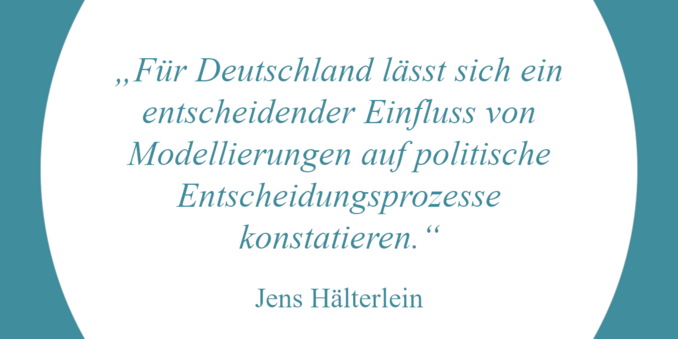
Was leisten Modelle und Simulationen in einer Pandemie? Mit dieser Frage beschäftigt sich @jens_haelterlein in seinem Special topic-Beitrag.
➡️ https://doi.org/10.14512/tatup.32.1.30
#agentbasedmodeling #simulation #pandemicmanagement
Agent-based modeling and simulation in pandemic management | TATuP - Zeitschrift für Technikfolgenabschätzung in Theorie und Praxis

In einer Woche ist es so weit: Mit einem reichhaltigen Workshop-Vorprogramm zu verschiedensten Themen & Ansätzen der #DigitalHistory wird die diesjährige #DigHis23 an der #HUBerlin eingeleitet. 🥳

Ob #AgentBasedModeling, #WebHistory, die kritische Reflexion des Forschungsprozesses, innovative Vermittlungsmöglichkeiten wie #LastSeen oder Anleitungen zur Arbeit mit dem #OpenEncyclopediaSystem - da ist für jede:n was dabei!

Eine Übersicht über die Workshops gibt es hier: https://t1p.de/dighis23-workshops

Workshopübersicht

Pre-Conference-Workshops: Programmübersicht Di, 23.05.2023, 9:00 – 13:00,Raum 2249 A Workshop 1: Workflows in Digital Research: Reflecting Critically Di, 23.05.2023, 9:00 – 13:00,Raum 2070 A Workshop 2: Growing and pruning the Republic of Letters: Learning to simulate the past with agent-based modeling using the ‘mesa’ package Di, 23.05.2023,14:00 – 18:00,Raum 2249 A Workshop 3: LastSeen: Innovative … „Workshopübersicht“ weiterlesen

Digital History Berlin

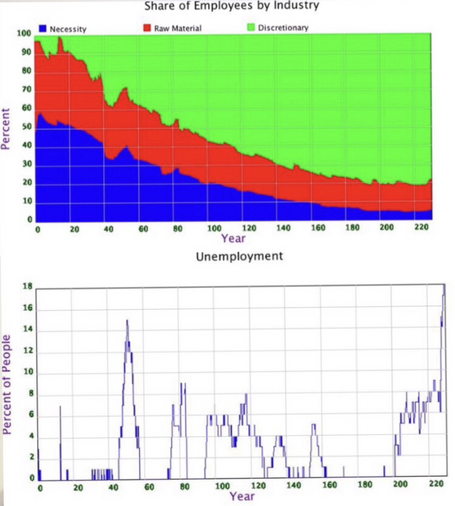
This was my first #AgentBasedModel (from a few years ago). It captures a mechanism in which employment shifts between industries. I’ve been meaning to either replicate it in another programming language or create a comparable alternative. #MacroeconomicModel #ZeroDebtMacroeconomicModel #threeIndustryMacroEconomicModel #java #openSource #ABCE #agentBasedModeling #agentBasedComputationalEconomics

https://www.comses.net/codebases/d26f3b76-312d-479d-a4f8-b69df3a78584/releases/1.1.0/

A Macroeconomic Model of a Closed Economy

This model/program presents a "three industry model" that may be particularly useful for macroeconomic simulations. The main purpose of this...

Shout-out to the POLNET Winter School on Social Network Analysis @IBEI in Barcelona, organized by @cbravuna and colleagues! They still accept applications until Jan 15.

The week-long course starts with the basics of #SocialNetworkAnalysis, then quickly moves forward to advanced topics such as hypothesis testing, discourse analysis and #AgentBasedModeling.

When? 28 Feb - 3 Mar 2023
More info: https://ibei.org/en/introduction_284112

POLNET: Social Network Analysis | IBEI

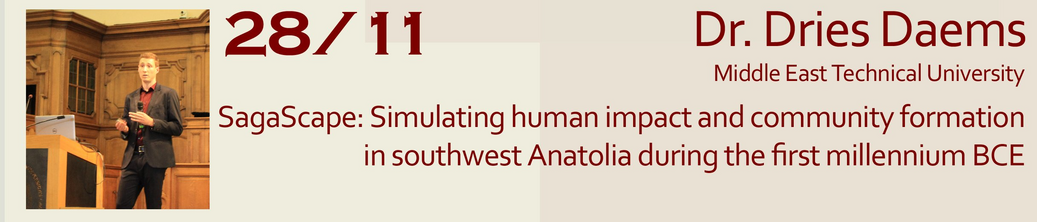
Today Dries Daems from the Middle East Technical University (http://sa.metu.edu.tr/en/assist-prof-dr-dries-daems) is presenting his research for our last #CDAL seminar of the term. The title: SagaScape: Simulating human impact and community formation in southwest #Anatolia during the first millennium BCE. On the menu: #AgentBasedModeling #netlogo #archaeology #SocialComplexity #HumanEnvironmentInteractions Join us in person in #Cambridge at the #McDonaldInstitute or online: https://cam-ac-uk.zoom.us/meeting/register/tJUtceugrjIrGNXrttydB_XbuFHMtgssRo33
Assist. Prof. Dr. Dries Daems | GRADUATE SCHOOL OF SOCIAL SCIENCES SETTLEMENT ARCHAEOLOGY