 Stefano Cacciatore
KODAMA goes spatial
https://doi.org/10.1101/2025.05.28.656544
#spatialtranscriptomics #visium #visiumhd
https://doi.org/10.1101/2025.05.28.656544
#spatialtranscriptomics #visium #visiumhd
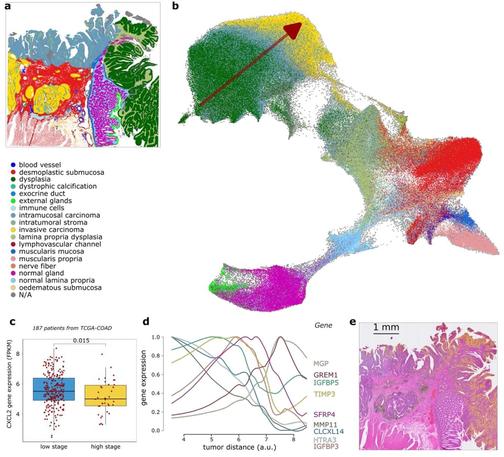
Excited for participating in this #spatialtranscriptomics #Visium platform study with an expert team from @NICHD_NIH, in the first step of studying the spatial biology of #pituitary corticotroph tumors, revealing their heterogeneity.
https://www.medrxiv.org/content/10.1101/2023.08.04.23293576v1

Spatial transcriptomic (ST) analysis of tumors provides a novel approach on studying gene expression along with the localization of tumor cells in their environment to uncover spatial interactions. Herein, we present ST analysis of corticotroph pituitary neuroendocrine tumors (PitNETs) from formalin-fixed, paraffin-embedded (FFPE) tissues. We report that the in situ annotation of tumor tissue can be inferred from the gene expression profiles and is in concordance with the annotation made by a pathologist. Furthermore, relative gene expression in the tumor corresponds to common protein staining used in the evaluation of PitNETs, such as reticulin and Ki-67 index. Finally, we identify intratumor heterogeneity; clusters within the same tumor may present with different secretory capacity and transcriptomic profiles, unveiling potential intratumor cell variability with possible therapeutic interest. Together, our results provide the first attempt to clarify the spatial cell profile in PitNETs. ### Competing Interest Statement The authors have declared no competing interest. ### Funding Statement The work was supported by the Intramural Research Program, Eunice Kennedy Shriver National Institute of Child Health & Human Development (NICHD), National Institutes of Health. ### Author Declarations I confirm all relevant ethical guidelines have been followed, and any necessary IRB and/or ethics committee approvals have been obtained. Yes The details of the IRB/oversight body that provided approval or exemption for the research described are given below: All study procedures were approved by the Eunice Kennedy Shriver National Institute of Child Health and Human Development (NICHD) Institutional Review Board (IRB). I confirm that all necessary patient/participant consent has been obtained and the appropriate institutional forms have been archived, and that any patient/participant/sample identifiers included were not known to anyone (e.g., hospital staff, patients or participants themselves) outside the research group so cannot be used to identify individuals. Yes I understand that all clinical trials and any other prospective interventional studies must be registered with an ICMJE-approved registry, such as ClinicalTrials.gov. I confirm that any such study reported in the manuscript has been registered and the trial registration ID is provided (note: if posting a prospective study registered retrospectively, please provide a statement in the trial ID field explaining why the study was not registered in advance). Yes I have followed all appropriate research reporting guidelines, such as any relevant EQUATOR Network research reporting checklist(s) and other pertinent material, if applicable. Yes All data produced in the present study are available upon reasonable request to the authors
Our work to derive hidden knowledge from #spatialtranscriptome by deep learning (DeepSpaCE) was one of the top 100 downloaded cancer papers for Scientific Reports in 2022!
According to https://www.nature.com/collections/ciijehjfha, our paper was ranked 9th in the cancer papers. I will continue to work on developing new methods to encourage data-driven science!
Paper: https://nature.com/articles/s41598-022-07685-4
Tool (DeepSpaCE): https://github.com/tmonjo/DeepSpaCE (ready-to-use for #Visium data).
COMMOT, COMMunication analysis by Optimal Transport, a versatile tool infer cell–cell communication in #SpatialTranscriptomics 🤠
Compatible with #MERFISH #Visium seqFISH+ #STARmap
vs #CellChat #Giotto #CellPhoneDBv3
Dr. Qing Nie lab Nature Methods 2023
https://www.nature.com/articles/s41592-022-01728-4
 Haojia Wu
 C. Harris Floudas
 Masaru Koido
 Hao Yin