 ferricoxide
 Winbuzzer
DHS Demanded Google Surrender Data on Canadian’s Anti-ICE Posts
#Google #ICE #DepartmentOfHomelandSecurity #DHS #FreeSpeech #DataPrivacy #UserData #PrivacyRegulation #Surveillance #MassSurveillance #DigitalRights #Government #USGovernment

The speed-difference between #EC2Launch and #cloud-init is pretty stark. When I fire up a #Linux instance that has a #userData payload, doing:
sleep $(( 60 * 2 )) ; ssh <USER>@<INSTANCE_ID>Is usually sufficient to get me a login. If I launch a Windows-based EC2, I usually have to do:sleep $(( 60 * 10 )) ; aws ssm start-session --target <INSTNCE_ID>Unless I want the dreaded "not available error". Worse, while two-minute pause for the cloud-init/Linux EC2 usually logs me in with the cloud-init content well underway, the #SSM login, after a ten-minute pause, usually has me arriving well before EC2Launch has even finished unpacking its data to start executing powershell scripts. It's like "dafuq is taking you so long??"DHS Demanded Google Surrender Data on Canadian’s Anti-ICE Posts
#Google #ICE #DepartmentOfHomelandSecurity #DHS #FreeSpeech #DataPrivacy #UserData #PrivacyRegulation #Surveillance #MassSurveillance #DigitalRights #Government #USGovernment
https://winbuzzer.com/2026/03/27/google-gemini-imports-chats-memory-chatgpt-claude-xcxwbn/
Google Gemini Now Imports Chats and Memory from ChatGPT, Claude
#AI #GoogleGemini #Google #ChatGPT #AIAssistants #Anthropic #Claude #OpenAI #BigTech #Chatbots #UserData

Please, please, please stop using passkeys for encrypting user data
https://blog.timcappalli.me/p/passkeys-prf-warning/
#HackerNews #passkeys #encryption #userdata #cybersecurity #datasecurity #technews
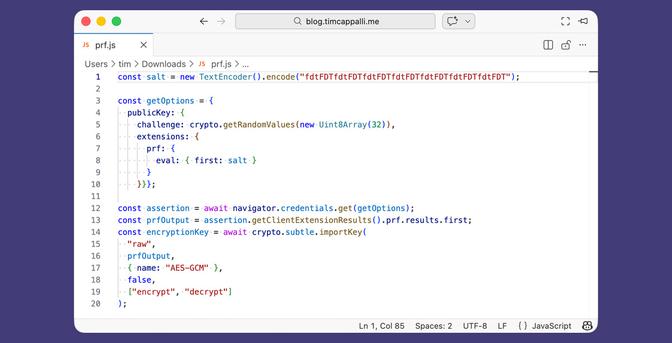
Passkeys are the future of authentication, but using them for data encryption is a disaster waiting to happen. Overloading these credentials creates a dangerous blast radius that can lead to the irreversible loss of a user's most sacred memories and documents.
#Lawmakers Ask Tech Companies What #UserData They Provided to #DHS.
The requests followed Times reporting that the Department of Homeland #Security had sent #Meta and other companies #subpoenas for information on accounts that track or comment on #ICE.
#privacy #immigration #deportation
https://www.nytimes.com/2026/02/25/technology/lawmakers-tech-companies-dhs.html
Google expands tools to let users remove sensitive data about themselves from Search
https://techcrunch.com/2026/02/10/google-remove-sensitive-personal-data-from-search/
#google #googlenews #googlesearch #sensitivedata #privacy #userdata #websearch #tech #technews #dataremoval #usaonly #techusa #personaldata #googledata #googletools
 PPC Land

 N-gated Hacker News
 Hacker News
 PrivacyDigest
 Lusogeek