 Home ━ The European Conservative [Unofficial]
U.S. Congressmen Protest EU Interference in Hungary’s Elections
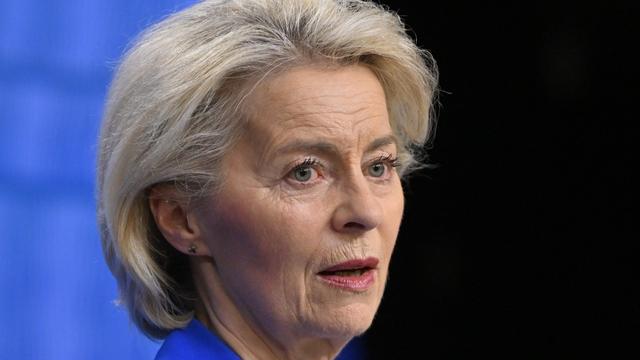
U.S. Congressmen Protest EU Interference in Hungary’s Elections
Congressional Republicans advance federal ‘don’t say trans’ school bill
https://fed.brid.gy/r/https://www.advocate.com/politics/national/trans-identity-education-ban
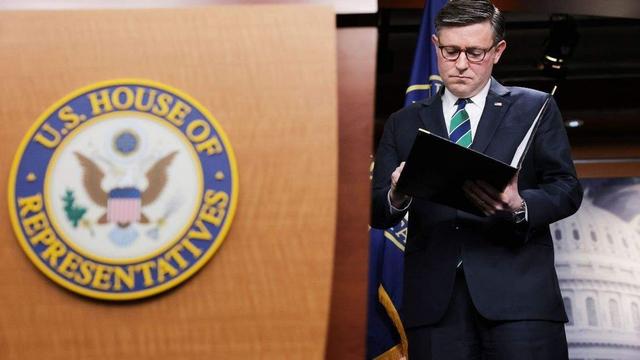
Mike Johnson loses another Republican as California congressman bolts from GOP

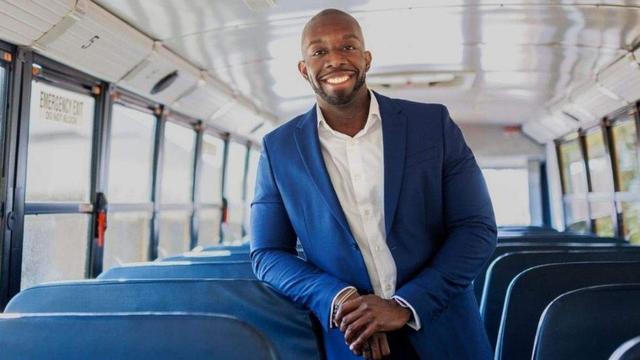
This Georgia education champion could be the first Black out gay man to represent the South in Congress
https://fed.brid.gy/r/https://www.advocate.com/politics/national/everton-blair-georgia-congress
The worst member of the US House just got endorsed for re-election by Trump.
#DonaldTrump #MAGA #Republicans #USHouseOfRepresentatives #CoryMills #Florida #Election2026 #MidtermElections #USPolitics #119thCongress
Democrats push for commission investigating anti-LGBTQ+ military policies
Trump’s Investigator Breaks His Silence – The New York Times
Jack Smith, the former special counsel, urged lawmakers on Thursday to stand up for the rule of the law. Credit…Kenny Holston / The New York Timeshttps://open.spotify.com/episode/40B6pujzxOqMK3Ap35pKzc?si=3a645e6425e34190
Jan. 23, 2026, 6:00 a.m. ET
Hosted by Michael Barbaro, Featuring Glenn Thrush, Produced by Alex SternStella TanMary Wilson and Mooj Zadie, Edited by Brendan Klinkenberg and Michael Benoist. Contains music by Rowan NiemistoDan Powell and Pat McCusker. Engineered by Alyssa Moxley.
Three years after his appointment as special counsel, Jack Smith finally delivered the legal argument against President Trump on Thursday that he was never allowed to make in court.
Glenn Thrush, who reports on the Justice Department, explains what Mr. Smith told Congress and why his message is likely to make him Mr. Trump’s next target.
On Today’s Episode
By Glenn Thrush, who reports on the Justice Department for The New York Times.
Background Reading
Listen to and Follow ‘The Daily’
Apple Podcasts | Spotify | Amazon Music | YouTube | iHeartRadio
Unlock full access to New York Times podcasts and explore everything from politics to pop culture. Subscribe today at nytimes.com/podcasts or on Apple Podcasts and Spotify.
Feedback
Tune in, and tell us what you think at [email protected]. For corrections, email: [email protected]. Follow our hosts on X: Michael Barbaro @mikiebarb, Rachel Abrams @RachelAbramsNY and Natalie Kitroeff @Nataliekitro
Continue/Read Original Article Here: Trump’s Investigator Breaks His Silence – The New York Times
#DonaldTrump #Embedded #GlennThrush #Investigator #JackSmith #Podcast #Spotify #TheDaily #TheNewYorkTimes #TheNewYorkTimesDaily #Trump #USCongress #USHouseJudiciaryCommittee #USHouseOfRepresentatives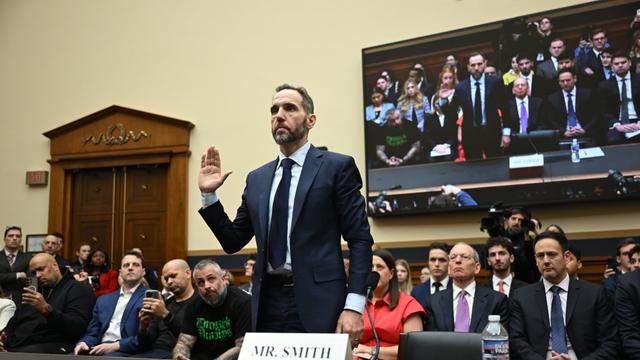
Jack Smith testifies in House over Trump investigations – NPR
Former special counsel Jack Smith arrives to testify in a closed-door deposition before the House Judiciary Committee on Dec. 17, 2025, in Washington, D.C. Chip Somodevilla / Getty ImagesLaw – Jack Smith defends Trump investigations to House Republicans
Updated January 22, 20263:06 PM ET, Heard on Morning Edition
By Carrie Johnson, 2-Minute Listen, Transcript
Former special counsel Jack Smith on Thursday defended his decision to secure two criminal indictments against President Trump and asserted his team had gathered enough evidence to convict.
Smith gave his first public testimony about his work Thursday, appearing before the House Judiciary Committee. Republican members of the panel attacked Smith’s move to collect phone records of lawmakers who had been in contact with Trump allies around the time of the Capitol riot in 2021. And they cast the historic investigations of Trump as politically motivated.
“It was always about politics and to get President Trump. They were willing to do almost anything,” said Rep. Jim Jordan, R-Ohio, the panel’s chairman.
“I am not a politician, and I have no partisan loyalties,” Smith responded. “My office didn’t spy on anyone.”
Neither of Smith’s cases reached a jury before Trump won the 2024 election and returned to the White House last year.
Law – Jack Smith defends his prosecutions of Trump in closed-door session in Congress
In a videotaped deposition, Smith said the president had only himself to blame, for charges he tried to overturn the will of voters in 2020.
“The evidence here made clear that President Trump was by a large measure the most culpable and most responsible person in this conspiracy,” Smith said in the deposition, which congressional Republicans released on New Year’s Eve. “These crimes were committed for his benefit.”
Smith said the violent attack at the U.S. Capitol, which injured 140 law enforcement officers, would not have happened, except for Trump. He said he could not understand the president’s mass pardon of members of the Capitol mob on Trump’s first day in office and predicted many of them would commit new crimes in the years ahead.
Editor’s Note: Read the rest of the story, at the below link.
Continue/Read Original Article Here: Jack Smith testifies in House over Trump investigations : NPR
#CapitolRIot2021 #CarrieJohnson #Conspiracy #EvidenceToConvict #FormerSpecialCounsel #Investigations #JackSmith #MassPardon #MorningEdition #NationalPublicRadio #NPR #Testifies #Transcript #Trump #TwoCriminalIndictments #USHouseJudiciaryCommittee #USHouseOfRepresentatives #ViolentAttack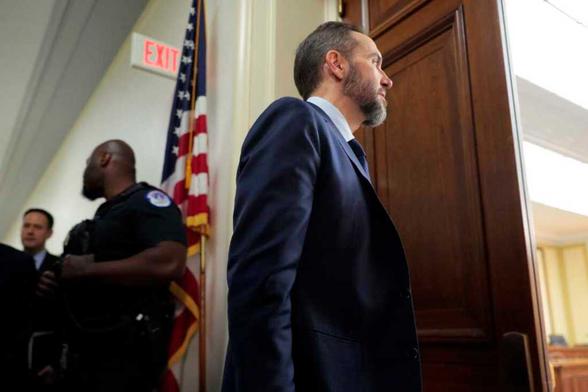
All anti-transgender provisions stripped from House and Senate funding bills
 Advocate.com [Unofficial]
 Tim Zee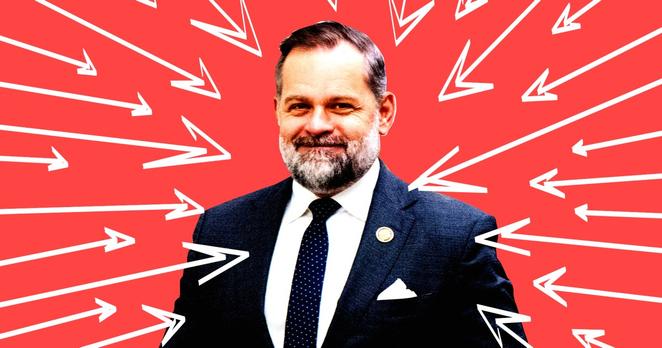
 Don Hawkins - W7DAH
 DrWeb
DrWeb