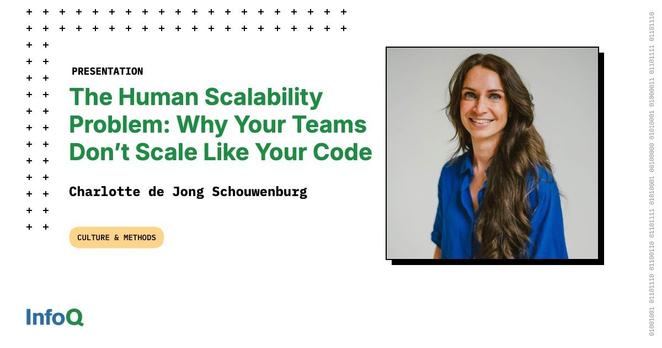
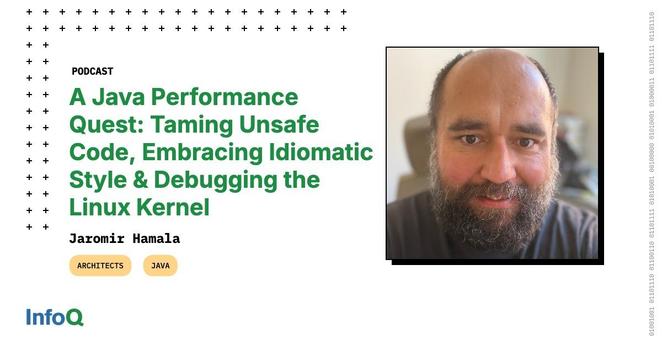
#PlatformEngineering sits at the intersection of infrastructure, developer experience & product delivery.

Scaling Technical Excellence isn’t about more tools - it’s about embedding #DevOps principles - ownership, fast feedback loops, and psychological safety - directly into the developer workflow.

Learn how to build platforms that teams actually love!

🎬 Watch now | 📄 #transcript included: https://bit.ly/4bqL9tw

#DeveloperExperience #EngineeringLeadership #SociotechnicalArchitecture

💧🤦‍♂️ Wow, who knew a glorified water #slide could be so "wild"? Let's all pretend we're thrilled by concrete and gravity while ignoring the fact that this article is just a #transcript of a #video. 🎥💤
https://practical.engineering/blog/2026/3/17/the-los-angeles-aqueduct-is-wild #wildwater #concretegravity #boredom #HackerNews #ngated
The Los Angeles Aqueduct is Wild — Practical Engineering

[Note that this article is a transcript of the video embedded above.] On the northern edge of Los Angeles, fresh water spills down two stark concrete chutes perched on the foothills of the San Gabriel Mountains, a place simply called The Cascades. It’s a deceptively simple-looking finish line: the

Practical Engineering

Shipping mobile updates is a bottleneck: app store reviews, slow user updates, multiple versions in the wild.

#Nubank flipped the model with Catalyst - a scripted Server-Driven UI (#SDUI) framework that ships more than just layouts.

3,000+ engineers can now deploy UI changes and complex business logic to 115M+ users in under 20 minutes.

🚫 No app store update required.

🎬 Watch the architecture deep dive ⇨ https://bit.ly/4lIUY9N

📄 #transcript included

#MobileDevelopment #SoftwareArchitecture #UserInterface #ServerSideRendering

On the latest #InfoQ #podcast, Andres Almiray - serial open-source contributor and creator of JReleaser - joins Olimpiu Pop to discuss:

✅ The current state of #JReleaser - why it’s a powerhouse for any ecosystem (not just Java)
✅ The mission and vision of the Commonhaus Foundation - the new open-source foundation that hosts JBang, Quarkus & JReleaser

🎧 Listen here / 📄 #transcript included: https://bit.ly/47QPO5w

#Java #OpenSource #SoftwareSupplyChain #Security #Commonhaus

Large organizations are optimized for stability - not experimentation. That’s exactly why "acting like a startup" often creates friction.

In this #InfoQ #podcast, Sam McAfee dives into:
• How AI hype is warping organizational behavior
• The friction between legacy culture & rapid experimentation
• Why unclear decision structures are your biggest bottleneck

🎧 Listen now / 📄 #transcript included: https://bit.ly/4bmqGF1

#Teamwork #Leadership #CompanyCulture

@Author-ized L.J. That's the problem: Whatever I do, I'll lose either way.

On the one hand, I feel a great pressure to describe and explain everything in advance. That way, nobody would ever have to ask me to describe a detail or explain something. And nobody, not even the most die-hard Mastodon alt-text activists, could say that I'm careless and that I only do the very bare minimum or not even that. There are people out there who are eager to block everyone who doesn't describe their images enough or lecture them or attack them for being lazy.

The last time I've described an image for Hubzilla, I refused to write detailed descriptions for the images within that image. That would have escalated and cost me weeks to describe them all because I'd also have had to describe dozens of images within these images and even more images within these images. Mind you, someone who travels to the place I've described couldn't actually see what I'd have described because the images in my image themselves have a limited resolution. But I genuinely felt bad for not describing these images.

Besides, if I only described my original images once, namely in the alt-text, and then briefly and concisely, and if someone came and asked me to describe certain elements at greater detail, I couldn't always do that. Sometimes I couldn't go back to the place shown in the image and take a closer look and write a more detailed description because that place simply doesn't exist anymore, or it has been modified, and it doesn't look like the image anymore. The details that I'd have to take a closer look at are gone.

On the other hand, my experience is also that posting more than 500 characters at once reduces my reach on Mastodon tremendously. I think I must have over 700 or 800 followers, but my reach on Mastodon is similar to that of someone with not even a dozen followers. And I don't think that's because what I post is so uninteresting or because of my rather controversial thoughts about the Fediverse, accessibility in the Fediverse, image descriptions etc.

Basically, I can't possibly post images without risking being sanctioned by anyone.

I've briefly considered putting my long descriptions into separate HTML documents and linking to them. In theory, that would reduce the length of my image posts greatly. However, this is entirely untested. I don't know if it'd work at all, i.e. open the HTML document in someone's browser rather than downloading it to their device as a file. I don't know either if a plain HTML document with no style sheet would be accessible to screen reader users.

What I do know, though, is that Mastodon hates external links with a flaming passion. That's also because the vast majority of Mastodon users is always on phones, using dedicated Mastodon apps. They hate their browser popping open when they tap a link all the same. Also, they tend to distrust external links because the linked documents or pages may not be sufficiently accessible.

Everything would be a whole lot easier if there were Fediverse-wide standards for image descriptions that take the requirements of blind or visually-impaired people into consideration as well as Mastodon's unique culture. If these standards were known to everyone both on Mastodon and in the non-Mastodon Fediverse. If everyone from blind or visually-impaired users to neurodivergent users to fully sighted alt-text activists agreed upon these standards all the same. And if these standards covered extreme edge-cases like mine as well. If there was a generally agreed-upon consensus on a whole lot of questions like:
  • Is it okay to have to ask for detailed descriptions of certain details in an image that don't matter within the context of the post?
    Or do they have to be described right away if there's a chance that someone might be curious about them? What if nothing specific in the image matters more within the context than everything else?
  • Is it okay to have to ask for explanations if you don't understand the topic of an image?
    Or do images about very obscure niche topics have to come with enough explanations for everyone to understand them right away (not counting technical or jargon terms which always have to be either avoided or explained)?
  • So there's the rule that all text within an image must be transcribed verbatim. How far does this rule go?
    Let's suppose I have a few dozen individual bits of text within an image. Most or all of them are so small that they're unreadable. Some are so tiny that they're actually invisible at the image's resolution. Still, technically speaking, they're there. And: I can read them. Instead of reading them in the image, I can read them at the source. So I can transcribe them all.
    What is the rule then?
    Do I have to transcribe them although they're unreadable because the rule says all text has to be transcribed?
    Do I have to transcribe them although they're unreadable because not doing so and writing that they're unreadable with no transcript is or may be considered lazy?
    Do I have to transcribe them because they're unreadable, and even fully sighted people need a transcript to know what's written there?
    Mustn't I transcribe them because they don't show themselves as text in the image at the image's resolution (if they actually don't)?
    Mustn't I transcribe them because I must only describe what's visible in the image at the image's resolution to the naked eye?
    Do I have to transcribe them in my special edge-case in spite of the two above lines because this might be my last and only chance to transcribe them, for they may be gone tomorrow, and I would no longer be able to transcribe them if someone asked for a transcript? Or must I remember to keep personal transcripts of all the texts I come across in my images, just in case someone asks for a transcript of a bit of text that no longer exists?
  • Must all text transcripts always be in the alt-text as opposed to an extra long image description in the post? Even if I have 20+ individual text transcripts to squeeze into Mastodon's limit of 1,500 characters of Misskey's limit of 512 characters?
    Or is it okay to
    • transcribe them in a separate long description in the post text
    • not put these transcripts into the alt-text
    • mention in the alt-text that there is a long image description in the post, that all the texts in the image are transcribed there, and how exactly to find that long image description?
  • If any of the above requires a separate long image description because the image description won't fit within the alt-text character limits, is it preferred for the long description to be in a linked document that will open in the browser (given one has the means to write and host such a document, and users on Hubzilla, (streams) and Forte do have these means)?
    Or must the long description be where the image is at all costs? Must it be in the post itself for the convenience of app users even if it inflates the post to a hyper-massive length to the inconvenience of Mastodon users?
Unfortunately, this would require some very extensive discussions on Mastodon, involving mostly Mastodon users. But Mastodon isn't fit for this kind of discussion or debate at all.

Worse yet: I've recently found out that none of the things above must be discussed on Mastodon. Ever. You must not discuss that stuff. You must do it. But you must do it right off the bat. For whichever individual definition of "right".

#Long #LongPost #CWLong #CWLongPost #FediMeta #FediverseMeta #CWFediMeta #CWFediverseMeta #CharacterLimit #CharacterLimits #CharacterLimitMeta #CWCharacterLimitMeta #AltText #AltTextMeta #CWAltTextMeta #ImageDescription #ImageDescriptions #ImageDescriptionMeta #CWImageDescriptionMeta #Transcript #Transcripts #A11y #Accessibility
Netzgemeinde/Hubzilla

#SoftwareDevelopment is entering a new wave of automation. With 600+ AI-native tools hitting the market, the real challenge isn’t the tech - it’s the shift in our mental models.

In this #InfoQ video, Patrick Debois breaks down 4 #patterns of AI-Native Development:
1️⃣ Producer → Manager
2️⃣ Implementation → Intent
3️⃣ Delivery → Discovery
4️⃣ Content → Knowledge

AI isn’t replacing developers - it’s changing where we create value!

🎬 Watch now / 📄 #transcript included: https://bit.ly/4uAyonM

#AI #BestPractices

New frameworks & libraries promise better performance, cleaner code, and happier teams. But the reality?

Migrations are expensive and raise tough questions:
• How long will it take?
• Will it be worth it?
• Could you end up worse off than where you started?

In this #InfoQ video, Sophie Koonin explores the realities of technical migrations, using Monzo’s 2-year #TypeScript migration as a #CaseStudy.

🎬 Watch now / 📄 #transcript included: https://bit.ly/4cvCiaS

#TechnicalMigration #SoftwareEngineering #Monzo

Transcript: Olga Stefanishyna, Ukraine's ambassador to the U.S., on "Face the

https://misryoum.com/us/world-news/transcript-olga-stefanishyna-ukraines-ambassador-to-the-u

The following is the transcript of the interview with Olga Stefanishyna, Ukraine's ambassador to the U.S., that aired on "Face the Nation with Margaret Brennan" on March 8, 2026.MARGARET BRENNAN: We turn now to the war in Ukraine, and...

#Transcript #US_Opinion #MISRYOUM

Transcript: Olga Stefanishyna, Ukraine's ambassador to the U.S., on "Face the

The following is the transcript of the interview with Olga Stefanishyna, Ukraine's ambassador to the U.S., that aired on "Face the Nation with Margaret

US News Hub

Transcript: Olga Stefanishyna, Ukraine's ambassador to the U.S., on "Face the

https://misryoum.com/us/world-news/transcript-olga-stefanishyna-ukraines-ambassador-to-the-u/

The following is the transcript of the interview with Olga Stefanishyna, Ukraine's ambassador to the U.S., that aired on "Face the Nation with Margaret Brennan" on March 8, 2026.MARGARET BRENNAN: We turn now to the war in Ukraine, and...

#Transcript #Olga #Stefanishyna #Ukraines #ambassador #the #Face #the #US_News_Hub #misryoum_com