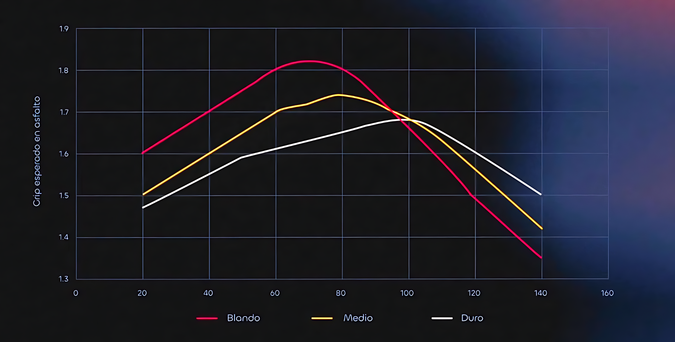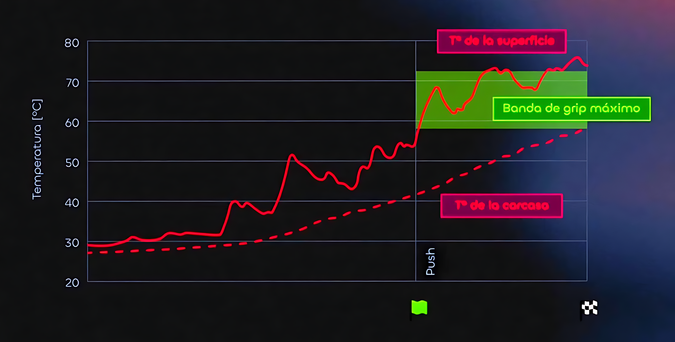
Very interesting what you can learn from F1 pre-shows. In this case, we’ve got insights into the operating temperature ranges of F1 tires, along with the actual friction coefficients for three different compounds (soft, medium, hard).

#TireSimulation #Driving #Racing #Motorsport #Engineering #RaceTech #F1 #TireData

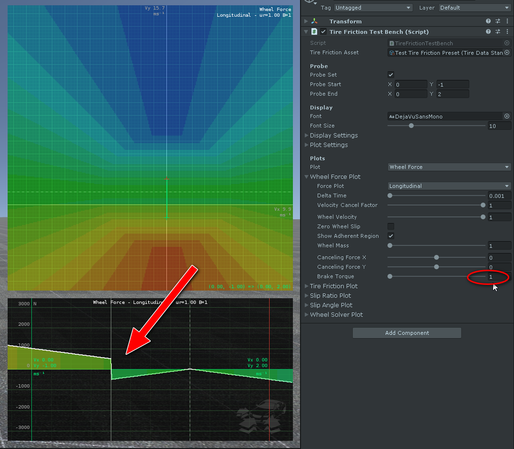
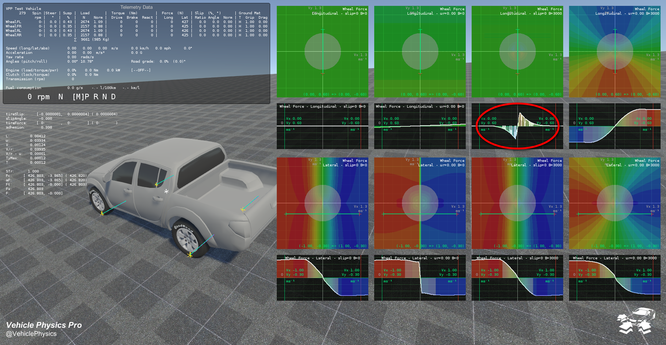
Why is there a discontinuity in the tire force that appears only when the brake torque is nonzero? I’m still investigating, but it looks like we’ll need to redesign the final stage of the wheel model. This part calculates the final longitudinal force from the combination of wheel torques (including the brake pads) and is a leftover from the previous model version.

#VPPDev #Unity #MadeWithUnity #TireSimulation #Simracing #ScreenshotSaturday

Here are eight views of the same wheel model under different conditions. Everything looks nominal except for the longitudinal force when the wheel transitions from freely rolling (slip = 0) to fully braked. The overall shape appears correct, but the noise in the graph suggests a possible numerical issue with the sign of the resulting longitudinal force in the calculations.

#VPPDev #Unity #MadeWithUnity #Physics #Simulator #TireSimulation #Simracing #Motorsport

With the analysis tool (right), we can click any point in the plot and pause execution just before it’s calculated. This lets us trace the process step by step, pinpoint the issue, and fix it.

#VPPDev #Unity #MadeWithUnity #Physics #GamePhysics #TireSimulation #Simracing #Motorsport

Inside the code of Vehicle Physics Pro. This is TireFrictionBase, the base class for every tire model implementation in VPP. You can implement any tire friction model and plug it directly into VPP. For example, you could run two instances of the exact same vehicle, each with a different tire model, and compare their behavior.

#VPPDev #Unity #IndieDev #GameDev #Physics #GamePhysics #TireSimulation #Simracing

Analyzing discontinuities in the wheel force model in Vehicle Physics Pro. Our tool makes it possible to visually detect issues in tire force calculations, and helps design and validate proper solutions.

#VPPDev #Unity #MadeWithUnity #IndieDev #GameDev #Showcase #Physics #GamePhysics #TireSimulation

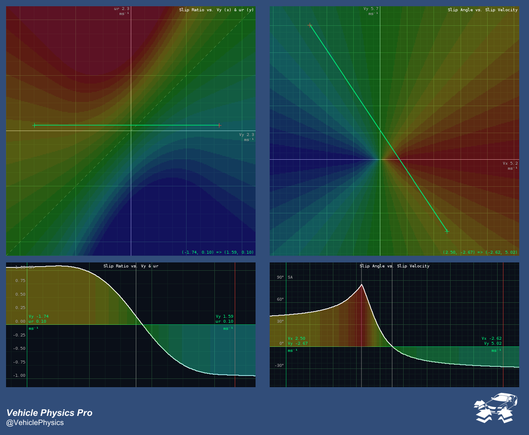
Visualizing Slip Ratio (left) and Slip Angle (right) as calculated by Vehicle Physics Pro. As part of the ongoing redesign of the tire flex model, we need to ensure that these calculations remain perfectly smooth and continuous across their full range.

#VPPDev #Unity #MadeWithUnity #Physics #GamePhysics #TireSimulation #Simracing #Engineering

The Tire Friction Model v2 in Vehicle Physics Pro. Friction curves can be easily configured in the inspector to match available data or expected behavior. The latest iteration also adds rolling resistance to the tire specifications.

#VPPDev #ScreenShotSaturday #Unity #MadeWithUnity #Showcase #Physics #GamePhysics #TireSimulation #Simracing #Motorsport #PERRINN #Project424 #Engineering #DigitalTwins

This awesome document (and video) is the new “Marco Monster” reference for programming vehicles in games. A clear, step-by-step guide for beginners on the special case of car simulation in games.

“Simulate the experience, not the machine” 👏👏

🔗https://wassimulator.com/blog/programming/programming_vehicles_in_games.html

🎥 https://www.youtube.com/watch?v=MrIAw980iYg

#IndieDev #GameDev #Physics #GamePhysics #Simulator #TireSimulation #Simracing