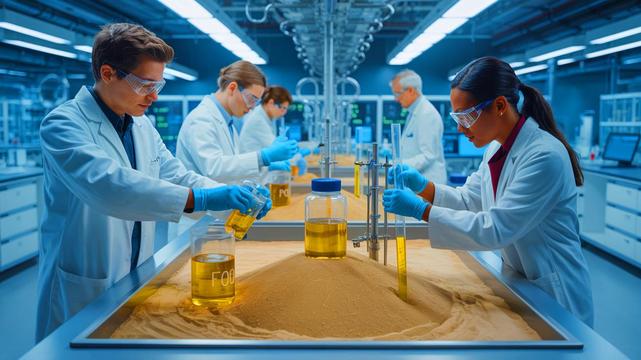
Scientists achieve massive breakthrough on an alternative to #LithiumIon batteries — why this 'significant advancement' matters

by Laurelle Stelle, January 13, 2026

"Researchers have recently discovered a way to make an efficient battery out of #zinc — an inexpensive, commonly found metal — instead of the #RareMetals used in lithium batteries.

"Most rechargeable batteries today are lithium-ion batteries, which include other metals like cobalt and nickel, Tech Xplore reports. As electric vehicles (#EVs) and large-scale energy storage get more common, we'll need more and more of those metals — but because they're uncommon, the costs are often massive.

"Many researchers are working on cheaper battery options to reduce or replace these metals. One Chinese company has created a car powered by a #SodiumBattery, and a University of Maryland researcher has invented a partly #BiodegradableBattery made of zinc and #CrabShells. Researchers have even found not one but two ways to store energy in ordinary #sand.

"According to Tech Xplore, this new project, led by Xiulei 'David' Ji of Oregon State University, offers yet another alternative to lithium-ion batteries: accessible, efficient zinc metal batteries.

"The secret is a new electrolyte developed by Ji and his team, Tech Xplore explains. A battery electrolyte is a liquid inside the battery that helps aid the chemical reactions to store and release energy.

"Unfortunately, past electrolytes in #ZincBatteries were not very efficient. Much of the energy stored in the battery was previously used up in extra, unwanted chemical reactions. Not only did that mean the battery couldn't release as much energy as it had put into it, but it also generated dangerous hydrogen gas. This meant that zinc wasn't practical for #RechargeableBatteries.

"Ji's team has created a new electrolyte formula that almost eliminates these unwanted reactions, Tech Xplore reports. It forms a protective coating on the zinc component of the battery that prevents that type of energy loss. A similar protective coating is what allows lithium-ion batteries to release more than 99% of the charging energy. The new zinc battery releases 99.95% of the energy it is charged with on each cycle.

"Not only is the zinc battery efficient, but it's also safer than a lithium-ion battery, according to Tech Xplore. The new electrolyte isn't flammable, while the ones used in lithium-ion batteries often are combustible. Both zinc and the components of the electrolyte are also cheaper and more common than the materials used in lithium-ion batteries.

" 'The breakthrough represents a significant advancement toward making zinc metal batteries more accessible to consumers,' Ji told OSU News and Research Communications. "These batteries are essential for the installation of additional solar and wind farms. In addition, they offer a secure and efficient solution for home energy storage, as well as energy storage modules for communities that are vulnerable to natural disasters.

"Thanks to the work of Ji and his team, Tech Xplore suggests rechargeable zinc batteries are likely to hit the market in the near future."

Source:
https://tech.yahoo.com/science/articles/scientists-just-made-massive-breakthrough-121500329.html

#SolarPunkSunday #LithiumBatteryAlternatives #ZincBatteries #BiodegradableBatteries #CrabShells #Cobalt #Nickel #Lithium #Technology #TechnologyBreakthrough
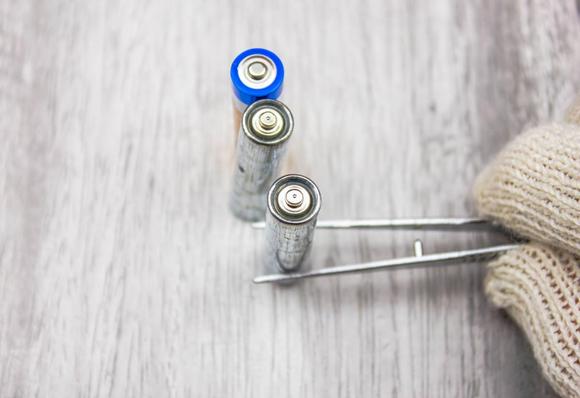
Scientists achieve massive breakthrough on an alternative to lithium-ion batteries — why this 'significant advancement' matters

"This is a significant breakthrough."

Yahoo Tech

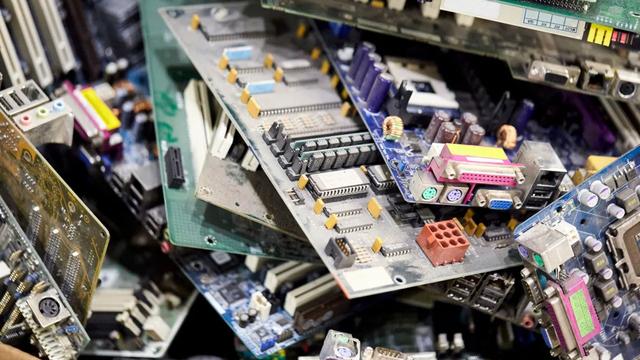
#Winemaking acid powers cleaner way for cobalt-nickel recovery from #BatteryWaste

Scientists use #TartaricAcid and electrowinning to split #cobalt and #nickel from battery waste for cleaner #recycling.

By Neetika Walter
Mar 11, 2026

"Scientists have developed a cleaner way to separate cobalt and nickel from lithium-ion battery materials using an electrochemical technique boosted by a naturally occurring acid commonly associated with wine.

[...]

"The researchers say the approach could be particularly useful for '#UrbanMining,' the process of recovering valuable #minerals from discarded #electronics and spent #batteries. Countries with limited mining resources are increasingly looking to #recycling to secure supplies of critical materials.

" '#Electrowinning’s edge in urban mining gives us a practical pathway to turn battery waste into a valuable resource for cobalt and nickel, while also helping the United States reduce its reliance on foreign supply chains,' Liu says."

Learn more:
https://interestingengineering.com/energy/bioacid-electrowinning-cobalt-nickel-battery-recycling

#SolarPunkSunday #Technology #TechnologyBreakthrough #LionBatteries #BatteryRecycling #CriticalMinerals
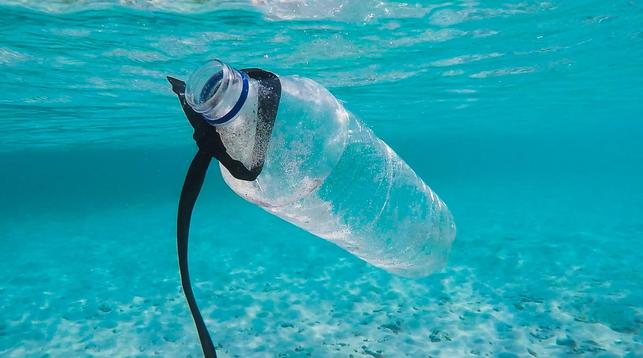
Bioacid-powered process pulls cobalt, nickel from old batteries

Wine-making acid helps scientists separate cobalt and nickel from battery waste using electrowinning technology.

Interesting Engineering

This #GreenConcrete Is Made From #Urine: German Scientists Recreate Sandstone Texture Using Waste in #EcoTech Breakthrough

In a groundbreaking development that could redefine sustainable construction, researchers at the University of Stuttgart have successfully transformed human urine into a robust and eco-friendly bio-concrete, paving the way for innovative building materials that dramatically reduce environmental impact.

The bio-concrete’s chemical composition closely resembles that of natural #sandstone, indicating a harmonious blend with nature.

by Gabriel Cruz, 05/10/2025

🌿 Researchers at the University of Stuttgart have developed an eco-friendly #BioConcrete using human urine.
🔬 The innovative process involves microbial #biomineralization, where bacteria convert urea into #CalciumCarbonate crystals.
🏗️ Bio-concrete offers a sustainable alternative to traditional concrete, reducing environmental impact and emissions.
🚀 The project aims to integrate bio-concrete into a #CircularEconomy, transforming waste into valuable building materials.

"In a groundbreaking exploration of sustainable construction methods, researchers at the University of Stuttgart have pioneered a method to transform waste into a valuable resource. By converting human urine into eco-friendly bio-concrete, they are paving the way for a new era of green building materials. This innovative approach not only seeks to reduce the environmental impact of construction but also leverages a commonly wasted resource to create something beneficial for society. The project’s implications stretch beyond mere construction, hinting at a sustainable future where waste is a key ingredient in building our world."

Read more:
https://www.sustainability-times.com/research/this-green-concrete-is-made-from-urine-german-scientists-recreate-sandstone-texture-using-waste-in-eco-tech-breakthrough/

#SolarPunkSunday #TechnologyBreakthrough #ZeroWaste #HumanUrine #SolarPunk

This Green Concrete Is Made From Urine: German Scientists Recreate Sandstone Texture Using Waste in Eco-Tech Breakthrough

In a groundbreaking exploration of sustainable construction methods, researchers at the University of Stuttgart have pioneered a method to transform waste

Sustainability Times

Scientists create "living #plastic" that can self-destruct on command

Dormant bacteria embedded in the material wake up to digest it from the inside

The researchers said the process did not create #microplastic particles, which could make this more appealing than conventional biodegradable plastics, which often fragment before they fully break down

By Rob Thubron May 6, 2026

"Plastic that can breaks itself down when no longer needed sounds like something from sci-fi, but Chinese scientists have moved the idea closer to reality. Their prototype embeds dormant bacteria inside a polymer, creating a material that can activate on command and degrade without leaving behind microplastic fragments.

"Scientists at the Shenzhen Institutes of Advanced Technology have developed a '#LivingPlastic' with a built-in kill switch. The material contains spores from engineered Bacillus subtilis, a common #SoilBacterium, that remain inactive during normal use.

"When exposed to the trigger [a warm nutrient broth] , the spores wake up and produce enzymes that digest the plastic from within."

Read more:
https://www.techspot.com/news/112317-scientists-create-living-plastic-can-self-destruct-command.html

#SolarPunkSunday #Technology #TechnologyBreakthrough

Scientists create "living plastic" that can self-destruct on command

Scientists at the Shenzhen Institutes of Advanced Technology have developed a "living plastic" with a built-in kill switch. The material contains spores from engineered Bacillus subtilis, a...

TechSpot

Scientists have created a material that generates energy from temperature changes, hinting at a future where solar power no longer needs panels

by Anke
April 23, 2026

Excerpt: "The 'Honeycomb' barrier to break energy loss barriers

"Converting heat into electricity is a rising trend in the engineering world. However, #thermoelectrics have always been considered too inefficient for wide-scale use, until now.

"Scientists from the Seoul National University (#SNU) College of Engineering created a new material with high-performance #thermoelectric properties.

"You can review their study 'Facile and scalable strategy for fabricating dense bulk Ag2Se as a high-performance thermoelectric material,' published in Advanced Composites and Hybrid Materials.

"The team’s design is based on #SilverSelenide (#Ag2Se) and operates on the #SeebeckEffect, producing voltage from temperature gradients.

"Blocking heat while boosting the power factor

"Ag2Se was scaled into nanoflakes and arranged in a honeycomb-like layout.

"Heat-carrying vibrations (#phonons) are scattered in the structure, preventing the temperature from leveling across the material.

"The material was 'doped' with #silver, which boosted the power factor by 300%, enabling electron flow despite the thermal barrier.

"This breakthrough in thermoelectric materials effectively renders the need for panels unnecessary.

"The highly efficient, thin, and flexible film has a series of application possibilities. Building integration enables solar power production from heat during the day and energy harvesting as the building cools at night.

"Flexible thermoelectric patches can power IoT devices, eliminating the use of batteries. Using the material at data centers creates a circular energy economy within digital infrastructure itself."

Read more:
https://energiesmedia.com/solar-material-energy-from-temperature-changes/

#Thermoelectric Materials [Wikipedia]:
https://en.wikipedia.org/wiki/Thermoelectric_materials

#SolarPunkSunday #Technology #TechnologyBreakthrough #Renewables #EnergyGeneration #Thermoelectrics

"Quantum Leap in Computing: RSA-2048 Cracked on a Cellphone! 📱💥"

Dr. Ed Gerck announces a groundbreaking quantum computing (QC) achievement: RSA-2048 encryption has been broken using a commercial cellphone or a commercial Linux desktop! Should this turn out to be correct, this would mark a pivotal moment in cybersecurity, as current public-key encryption may no longer be secure. Time for quantum-resistant algorithms! 🚨🔐

As some others have also stated, and I quote "Well, I'd like to see a more tangible proof of these tall claims..."

Would be cool tho...

Source: Ed Gerck on LinkedIn

Tags: #QuantumComputing #CyberSecurity #RSA #Encryption #PublicKey #QuantumResistant #TechnologyBreakthrough #InfoSec #DataProtection 🔒🌐💻

Ed Gerck, PhD, PhD on LinkedIn: Today, we could announce it. Quantum computing (QC) has become a reality… | 734 comments

Today, we could announce it. Quantum computing (QC) has become a reality. We broke the RSA -2048 key. Ron Rivest is a dear friend, but that was needed to… | 734 comments on LinkedIn