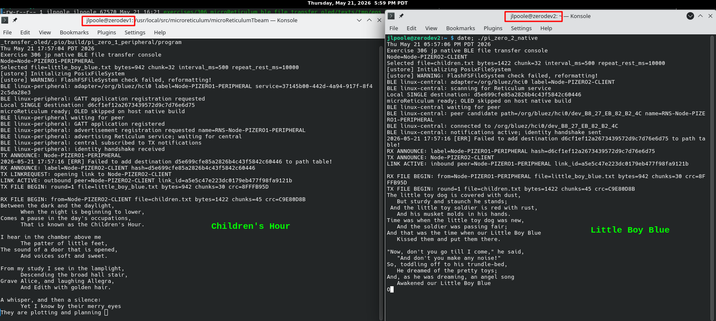
Skipping the #TBeamSupreme for this test: two bare #RaspberryPiZero2W boards running #microReticulum with my BLE interface, each sending poetry to the other over their built-in Bluetooth radios.

Two $17 SBCs, 8.8 MB builds, fully secure Reticulum link, and ambidextrous roles: start both, and they decide who is client/server.

#Bluetooth #BLE #Reticulum #RaspberryPi #MeshNetworking

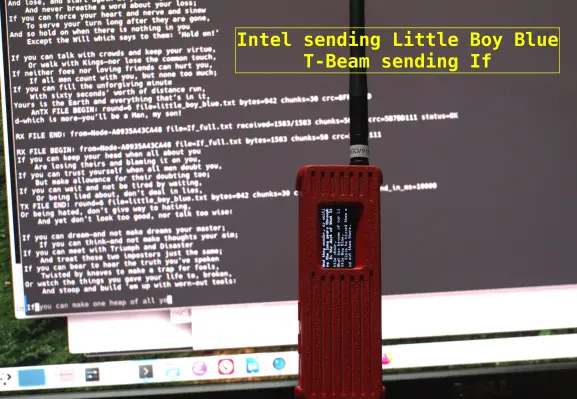
The voyage of discovery expands: I've compiled the microReticulum + BLE interface for my Intel workstation (binary is 8.8M -- ouch!) and have succeeded in having my Intel workstation sends poetry to a T-Beam over Bluetooth and vice-versa. Using a KIVO low quality bluetooth on the Intel. I'm having each unit have its own poem so it's clear where the source is coming from. Next: compile for ARM64 (Rpi4 & then RpiZero2w) and AMD64 (System76 Pangolin)

#TBeamSupreme #Reticulum

@geerlingguy @jpsays I have one, too -- inspired by Andreas Spiess and I had hoped to determine what the #TBeamSupreme antenna was tuned to, but I found I could not discern from the documentation how to do so quickly, so I relegated it to the TODO pile. I even subscribed to the Groups,IO list, but realize it must be a powerful tools as there are so many things people are doing with it.

Epiphany: I entered the #TBeamSupreme arena to field-test #LoRa and #Reticulum mesh behavior. That led to building a Bluetooth interface.

The surprise: Bluetooth may let me shrink the test range. Instead of sending people blocks away to force LoRa gaps, I can use walls, houses, and barriers on my own property to create repeatable mesh-resiliency tests.

I stress tested the unit for distance and found they remained paired between basement and 2nd floor of a house. Once the unit in the basement went outside the connection broke.

Had the units sending simultaneous and continuous text of: If by Rudyard Kipling.

Now have to consider the logic for resiliency, queuing, heartbeats, and other complicated stuff to make Bluetooth pairing for real world scenarios. I was impressed with T-Beams Bluetooth distance.

#Reticulum #TbeamSupreme

Milestone: Torlando’s Python BLE Reticulum protocol behavior has now been partially distilled into a C++ protocol/session core and field-tested between two Raspberry Pi Zero 2Ws. The test moved the full U.S. Constitution both directions over Reticulum using BLE, with C++ fragmentation/session backends confirmed.

https://salemdata.net/johnpress/?p=695

Next stop: microReticulum on the LilyGO T-Beam SUPREME.

#Reticulum #BLE #Bluetooth #microReticulum #TBeamSupreme #LilyGO #RaspberryPi #ESP32 #LoRa #Cplusplus
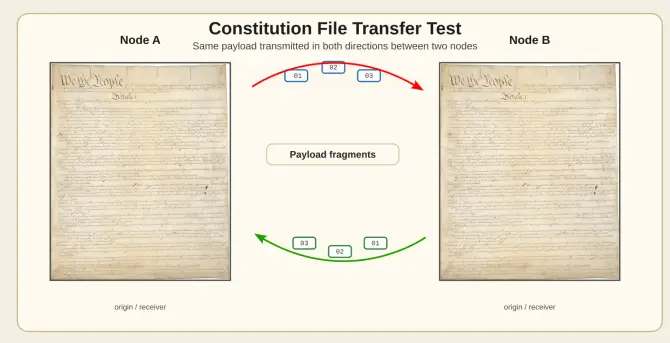
Two $17 Raspberry Pi Zero 2Ws successfully exchanged the full 44k text of the U.S. Constitution over a Reticulum Bluetooth interface: 100% completeness simultaneously.

Can BLE become a viable Reticulum interface for projects like microReticulum on the LilyGO T-Beam SUPREME? Includes synchronized timing analysis, latency metrics, and Perl-based log analytics.

https://salemdata.net/johnpress/?p=687

#Reticulum #Bluetooth #BLE #PiZero2W #LoRa #TBeamSupreme #OpenSource

Testing Reticulum’s Bluetooth Interface – Salem Data Blog

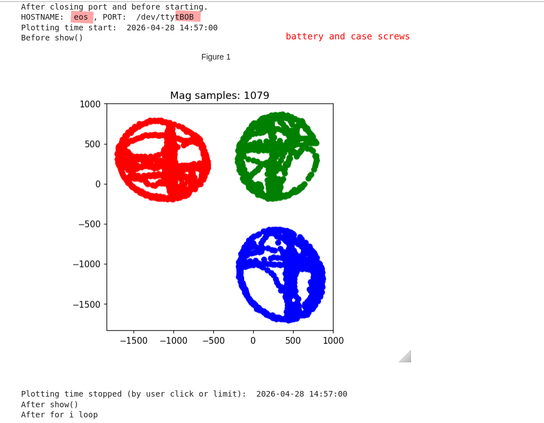
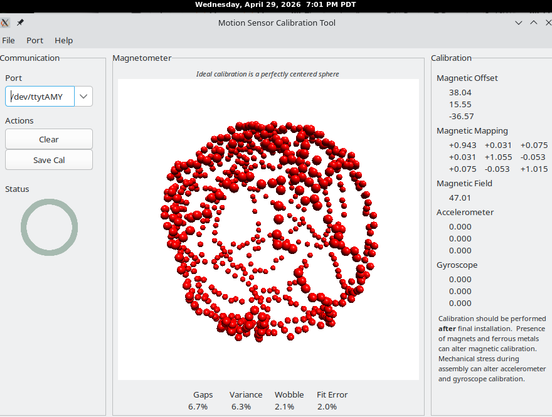
After testing 7 #LilyGO #TBeamSupreme units, one thing is clear:

👉 Magnetometer calibration is not transferable between devices.

Even in similar environments, raw readings varied dramatically between units. Proper calibration isn’t optional—it’s per-device.

I also looked at how #Meshtastic handles the onboard #QMC6310… and it essentially doesn’t (no heading, no calibration).

https://salemdata.net/johnpress/?p=661

#Magnetometer #EmbeddedSystems #LoRa #Sensors #Electronics #Calibration #IoT