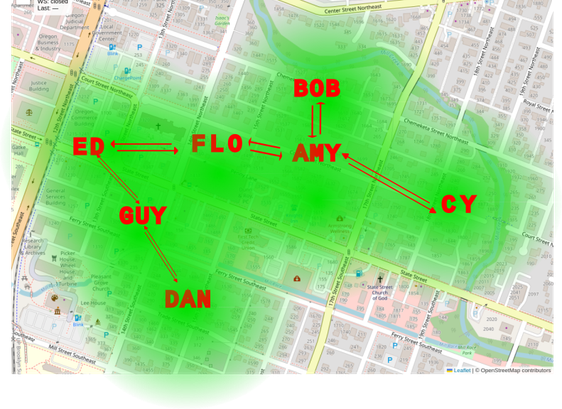
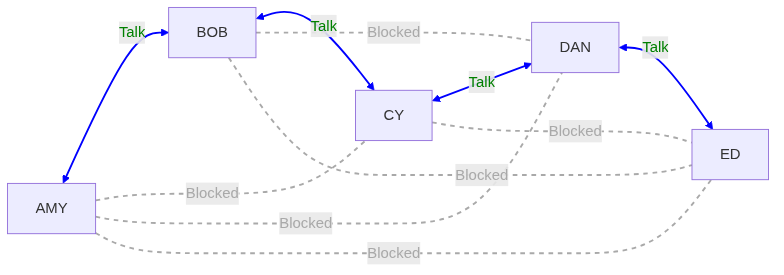
Each #MeshNetworking radio test cycle requires rebuilding and uploading separate #ESP32S3 firmware images 4 each #TBeamSupreme, because each unit has different blocker rules to simulate network topology.

Moving the compile step from my older Intel workstation to a Ryzen 7950 box cuts roughly 8–9 minutes from each iteration. That adds up fast when testing, retesting, and chasing radio anomalies.

https://salemdata.net/johnpress/?p=974

#Reticulum #PlatformIO #EmbeddedSystems #Forgejo #Gentoo #HardwareHacking
Debugging #microReticulum LINK/transport behavior over LoRa is hard when the “wire” is invisible.

I’m testing BOB, CY & DAN, with DAN acting as the middle node between two units that cannot hear each other directly. To look for possible RF collisions, I modified #OpenWebRX.

It is fuzzy, but it turns millisecond logs and invisible transmissions into something I can actually see.

https://salemdata.net/johnpress/?p=868

#Reticulum #TBeamSupreme #LoRa #ESP32 #EmbeddedSystems #Radio #SDR #OpenSource #AIcoding

In furtherance of testing and considering bandwidth contention, I modified openwebrx monitoring 915Mhz to have time codes (in black) so I can align each unit's transmission with the time to identify the unit transmitting. I may be overcrowding the air wave. The screenshot is an extreme situation meant to see a saturation, I have 7 units transmitting.

#Reticulum #TBeamSupreme

Looking at two Rust paths toward #Reticulum: Reticulum-rs, a smaller MIT-licensed library, and Leviculum, a much broader AGPL implementation with a no_std core, daemon/CLI, interop tests, and embedded ambitions.

My practical question: could either help with #ESP32 / #TBeamSupreme transport work, or does #microReticulum still win today?

https://salemdata.net/johnpress/?p=850

#Rust #EmbeddedSystems #LoRa #NoStd #ProtocolDesign

Reticulum on Rust: Comparison Of Two Projects – Salem Data Blog

A house is not a building code.

I wrote about using ChatGPT + Codex to derive a protocol specification for Reticulum/LXMF from its Python implementation—turning “look at the source” into something closer to a language-neutral contract, with test vectors to follow.

https://salemdata.net/johnpress/?p=812

#Reticulum #LXMF #Codex #AIcoding #ProtocolDesign #EmbeddedSystems #TBeamSupreme #ESP32

Herding T-Beam Cats: my practical test bench for running 7 LilyGo T-Beam SUPREMEs with PlatformIO, synchronized clocks, serial monitors, structured logs, and Codex-assisted debugging bounded by actual evidence.

https://salemdata.net/johnpress/?p=777

#TBeamSupreme #ESP32 #PlatformIO #Reticulum #microReticulum #EmbeddedSystems #Gentoo #AIcoding #Codex #HardwareHacking

Herding T-Beam Cats – Salem Data Blog

I used #Bluetooth / #BLE as a short-range stand-in for #LoRa to test #Reticulum mesh behavior with #TBeamSupreme units.

The RSSI graph worked: carry two units away from a base pair, watch signal strength decay, disappear, then recover on return.

The GPS trace? Woeful. Useful lesson: RSSI test succeeded; urban T-Beam GPS precision did not.

https://salemdata.net/johnpress/?p=757

#MeshNetworking #ESP32 #FieldTesting #OpenSource

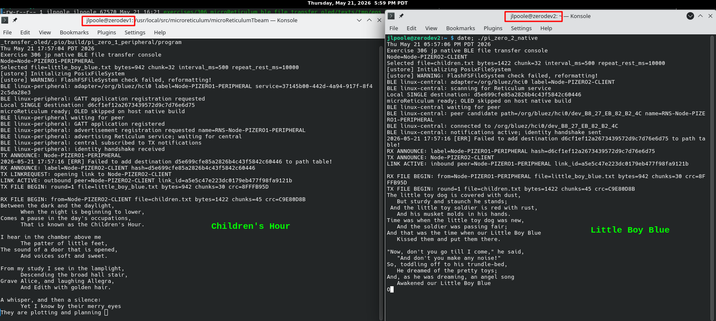
Skipping the #TBeamSupreme for this test: two bare #RaspberryPiZero2W boards running #microReticulum with my BLE interface, each sending poetry to the other over their built-in Bluetooth radios.

Two $17 SBCs, 8.8 MB builds, fully secure Reticulum link, and ambidextrous roles: start both, and they decide who is client/server.

#Bluetooth #BLE #Reticulum #RaspberryPi #MeshNetworking

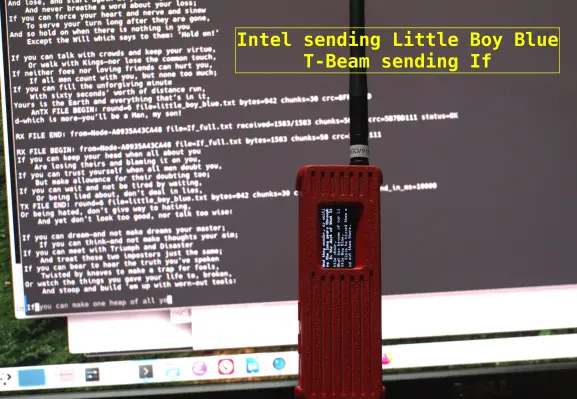
The voyage of discovery expands: I've compiled the microReticulum + BLE interface for my Intel workstation (binary is 8.8M -- ouch!) and have succeeded in having my Intel workstation sends poetry to a T-Beam over Bluetooth and vice-versa. Using a KIVO low quality bluetooth on the Intel. I'm having each unit have its own poem so it's clear where the source is coming from. Next: compile for ARM64 (Rpi4 & then RpiZero2w) and AMD64 (System76 Pangolin)

#TBeamSupreme #Reticulum

@geerlingguy @jpsays I have one, too -- inspired by Andreas Spiess and I had hoped to determine what the #TBeamSupreme antenna was tuned to, but I found I could not discern from the documentation how to do so quickly, so I relegated it to the TODO pile. I even subscribed to the Groups,IO list, but realize it must be a powerful tools as there are so many things people are doing with it.