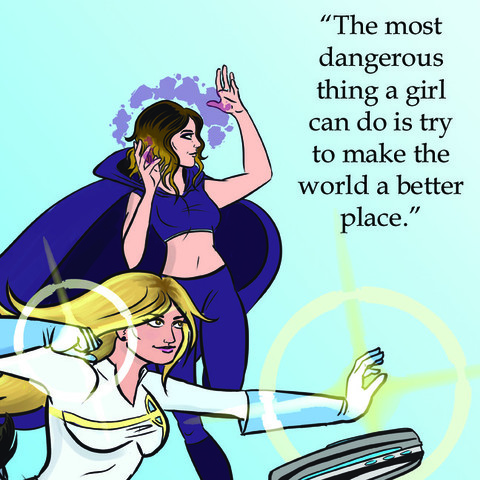
Author Spotlight: Queer SFF Author E.A. Noble
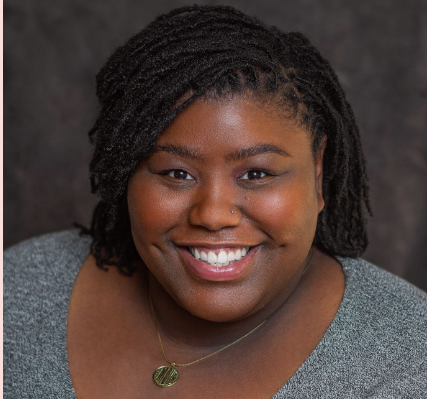
I’m E.A. Noble, and I write Queer and Diverse Fantasy for the Culture. I grew up in Mississippi with my great-grandmother, who encouraged me to turn my dreams into reality. Becoming a writer was always what I wanted to do. As a Queer, fat, Black, AuDHD, and disabled woman, it was important to me to write stories that amplify voices like mine. I want it to be normalized that we can be the love interests, the warriors, the assassins, the main leads, and the superheroes too!
Connect: @eanoble or @authoreanoble on all social media platforms.
Linktree: linktr.ee/eanoble
What drew you to superhero fiction and where did the idea come from for Super-Sized Bubble Gum?
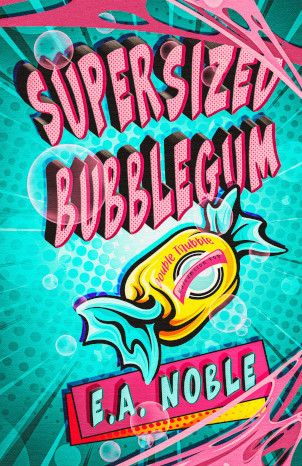
I ALWAYS loved Superheroes! From Xena the Warrior Princess to the X-men. Growing up, I consumed Marvel and DC stories and never missed an episode of Smallville. Now that I am an author, it wasn’t so farfetched to dive headfirst in this genre, especially with shows like The Boys and Invincible, where the “Superheroes” act badly. BUT here’s the thing: what inspired me to write Supersized Bubble was one single thought. “Why is it that every Superhero could bench press 50-ton trucks, prevent full buildings from collapsing, and stop passenger-filled trains from nosediving into epic danger, but none of them can lift a single plus size woman?” Thus, Supersized Bubblegum was born.
What is your favourite character dynamic to write, and which characters / which book of yours do they feature in?
There are so many character dynamics that I love to write, and it’s hard to narrow them down to just one. First and foremost, I prioritize women in fantasy, so most of my work is women-led. More specifically, it’s led by Black women. I mention this because the dynamic I am about to name is a very sticky subject: the “Strong Black Woman.” Movies, TV, and books have trashed this character type so badly that the “Strong Black Woman” trope should be utterly flushed down the toilet and never heard from again.
Black women are not a monolith, and often, especially in fantasy, we are seen as the ones who uplift the main character, the sages of wisdom, the ones who can carry the burdens of the lead, and the fixers of everyone’s problems. People forget that Black women are human. We suffer, feel pain, hurt, cry, and break down just like everyone else. We want to be held, loved, fussed over, and we want someone to carry our burdens too. Yes, we are the strong friends, but strong friends need someone to check in on them as well.
Most of my characters are strong Black women, whether emotionally, physically, mentally, or spiritually. But I make sure that our humanity is written into the pages. I aim for readers to see not only our peaks but our valleys. I hope that when a reader opens my book, they identify with my characters’ humanity. Yes, they are strong, but they are no different than you.
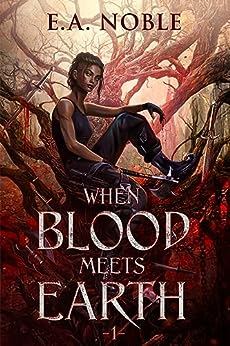
So far, my readers absolutely love the journey my characters go through, whether it’s in Supersized Bubblegum, which is about fat women gaining superpowers by eating bubble gum while looking for their missing friend, or in When Blood Meets Earth, about a princess on the precipice of her bad girl era.
What can readers expect from your latest release, Super-Sized Bubble Gum (Aug 2024) and will they find themes that they recognise from your previous books?
Expect plus-size women being loved, respected, and embracing their power and womanhood. Be prepared for adventure, disappointment, and the discovery of self, friends, and what it really means to have a supportive and faithful family. Get ready for not only the tortured soul male character but also the cinnamon roll boyfriend and the slightly unhinged, possibly sociopathic girlfriend that you will love. Some recurring themes in my books are the found family trope and the power of friendship. (I can’t help it, that’s the anime girl in me.)
What tropes and elements of superhero fiction do you work with in SSBG, and how do you use/subvert/feature them?
With this question, I low-key didn’t want to answer because I thought it might spoil some of the fun in SSBG. So, if you’re a reader and haven’t read SSBG yet, please stop here, go read it, then come back! For everyone else, carry on.
The superhero elements in SSBG aren’t very unique. I wasn’t trying to reinvent the wheel, but rather expand it to include more diverse bodies. One of my favorite superhero elements is the Speed Force. I absolutely love a speedster, so it was a no-brainer that one of my Fatty Baddies had to be one.
What I did differently was allow their powers to mimic who the ladies were already deep down. The bubble gum just helped to bring their magic out.
One of the ladies has a bubble gum power that coats her entire body as an added layer of protection. This layer of protection flares when she’s upset, becoming hard and stiff like candy-coated apples, but when she’s happy, it becomes soft and fluffy like cotton candy. She can touch her friends and give them a literal dopamine boost, like a sugar rush of love and happiness. As a defensive power, not only can it harden to stop literal bullets from harming her, but she can also use it offensively to bubble her opponents, causing them to stick in place. There are cyborgs in SSBG, and she used her power to jam their gears. When you read the story, her power totally makes sense based on her core personality. Each Fatty Baddy’s power reflects their deeper selves, so it isn’t just some random power. But I don’t want to spoil any more for the reader because the other ladies also have some really cool powers to display.
If you are a reader and have read SSBG, please tell me which one was your favorite!
Does/How does the intersection of Blackness and queerness of your work interact and speak to the themes of transformation and community/sisterhood/found family?
I always tell people that one of my goals is to normalize diversity to the point where being Black, queer, fat, disabled, or anything else is just what it is—nothing more, nothing less. We exist, and we can be heroes too!
One of my favorite stories is “Cinderella” with Brandy and Whitney Houston (R.I.P.). No one questioned why her stepsisters were Black and white with a white mother. No one questioned why the King and Queen were Black and white with an Asian son. People were just happy to see beautiful people on screen, dancing, singing, and being magical! That’s what I want: people to simply exist and be seen, heard, loved, and experienced without question and judgment.
When people pick up my books, I want them to see an amazing book that they can enjoy and get sucked into! We all have unique experiences in life, and we open these books to live in another person’s body for 200-550-plus pages, just for a little while, to get a break from living in ours.
When it’s time to close an E.A. Noble book and the story ends, I want my readers to learn a little bit more about themselves and the world around them. Stories have bound, molded, and shaped minds since the beginning of time. There are people trying to ban books because those books have power, and when they speak, people listen! Many see this as a threat because they want to control your mind, and books set so many people free.
Freedom, in America as a queer, Black, fat, AuDHD, disabled woman, seems to be threatened with every bill presented. The right book in the right hands can topple governments, transform communities, and liberate nations. Just as the wrong book in the wrong hands can displace millions, destroy entire cities and states, and be used as a weapon of control. This is why it is important to read stories with queer, Black, BIPOC, disabled, trans, and other diverse main leads. By doing so, you gain more empathy and a better understanding of yourself and the people around you. And the wild thing is, people say, “Well, I read to escape.” And yet they can read about a white woman toppling a government in “The Hunger Games” and be just fine with the escape. But paint her Black and suddenly it’s “I can’t relate. Why is it political?” Reading has always and forever will be political. But I digress. Read. Read more. Read well. Read diversely. By doing so, we discover that we are more alike than we are different, and at the end of the day, we are all in this together.
What are the challenges (and joys) of being a multi-genre author, and how do you manage them?
I just see it as one of the joys of being an indie author. When I first decided to take my writing seriously, I wanted to go the traditional route. However, after doing my research, I realized that traditional publishing might not be for me (at least not fully—maybe hybrid in the future).
One of the challenges most traditionally published authors face is being gridlocked into one genre. If you start with romance, then you are expected to stick with romance from here on out. If you want to write in a different genre, like murder mystery, you typically have to create new pen names. I can barely manage my personal Facebook account and my author Facebook account at the same time; there’s no way I could handle multiple personas just because I didn’t want to stay in one genre box.
These days, traditional authors have a bit more freedom to write in different genres as long as they are similar. For example, if you write romance, it’s easier to slip into historical romance, contemporary romance, or the increasingly popular romantasy. At the end of the day, I didn’t want to be put in a box. When readers meet me, I want them to know that while my primary genre is queer fantasy, I also write horror, mystery, action-adventure, urban fantasy, and superhero fantasy—really anything under the speculative fiction umbrella. I’ve decided to ditch the various personas and just say, “Hey, I am E.A. Noble, and this is the story I have for you today,” regardless of the genre.
I hope to introduce readers to new genres they didn’t know they liked because they are used to reading only one specific genre. For example, I had a reader tell me that she had never read a fantasy book before, but my story was her first. She said the only reason she read it was because she loved one of my horror stories and decided to pick up “When Blood Meets Earth” to see how it was. Now she’s obsessed and has added epic fantasy books to her to-be-read list. I just want to bring imagination back to adulthood.
The world can get far too mundane—let’s add a bit of magic and wonder to it!
Find Out More Like This? Try These:
#AuthorInterview #BlackFantasy #BlackMC #diverseFantasy #queerFantasy #SuperheroFiction cmrosens

 Tycoon World
 Théâs Dehran
 Jarrett
 Androcat
 S,夜紫蛇🔞nouskjp【濃縮還元帝国!】bluesky
 Sketch Sanchez

 Queer Lit Cats
 Michael C. Bailey - Writer