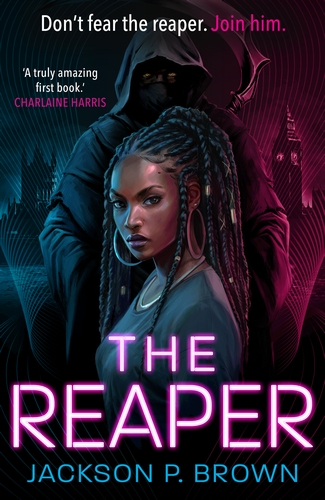
Author Spotlight: Queer SFF Author E.A. Noble

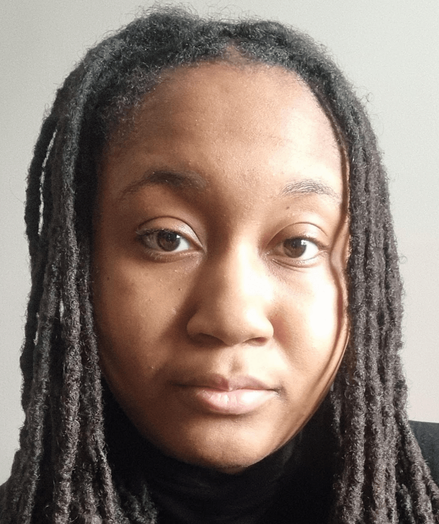
I’m E.A. Noble, and I write Queer and Diverse Fantasy for the Culture. I grew up in Mississippi with my great-grandmother, who encouraged me to turn my dreams into reality. Becoming a writer was always what I wanted to do. As a Queer, fat, Black, AuDHD, and disabled woman, it was important to me to write stories that amplify voices like mine. I want it to be normalized that we can be the love interests, the warriors, the assassins, the main leads, and the superheroes too!

Connect: @eanoble or @authoreanoble on all social media platforms.

Linktree: linktr.ee/eanoble

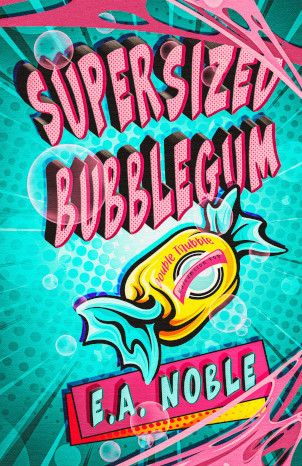
What drew you to superhero fiction and where did the idea come from for Super-Sized Bubble Gum?

I ALWAYS loved Superheroes! From Xena the Warrior Princess to the X-men. Growing up, I consumed Marvel and DC stories and never missed an episode of Smallville. Now that I am an author, it wasn’t so farfetched to dive headfirst in this genre, especially with shows like The Boys and Invincible, where the “Superheroes” act badly. BUT here’s the thing: what inspired me to write Supersized Bubble was one single thought. “Why is it that every Superhero could bench press 50-ton trucks, prevent full buildings from collapsing, and stop passenger-filled trains from nosediving into epic danger, but none of them can lift a single plus size woman?” Thus, Supersized Bubblegum was born.

What is your favourite character dynamic to write, and which characters / which book of yours do they feature in?

There are so many character dynamics that I love to write, and it’s hard to narrow them down to just one. First and foremost, I prioritize women in fantasy, so most of my work is women-led. More specifically, it’s led by Black women. I mention this because the dynamic I am about to name is a very sticky subject: the “Strong Black Woman.” Movies, TV, and books have trashed this character type so badly that the “Strong Black Woman” trope should be utterly flushed down the toilet and never heard from again.

Black women are not a monolith, and often, especially in fantasy, we are seen as the ones who uplift the main character, the sages of wisdom, the ones who can carry the burdens of the lead, and the fixers of everyone’s problems. People forget that Black women are human. We suffer, feel pain, hurt, cry, and break down just like everyone else. We want to be held, loved, fussed over, and we want someone to carry our burdens too. Yes, we are the strong friends, but strong friends need someone to check in on them as well.

Most of my characters are strong Black women, whether emotionally, physically, mentally, or spiritually. But I make sure that our humanity is written into the pages. I aim for readers to see not only our peaks but our valleys. I hope that when a reader opens my book, they identify with my characters’ humanity. Yes, they are strong, but they are no different than you.

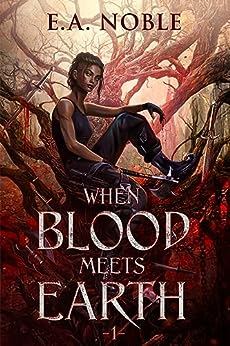
So far, my readers absolutely love the journey my characters go through, whether it’s in Supersized Bubblegum, which is about fat women gaining superpowers by eating bubble gum while looking for their missing friend, or in When Blood Meets Earth, about a princess on the precipice of her bad girl era.

What can readers expect from your latest release, Super-Sized Bubble Gum (Aug 2024) and will they find themes that they recognise from your previous books?

Expect plus-size women being loved, respected, and embracing their power and womanhood. Be prepared for adventure, disappointment, and the discovery of self, friends, and what it really means to have a supportive and faithful family. Get ready for not only the tortured soul male character but also the cinnamon roll boyfriend and the slightly unhinged, possibly sociopathic girlfriend that you will love. Some recurring themes in my books are the found family trope and the power of friendship. (I can’t help it, that’s the anime girl in me.)

What tropes and elements of superhero fiction do you work with in SSBG, and how do you use/subvert/feature them?

With this question, I low-key didn’t want to answer because I thought it might spoil some of the fun in SSBG. So, if you’re a reader and haven’t read SSBG yet, please stop here, go read it, then come back! For everyone else, carry on.

The superhero elements in SSBG aren’t very unique. I wasn’t trying to reinvent the wheel, but rather expand it to include more diverse bodies. One of my favorite superhero elements is the Speed Force. I absolutely love a speedster, so it was a no-brainer that one of my Fatty Baddies had to be one.

What I did differently was allow their powers to mimic who the ladies were already deep down. The bubble gum just helped to bring their magic out.

One of the ladies has a bubble gum power that coats her entire body as an added layer of protection. This layer of protection flares when she’s upset, becoming hard and stiff like candy-coated apples, but when she’s happy, it becomes soft and fluffy like cotton candy. She can touch her friends and give them a literal dopamine boost, like a sugar rush of love and happiness. As a defensive power, not only can it harden to stop literal bullets from harming her, but she can also use it offensively to bubble her opponents, causing them to stick in place. There are cyborgs in SSBG, and she used her power to jam their gears. When you read the story, her power totally makes sense based on her core personality. Each Fatty Baddy’s power reflects their deeper selves, so it isn’t just some random power. But I don’t want to spoil any more for the reader because the other ladies also have some really cool powers to display.

If you are a reader and have read SSBG, please tell me which one was your favorite!

Does/How does the intersection of Blackness and queerness of your work interact and speak to the themes of transformation and community/sisterhood/found family?

I always tell people that one of my goals is to normalize diversity to the point where being Black, queer, fat, disabled, or anything else is just what it is—nothing more, nothing less. We exist, and we can be heroes too!

One of my favorite stories is “Cinderella” with Brandy and Whitney Houston (R.I.P.). No one questioned why her stepsisters were Black and white with a white mother. No one questioned why the King and Queen were Black and white with an Asian son. People were just happy to see beautiful people on screen, dancing, singing, and being magical! That’s what I want: people to simply exist and be seen, heard, loved, and experienced without question and judgment.

When people pick up my books, I want them to see an amazing book that they can enjoy and get sucked into! We all have unique experiences in life, and we open these books to live in another person’s body for 200-550-plus pages, just for a little while, to get a break from living in ours.

When it’s time to close an E.A. Noble book and the story ends, I want my readers to learn a little bit more about themselves and the world around them. Stories have bound, molded, and shaped minds since the beginning of time. There are people trying to ban books because those books have power, and when they speak, people listen! Many see this as a threat because they want to control your mind, and books set so many people free.

Freedom, in America as a queer, Black, fat, AuDHD, disabled woman, seems to be threatened with every bill presented. The right book in the right hands can topple governments, transform communities, and liberate nations. Just as the wrong book in the wrong hands can displace millions, destroy entire cities and states, and be used as a weapon of control. This is why it is important to read stories with queer, Black, BIPOC, disabled, trans, and other diverse main leads. By doing so, you gain more empathy and a better understanding of yourself and the people around you. And the wild thing is, people say, “Well, I read to escape.” And yet they can read about a white woman toppling a government in “The Hunger Games” and be just fine with the escape. But paint her Black and suddenly it’s “I can’t relate. Why is it political?” Reading has always and forever will be political. But I digress. Read. Read more. Read well. Read diversely. By doing so, we discover that we are more alike than we are different, and at the end of the day, we are all in this together.

What are the challenges (and joys) of being a multi-genre author, and how do you manage them?

I just see it as one of the joys of being an indie author. When I first decided to take my writing seriously, I wanted to go the traditional route. However, after doing my research, I realized that traditional publishing might not be for me (at least not fully—maybe hybrid in the future).

One of the challenges most traditionally published authors face is being gridlocked into one genre. If you start with romance, then you are expected to stick with romance from here on out. If you want to write in a different genre, like murder mystery, you typically have to create new pen names. I can barely manage my personal Facebook account and my author Facebook account at the same time; there’s no way I could handle multiple personas just because I didn’t want to stay in one genre box.

These days, traditional authors have a bit more freedom to write in different genres as long as they are similar. For example, if you write romance, it’s easier to slip into historical romance, contemporary romance, or the increasingly popular romantasy. At the end of the day, I didn’t want to be put in a box. When readers meet me, I want them to know that while my primary genre is queer fantasy, I also write horror, mystery, action-adventure, urban fantasy, and superhero fantasy—really anything under the speculative fiction umbrella. I’ve decided to ditch the various personas and just say, “Hey, I am E.A. Noble, and this is the story I have for you today,” regardless of the genre.

I hope to introduce readers to new genres they didn’t know they liked because they are used to reading only one specific genre. For example, I had a reader tell me that she had never read a fantasy book before, but my story was her first. She said the only reason she read it was because she loved one of my horror stories and decided to pick up “When Blood Meets Earth” to see how it was. Now she’s obsessed and has added epic fantasy books to her to-be-read list. I just want to bring imagination back to adulthood.

The world can get far too mundane—let’s add a bit of magic and wonder to it!

Find Out More

Like This? Try These:

#AuthorInterview #BlackFantasy #BlackMC #diverseFantasy #queerFantasy #SuperheroFiction
Author Spotlight (Trad Release): Urban Fantasy Author Jackson P. Brown

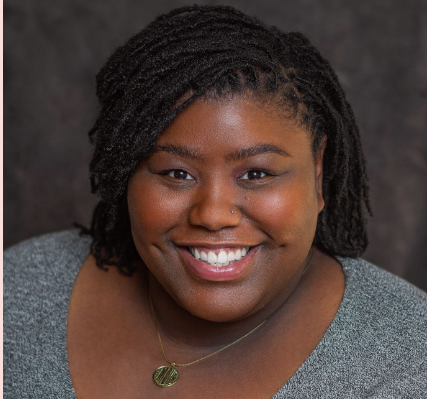
Jackson P. Brown is a writer from London, an anime and manga enthusiast, and the founder of Black Girl Writers — a mentoring programme for aspiring Black writers.

After winning Penguin Random House’s #WriteNow competition in 2020, she signed a 3-book deal with Del Rey UK for her debut adult fantasy series, GETHSEMANE.

Author Links:

Website: jacksonpbrown.com

Instagram: @_JackPBrown
TikTok: @jackpbrownauthor

PREORDER FOR 10 JULY 2025: https://www.penguin.co.uk/books/455385/the-reaper-by-brown-jackson-p/9781529907193

First of all, congratulations on your book deal with Penguin! What inspired your debut urban fantasy novel, The Reaper? 

Thank you!

Quite a few things inspired the novel: people I know, my love for London, my Jamaican heritage, my everyday experiences, and of course the madness of the British government and the UK’s difficult relationship with race and class, but The Reaper has two specific origin stories.

A major aspect of the novel is the magical city beneath London, Downstairs. This idea came to me when I was a teenager attending one of many psychiatric outpatient appointments following a period of mental illness.

I had to pass under a dark railway tunnel to get to the therapy office in London Bridge, central London, and one day I imagined pressing a brick in the wall and escaping down a chute to a new, fantastical land, Alice in Wonderland style.

Soon, I kept daydreaming about the city hiding under London, and all the different creatures that lived there and how they interacted with the human world. It underwent many names and was originally called The Cave.

I was so obsessed that I wrote a self-insert novel about a girl who feels like an outcast and discovers the city. It was my second full length novel and I finished it when I was 16. Strangely enough, many of the characters from that novel are in The Reaper today – they’re just properly aged up and much better written!

As for the other origin: I’ve always had a fascination with death and Grim Reaper stories, and I once wrote a short story about a Grim Reaper called Maxwell and the schoolgirl who discovers she’s the only one who can see him. When I told my mum about it, she gave me her copy of Mort by Sir Terry Pratchett because she said my irreverent take on the Grim Reaper reminded her of Death from Discworld.

Doubly inspired, I rewrote my short story in college and entered it into a writing competition set up by the English department. I won second place and my prize was a 3-course meal at Pizza Express in King’s Cross, which was very posh and fancy for me! I sat right by the window in view of King’s Cross and St Pancras International Station and just basked in the knowledge that I was enjoying a nice meal in a nice place because of my writing.

I think Gerald, my Grim Reaper, was born on that day. Of course, Gerald lives in the clocktower of St Pancras Station, and he likes to go to Pizza Express from time to time.

Can you tell us more about the intersections of culture, identity, race, and the British class system that readers will find in the novel?

Basically, readers will find these realities weaved into the characters, settings, and conflicts in The Reaper: London is a multicultural city – I often view it as a Vatican of sorts, as it has its own unique culture and politics that isn’t replicated anywhere else in England.

London just moves differently.

It’s also extremely expensive, and the disparity between rich and poor grows daily. We have a strange proximity to these things: when the Grenfell tragedy happened a few years ago, we all watched horrified as this huge block of flats in the middle of a sprawling council estate (known as the projects in the US) burned so violently, claiming over 70 lives of mainly immigrant, working class, ethnic minorities, and just a couple roads down there were people like Simon Cowell living in luxury.

England has other diverse cities, but London is the poster child, which means that for a large portion of Britain (which is mostly white), it’s viewed as a failed state. You will hear right wing pundits speak of “no go zones” created by Muslim communities where white people can’t visit, and others blame the high crime rates on “multiculturalism gone mad”.

Outside London, there are cities like Luton (Andrew Tate’s hometown) where a longstanding tension between whites and Asians exist, all fuelled by far-right Islamophobe Tommy Robinson, whose English Defence League regularly stages intimidation marches in the area.

London itself has seen many periods of white flight – where white families have fled to neighbouring cities to escape immigrants. So it leads to a multitude of reductionist contradictions from people who don’t live here: that London is filled with privileged rich people, and it’s also a hot bed of poverty and crime, and the main perpetrators of this crime are ethnic minorities – particularly Black people and Muslims.

At the same time, there are cultural differences between different ethnic groups within the Black diaspora. My main character Amy is of Jamaican descent, which means she’s a direct descendant of slavery, and her family would have immigrated to the UK during the Windrush Era post WW2. Her understanding of working class issues as a Black Brit of Jamaican heritage would be different from Gerald, who is a rich, highly privileged man originally from a dimension based in the Sahara Desert.

Gerald, although Black, regularly liaises with the British elite (which is white) because of his assassin job. He and Amy live two totally different lives, which is why, as they’re tracking down the antagonists of this story – a warlock and witch of extremely impoverished backgrounds – Amy has to remind Gerald that the case is more complicated than “criminals = bad”.

Can you tell us a bit about the worldbuilding process for your novel – how well do you know London, and how did you go about creating the hidden world beneath it?

I went on a crazy sociological rant about London just now. I’m sorry! But yes, I know the city very well. It’s my home town.

I once lived way out in the middle of England for a year of study and it was like going to a different country. There was nowhere to buy ethnic food, all the shops closed mad early, and one afternoon there was some nationalist parade going on in the town centre where a group of men and women were dancing around in blackface, waving England flags! I was appalled, packed my things and ran back to London.

Creating Downstairs was a process that took many years whilst I tried to map out the different races and how they’d interact with each other. I wanted to create a city that was as diverse as the one up top, and equally affected by its class issues.

There’s a social hierarchy Downstairs dominated by a series of “old families” that were involved in the city’s founding. In the novel, there’s a working class district called Cruickstown that’s based on the notorious real-life Aylesbury Estate in South London which has since been knocked down, turned into luxury penthouse apartments (prices start from around £700k), and the original occupants have been moved outside of London to poorer towns.

One of the antagonists of The Reaper is from Cruickstown. I’m trying to show that class inequality can exist anywhere and that it’s a conscious effort to divorce the mind from typical capitalist ideology.

Apart from the more challenging elements, I used a lot of pop culture and urban myths to make Downstairs fun. For example, you have to play the elevator game to enter the city, and there are abandoned and mysterious locations all over London “Upstairs” that the residents of Downstairs like to use as hiding places and social haunts.

What were the challenges for you in creating the characters of Amy and Gerald? What is your character development process like?

Gerald came to me fully formed. His name, appearance, way of speaking, and mannerisms all just fell into my lap. He was easy to write, and I see him as almost a parody of an affluent Londoner who’s out of touch with every day common life.

Amy was harder. She’s the audience, discovering this new world at the same time as the reader.

In my early drafts, my editor said she needed to be fleshed out more as sometimes she felt 2 dimensional. I gave her a stronger backstory and delved deeper into her heritage and the relationship she has with her deceased grandmother, explored the trauma she contends with after being disowned by her parents due to her strong empath powers, and I worked to show the reader how all these feelings of empathy affect her on a mental and emotional level.

An early critical reviewer said they liked Amy and her powers, but didn’t care for anyone else. Although the review wasn’t too favourable, I counted it as win as it meant I succeeded in fleshing her out! Another reason why Amy was hard is because her sense of loss and bereavement are very raw, and during the writing of this novel, my mum unfortunately passed away suddenly and unexpectedly, so there were times it took an emotional toll on me to write about Amy’s grief while I was still struggling with my own. I do think being able to empathise with Amy on this level made those moments much richer in the story, however.

What parts of the book did you have the most fun writing (if you can share without spoilers)?

Any time Gerald gets to show off. He’s the Grim Reaper, which in my story means he’s a supernatural creature that’s been born with a killing curse – but he’s the Awakened one of his family and he has additional powers that no one else has.

Other magical creatures are scared of Gerald, and although he’s often soft spoken and endearing, it’s really a front he puts on to allow him to fulfil his assignments efficiently.

He has a whole arsenal of tricks and powers, and when his mask comes off and he assumes the role of killing machine, it’s a bit exciting!

I hope people enjoy seeing a Black male character in this role – although, Amy is a necessary counter measure to bring him back to earth.

Can you share some early feedback that you’re really proud of for this novel, and let us know if there’s anything else in the works?

My biggest achievement so far has been a review from the legend herself, Charlaine Harris, whose Sookie Stackhouse novels really got me through some dull moments in university.

She said she loved the world building and called it a “truly amazing first book”.

I’m currently finishing up the manuscript for Book 2.

The stakes are higher, the will they/won’t they tension is much more explicit, and we get introduced to some of my favourite characters of the whole series.

I can’t wait for people to read it.

Outside of this series, I’m writing a duology also set in London that deals with demons and dubious pacts made with hell! They are both standalones but share some themes. One is a dark fantasy/literary horror and the other is a horrormance.

Like This? Try These:

#AuthorInterview #AuthorSpotlight #BlackBooks #BlackBritishFantasy #BlackMC #DelRayFantasy #DiverseCastFantasyBooks #diverseFantasy #PenguinRandomHouse #urbanFantasyBooks #WriteNow