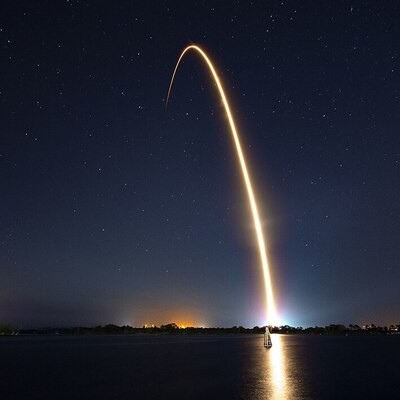
 Spaceflight 🚀
#ElectricPropulsion uses up to 90% less 📉 propellant than traditional, high-thrust chemical rockets. During tests, the #NASA JPL team achieved power levels of up to 120 kilowatts. That’s over 25 times 📈 the power of the thrusters on Psyche. The team aims to reach power levels between 500 kilowatts and 1 megawatt per thruster. A human 🧑🚀 mission to #Mars might need 2 to 4 megawatts of power, requiring multiple MPD thrusters https://www.jpl.nasa.gov/news/nasa-fires-up-powerful-lithium-fed-thruster-for-trips-to-mars/
#NASA will launch the #SpaceReactor1 Freedom, the first nuclear ☢️ powered #interplanetary spacecraft, to #Mars 🔴 before the end of 📆 2028. Nuclear #ElectricPropulsion enables high power missions beyond #Jupiter 🪐 where #solar arrays are not effective https://www.nasa.gov/news-release/nasa-unveils-initiatives-to-achieve-americas-national-space-policy/
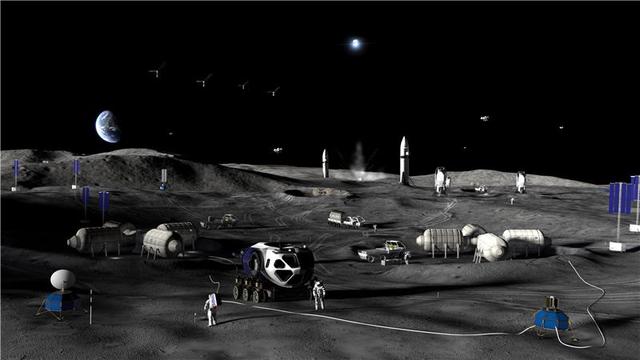
#GeneralGalactic’s water 💧 propulsion system could provide 5-10 times the Delta-V of traditional systems. For #chemical propulsion, it will use electrolysis to split water, then burn the hydrogen with oxygen as the oxidizer. For #electrical propulsion, it will split water and then apply sufficient electrical energy 🔋 to convert the oxygen into plasma. It will then use a #magnetic field to guide the plasma out of a thruster https://interestingengineering.com/space/satellite-using-water-powered-propulsion-system

“While we are still some years away from making #fusion energy a viable technology for #PowerGeneration on Earth, we don’t need to wait to start using this power source for #SpacecraftPropulsion” https://edition.cnn.com/science/nuclear-powered-rocket-pulsar-space-spc/index.html

To get enough fuel ⛽ into #orbit for a #Mars 🔴 mission would require at least 10 launches of the #SLS rocket, or about $20 billion 💰. Just for the fuel. To use traditional propulsion, one needs to push the boundaries of #reuse ♻️ and heavy lift rockets to extreme limits—which is precisely what #SpaceX is trying to do with its fully reusable launch system https://arstechnica.com/science/2021/02/report-nasas-only-realistic-path-for-humans-on-mars-is-nuclear-propulsion

#Space 🌌 is a far more logical, sensible place to do #fusion, because that’s where it wants to happen anyway. In 📆 2027, we’re going to send a small part of #Sunbird in #orbit. The first #functional Sunbird will be ready four to five years later. Sunbird could deliver #cargo to #Mars 🔴 in under six months https://edition.cnn.com/science/nuclear-powered-rocket-pulsar-space-spc/index.html
@ScottManleyHimself : Why #nuclear ☢️ rockets can beat #chemical rockets and #IonEngines https://www.youtube.com/watch?v=KlKAMB71wT4

Why Nuclear Rockets Are Going To Change Spaceflight
In an #electrospray thruster, charged particles are pulled directly out of a liquid propellant using a strong electric field and accelerated using charged #electrodes https://spacepropulsion.mit.edu/electric-propulsion
The #3Dprinted prototype was able to generate thrust more #efficiently than larger, more expensive #chemical rockets and outperformed existing droplet #electrospray engines. It can be produced rapidly and for a fraction of the #cost 💵 of traditional thrusters and even be fully made in #orbit 🌌 https://news.mit.edu/2025/mit-engineers-develop-fully-3d-printed-electrospray-engine-0212

MIT engineers develop a fully 3D-printed electrospray engine
MIT researchers demonstrated the first fully 3D-printed, droplet-emitting electrospray engine. The low-cost device can be fabricated more quickly than traditional thrusters, potentially from on board a spacecraft, and could enable CubeSats to perform precise, in-orbit maneuvers, aiding space research projects.
#MIT #OpenLearning, topic #SpacePropulsion, excerpt :
• Fundamentals and Definitions
• Basic #Electromagnetic Theory and Plasma Physics
• #Electrostatic Thrusters
• Characterization of Space Propulsion Devices
• #Plasma Accelerators
...
https://ocw.mit.edu/courses/16-522-space-propulsion-spring-2015/pages/lecture-notes/
