#Solar #Desalination Using #FresnelLens as Concentrated Solar Power Device: An Experimental Study in Tropical Climate
Wing Sum Choong, Zhi Yong Ho and Rubina Bahar, October 2020
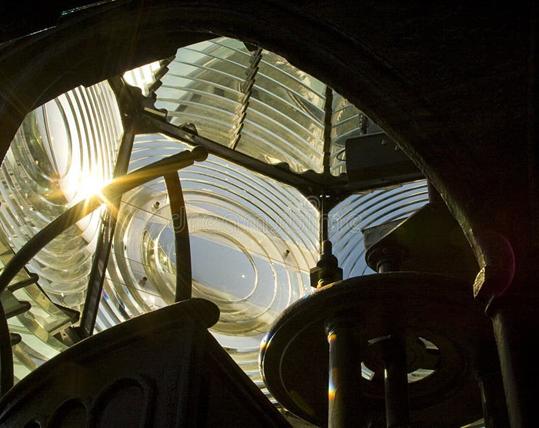
"Solar desalination is a renewable energy-driven method that produces freshwater from saline/brackish water. Conventional solar desalination units are equipped with an inclined transparent condensing plate placed over a feedwater basin containing saline water. The process is limited to a small quantity of production because of scattered solar irradiation and the unavailability of solar heat due to intermittent cloudy weather. In this study, a Fresnel lens has been used to concentrate solar energy onto a spot to increase the local temperature of feedwater and the evaporation rate. Flat Fresnel lenses on a double sloped passive solar still were used, where the focal points were adjusted to fall directly on the feedwater. The experiments were conducted for two different geometries and alongside the comparison between the conventional and the modified solar still; the number of Fresnel lenses was also varied. Saline solution with a concentration of 20,000 ppm was used as the feedwater. The research is aimed to be implemented for producing freshwater in the natural weather conditions of Malaysia. It was found that using two Fresnel lenses instead of a single large one gives a boost to the production of freshwater per unit solar irradiation by 39%. The produced water has a total dissolved solids (TDS) value of 37 ppm, which is well within the drinking water standard range according to the World Health Organization."
https://www.frontiersin.org/articles/10.3389/fenrg.2020.565542/full
#SolarConcentrator #SolarPunkSunday
 FreddyB Aviation Photography
 DoomsdaysCW