Many years ago in Trump alpha version, I had a twitter account called something like "1930s Reich Family" (I think I named the account "Magda und Detlev"). I posted replies to Trump and trumpish politicians as if I were a Good German Citizen in the 1930s. It was things like "Yes, Leader, we should fear the outsiders because it is clearly they who have taken our jobs, not our national economic policy". As you might imagine, it had zero interaction.

I felt daring posting those things, but (a) nobody noticed or cared, and (b) the things I posted then, which I thought were highly provocative, don't even register on the awfulmeter for the past year.

#birdsite #memories #slacktivism

Social Media Trains Us to Do Nothing

Social media is one of the key ways we interact with each other. I get to talk to my friend Chris regularly about life and code. I never would have met him without the connections that Twitter let me make years ago. Twitter helped me build a business by allowing me to get my name out in the WordPress ecosystem which let me meet local developers, who then referred work to me.

For all the good that social media has brought me personally, I’m not convinced that it’s a net good in society.

Facebook and Google ate all the ad revenue that used to support local journalism, so now we have news deserts which allows politicians to exert influence without fears of being found out. When there is no local journalist in your town that has the time to investigate what goes on in City Hall, corruption gets easier. Give that contract to your friend, no one is looking.

Social media is a mixed bag for teens with some good connections happening, but also plenty of time spent comparing your real world with the highlights of someone else. Boredom is viewed as a terrible thing to avoid, so we whip out our phones in every idle moment to see what the algorithm will bring us, harming the creativity that comes from idleness.

Take Back the Fight comes into this as we look at the trick social media and neoliberalism has played on us, making us think that a social media post in support of some cause is enough. We think that the whole minute we spent thinking of something pithy to say was all the time we had to devote to the issue. That this minute and the few digital bits we spent is as powerful as public resistance.

Sure that social media post was easy, but it doesn’t have the same power as getting out in the world and showing your resistance. It’s nowhere near the level of effort that a sustained campaign takes, but it makes us feel like we’ve done our job supporting a cause. When we default to an easy online action that affirms our inner dialogue that tells us we’re a good person, the system rejoices because nothing has to change. When we’re out in the street supporting a sustained campaign for change, the people in power get concerned because they may have to change.

Those in power want us busy so that we don’t have time for thought and action. They want us so busy that we’re grateful for the scraps they give to us out of their vast wealth. When we’re busy, overrun with misinformation campaigns1, that parade of lies distracts us from the truth making it easy to drift into nihilism.

Nihilism is exactly what the budding autocrat wants. They want us to give up trying to find the truth in a sea of algorithmic engagement bait. When the powerful flood the landscape with lies about those who oppose power they want us to question if some part of it is true. They want us to give up on the leaders of movements that are forcing change. They want us to give up demonstrating. They want us to give in and say nothing will change, so why bother doing anything. They want us to send a flippant social media post and feel like we’ve done the job of resistance.

Loreto asks us to look at the MeToo movement and the lack of systematic change it was able to make despite being a worldwide phenomenon. Yes a number of serial abusers were removed from their positions of power. Some were put in jail and we are a bit better at talking about sexual assault. The system that tolerates abusers remains mostly unchanged though2. Victims still have to battle with police to be believed that the abuse wasn’t asked for or agreed to. Many victims are still stigmatized after abuse, and spend years recovering without support. Rather than change society into one that no longer tolerates abusers, the onus is still on the abused to bring their story forward and to fight to be believed3.

That’s one of the points of the book, that if we want real change we need to connect with a social organization and get out in the streets to show our resistance. We need to put our bodies on the line, email and write our politicians. We need to make them feel uncomfortable in the halls of power so they fear being overthrown and are willing to make a change to the system to help everyone, instead of just those with the money to lobby.

Effective action is uncomfortable, but it is the only thing that has produced change that lasts. Gains around women’s control over their own bodies were not won through low-effort expressions of support or fleeting public sentiment. They were the result of decades-long organizing: letter writing, sustained public demonstrations, repeated pressure on politicians, and countless conversations that forced society to confront whose lives were being constrained and why. That work was slow, contentious, and exhausting. But it’s what worked worked precisely because it made the status quo impossible to ignore and the system had to change.

  • Autocracy Inc Pg 79 ↩︎
  • Take Back the Fight Pg 57 ↩︎
  • Take Back the Fight Pg 59 ↩︎
  • #activism #neoliberalism #slacktivism #socialMedia
    Blog

    The full blog of Chris Wiegman including all tutorials, posts and other articles by Chris Wiegman since 2008.

    Chris Wiegman
    Social Media Trains Us to Do Nothing
    Social media is one of the key ways we interact with each other. I get to talk to my friend Chris regularly about life and code. I never would have met him without the connections that Twitter let me make years ago. Twitter helped me build a business by allowing me to get my name out in the WordPress ecosystem which let
    https://curtismchale.ca/2026/01/11/social-media-trains-us-to-do-nothing/
    #BookClub #activism #neoliberalism #slacktivism #SocialMedia
    Social Media Trains Us to Do Nothing – Curtis McHale

    Luckily, the turnout was good at my local No Kings protest, and it looks like it may have exceeded the first nationwide!
    Aktivismus im Netz: Was bringen Online-Petitionen?

    Gefühlt jeden Tag sollen wir mit unserer Unterschrift die Welt retten. Aber was bringen Online-Petitionen wirklich?

    geo.de

    Kony Lingers

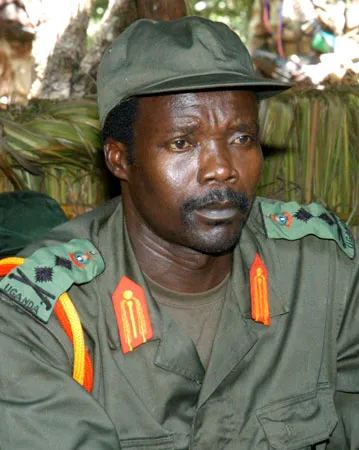
    Most people in the West had never heard of Joseph Kony.

    Head of the Lord’s Resistance Army, a Christian insurgent militia operating out of Uganda and elsewhere since 1987, Kony met all international definitions of a terrorist warlord. Cutting a swathe through the region, the LRA soon became notorious for mass atrocities, kidnapping, and the deployment of child soldiers – mostly to the ambivalence of the “First World.”

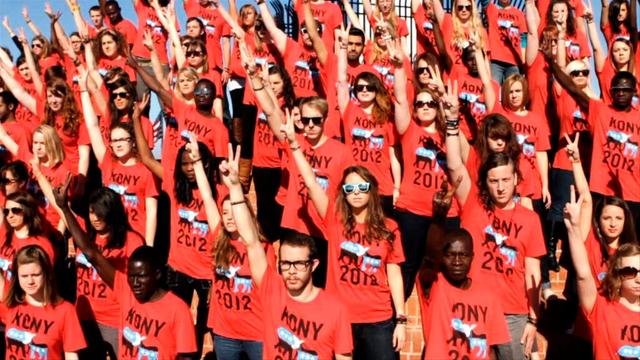
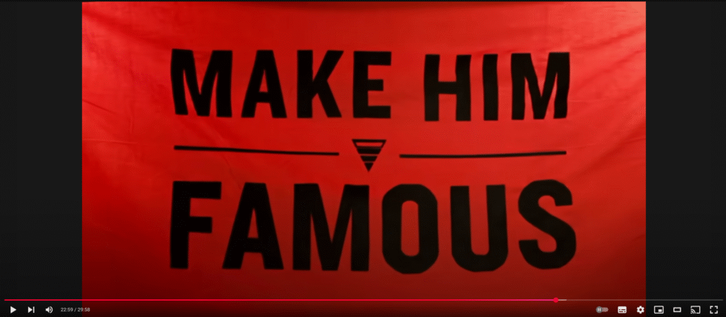
    In March 2012, the charity Invisible Children dropped a documentary on YouTube. Directed by Californian Jason Russell with intent to make the warlord famous, KONY 2012 was expertly crafted to provoke action across the Internet. Exposing the brutal consequences of Kony’s campaign while demanding shares, retweets and easily digestible hashtags-du-jour to amplify its reach.

    Framed as a “Social Experiment”, a phrase beloved of demagogues and charlatans alike, the viral video was a ploy to recruit a youth army of its own. Appealing to the burgeoning Fifth Estate of independent bloggers and online activists, SocMed’s nascent influence was exploited to “raise awareness” against the perceived complicity of traditional journalism’s Fourth Estate.

    Well-meaning campaigners eagerly stood up to be counted, declaring support for the cause and holding their representatives to account. Proudly proclaiming the power and privilege of the Internet to tame a land barely connected. Denying agency to those most affected, by demanding something, anything, be done to internationally intervene against this terrible injustice.

    Except Kony had been driven out of Uganda six years prior.

    Although it can be argued that the video was successful in its aim, given it is literally still being discussed, such success was ultimately for the wrong reasons. It faced widespread rebuke from across Africa for focusing on the filmmakers, while reducing those actively impacted by the violence to little more than narrative props. Their suffering a stage for the morality play of the modern age.

    Nigerian author Teju Cole dubbed this technocratic conclusion to Kipling’s burden the White Saviour Industrial Complex: a banality of sentiment as insincere as it is self-aggrandising.

    As with most performative advocacy, the cause was never the concern. The horrors of the world an ever-churning backdrop for hysterical hubris. Pearls clutched and frenzy stoked in a praxis of pretence, coerced and consumed by the next most-terrible thing in the ceaseless cycle of clickbait.

    And yet, all remain helpless. Judging one another for not caring enough, damning those who fail to perform and conform to the herd-instinct of passionate intensity. Keeping up the appearance of objective good, despite having no quantifiable impact or influence beyond the spite directed at those they deem less informed.

    In every epoch of technology, the novelty of new media outpaces our capacity to reason and reflect. The printing press bore propaganda, and film empowered fascism. From grim experience, we learn to distrust the old as yesterday’s clumsy manipulation – yet the bright new stars of today are assumed to only shine true. We accept without question, and condense the complexities of the world into the feel-good scintilla of SocMed slacktivism.

    Without hard, ugly, genuine action to break the inertia of online outrage; and a will to listen to and empower those most affected, merely sharing the latest injustice for clicks and likes does not serve a greater purpose.

    It just desensitises everyone to the next.

    A short while after the video’s release, Russell was allegedly found naked. Wandering his San Diego neighbourhood in a frenzy of his own, vandalising vehicles while fervently palpating his turgid member. He was placed under care for a psychotic break, and Invisible Children eventually handed their work over to local organisations in 2014.

    Joseph Kony remains at large.

    https://heathenstorm.com/2025/06/05/kony-lingers/

    #DigitalManifesto #africa #fifthestate #invisiblechildren #jasonrussell #josephkony #kony2012 #praxis #slacktivism #socialmedia #technology #tejucole #uganda #whitesaviourindustrialcomplex
    ACTIVISMO DE SOFÁ? desde ese sofá se han tumbado reputaciones, proyectos, negocios, marcas, gobiernos y leyes en los últimos 10 años, y cada vez tiene más protagonismo. #activismodigital

    En mi opinión, negar el peso de las redes sociales hoy en día sólo puede ser una excusa (consciente o no) para no hacerlo. Obvio necesita de una acción en la "realidad" pero supone una ayuda innegable para conseguirlo.

    El único peligro que le veo es que a su vez sirva de excusa para no actuar más allá por tener la sensación de haber hecho lo suficiente. Pero creo que es preferible que al menos se hable de ello que no hacer nada. Y si estás hablando de ello también será más difícil que tú lo ignores

    En mi caso además, que soy un poco asocial a veces (y el resto del mundo creo que sigue mi misma tendencia...), me ha ayudado a buscar información del tema, como por ej. las marcas que cooperan con el demonio, convocatorias de manifestaciones, donaciones y grupos de apoyo.

    Sí, hablaba de Gaza.
    Hagamos más RUIDO

    #gaza #activism #palestine #slacktivism

    (Almost) everyone is watching, talking rubbish, commenting and reproducing what has long been obvious. !!! Including me !! Very few people do anything about it! This must be the famous #slacktivism. #showdonttell
    Bluesky

    Bluesky Social
    Hacktivism, Slacktivism, and (Cybertruck) Vandalism

    Which digital protest tactics are working, and which ones risk ending up as just another Instagram black square?

    Slate

    You Can't Post Your Way Out Of Fascism
    Yes, but also maybe
    You Can't End Fascism Without The Posts

    #thoughts #slacktivism #socialmedia #IncompleteThoughts #gatekeeping #fascism