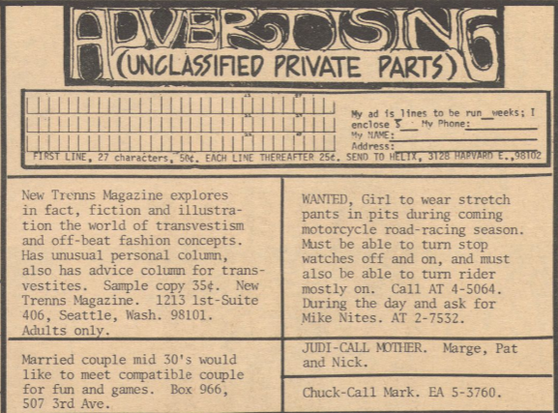
"WANTED, Girl to wear stretch pants in pits during coming motorcycle road-racing season. Must be able to turn stop watches off and on, and must also be able to turn rider mostly on."

from the classified ads in Helix, a #Seattle underground newspaper, February 1968. The others are rather spicy too....

#counterculture #1960s #sexualrevolution #trans #Motorcycle #motorcycles #culturalhistory #historyofsex #feminism #washingtonstate #pnw #leftcoast

The 6 Best Books I Read in 2025 (Nonfiction + Fiction that Stuck)

In 2025 I got back to reading a book a week by finishing 53 books, after a few years of being busy and not reading as much as I had hoped. I know that a book a week is an arbitrary number, but when I get to read that much I feel like I’m doing what I want with my time, instead of doom scrolling.

Today we’ll go over 3 non-fiction and 3 fiction books that I’d recommend from the year.

Join book club to read with me and get weekly emails about books.

Non-fiction

Corporate Control

This was my hardest book to pick because I read a bunch of books about how the world has moved towards a world that isn’t there for the regular people living in it, but is there to serve rich people and corporate interests. Autocracy Inc. looked at how democracies are moving towards autocracies, and while it was published just before Donald Trump took office, it clearly demonstrates how the steps he’s taking are turning the US from a democracy to an autocracy that Trump wants to rule. At the Trough was a short book that took a look at corporate greed and the corporate welfare state in Canada.

But Corporate Control was a full treatment of the corporate welfare system that is run in Canada. Where businesses get massive subsidies to bring jobs to your city. But the projects rarely get finished, and if they do the jobs are usually far less than predicted, then the profits get funnelled to investors out of your city, and country, to enrich other communities.

In the midst of this we saw headlines of Stellantis withdrawing its construction of subsidized battery plants due to Trump’s tariffs after getting billions in subsidies from various levels of Canadian government to bring jobs to Windsor. Unlike previous times where corporations have bailed with government money to pad their profits this time the Canadian Government is going to enforce penalties by reducing tariff quotas. It remains to be seen if anything comes of the threatened legal action, but I’m happy to see the Canadian government having some backbone with corporations.

This, along with Dark PR show how deeply embedded all corporations are with government subsidies. They’re profits are often provided by taxpayers subsidizing parts of the business, so that those same taxpayers can pay for the product in a world where pricing is increasingly out of reach of many.

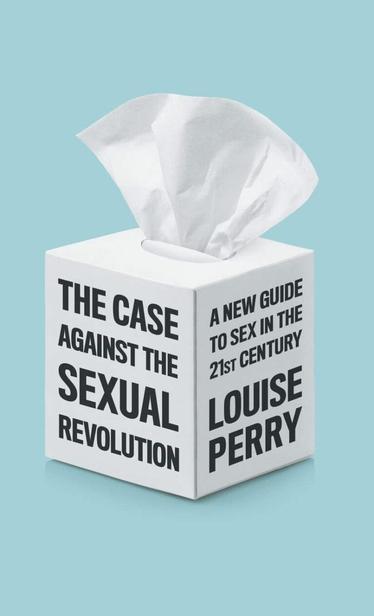
The Case Against the Sexual Revolution

While the sexual revolution brought some good things, Louise Perry contends that many of those good things were for men and harm women in the long run. While it make look like freedom was won for women, it was mostly the freedom to enhance the sexual lives of men.

Much like Of Boys and Men, Perry contends that we shouldn’t worry about just women or how we can all be free, we should be working towards the well being of both men and women. This is a well being that is sometimes in tension, with both groups desiring things on opposite ends of a spectrum.

There is a strong push back against neoliberalism here, much like the current book club read Take Back the Fight, with the recognition that neoliberalism pushes ultimate freedom for all, which isolates us from each other as we each pursue our own ideal possibly at the expense of those around us. Yes it’s good to reduce the stigmatization of women that have sex with multiple partners, but that reduction has also promotes a sexuality that suites the likes of Hugh Hefner and other highly sexually active men at the expense of the well being of women.

Perry ends the book with some basic rules for sex that summarize her earlier arguments. First, take sex seriously. It’s not some throw away activity equivalent to brushing your teeth. It’s serious and should be entered into with serious thought about the long term impact any encounter may have on your life.

Otherwise, we need to stop the idea that violence in sex couched as BDSM is okay. If a man can hold an erection while abusing a woman, he’s not a trustworthy man.

Meditations for Mortals

This book helped me come to the realization that read later is mostly garbage. You’re not going to read it later, you’re just going to store the link and most people are going to feel bad about the continued increase in links they’re never going to read. That got me to change how I collect interesting links with regular deletion being a key factor to keeping the list down.

The big thrust of this book is that so much goes by us and we need to recognize that we’ll never get to everything that seems interesting. We should simply get to the stuff we get to, and let the rest pass us by.

In fact, most of your life is outside of your control, so stop worrying about all the stuff you can do nothing about. Let it go and control the few things that you can control.

With this realization you can start to spend your time on the things you enjoy, instead of what everyone else thinks you should spend your time on. While this sounds like the neoliberal ideal of the singular person focused solely on their gratification, Burkeman doesn’t push this idea. He does acknowledge that if you have kids you’re going to need to spend time doing things with them even when maybe you don’t want to. This time with your kids is a good thing. Burkeman is simply encouraging you to give up on all the stuff the wider culture says is important so you can focus on the few things that you find important.

Fiction

The Faded Sun Trilogy

No this isn’t a single book, it’s a trilogy written in the 1970’s that I’ve read the most out of any series I own. Part of that is because it’s not nearly as long as anything from the likes of Brandon Sanderson or Neil Gaimon, making it easy to read the series over the holiday season.

The Faded Sun is about the survival of the mri species, a humanoid warrior/adventurer that hires itself out to other species to help them explore. The mri have lately been in the employ of the regul, a merchant race that’s fairly immobile. As part of this employ the mri have battled humans and once the regul started seeing losses of regul they took over the battle and ordered hundreds of thousands of mri to death to save small assets they couldn’t bear to part with.

We pick the story up at the end of the war, where regul have bartered a treaty with humans for peace. The mri are now an unknown quantity and the regul are terrified they’ll take hire with humans going forward.

In the first book we watch the story unfold on Kestrith, a hard world that has reduced the mri to about a dozen people on world. Their last ship shows up with around 500 mri, the last mri out of the millions that set out from their homeworld to explore.

The second book is mostly bound to a single ship that has been cast through space back along the track of the mri exploration out from their homeworld. We realize that they’re hundreds of thousands of years old as a species. They’re exploration alone has covered this time, let alone the time they existed on their home planet before they started travelling. The lone human on their ship works to learn their exacting ways as he expends all that he his to help ensure the survival of the species.

The final instalment takes place on Kutath, the original homeworld of the mri. It bears a striking resemblance to Kestrith, and if anything is even harder. It’s mostly dessert, and while there are massive cities of unbelievable beauty, this is a mostly dead ancient world. Here we find the rest of the mri that are alive and finish the battle for their survival under the treacherous eyes of the regul, and the confused humans.

I loved the series yet again.

All Systems Red

I watched Murder Bot on AppleTV this year and enjoyed the story, I even found a high school theatre mate had a decent sized part in the show. This follows Murder Bot, a security bot that has hacked his governor module so he could go rogue and kill everyone if he wanted.

He saves his employers from monsters on the planet, and then from another on world expedition that is killing.

I enjoyed the dry humour of Murder Bot, and the slightly bumbling but loving scientists that break through is utter boredom and contempt with humanity to turn it into a machine caring for his employers.

My Friends

Fredrik Backman does it again, serving readers a tragic but also uplifting tail that brought me to tears. This was by far the one I thought was going to end in all tragedy, but had a strong light at the end of the tunnel as community was formed in the midst and via the heart wrenching tragedy found throughout the book.

You should read his other books A Man Called Ove and Anxious People both of which I can recommend highly enough.

#autocracy #readLater #scienceFiction #sexualRevolution
The 6 Best Books I Read in 2025 (Nonfiction + Fiction that Stuck)
In 2025 I got back to reading a book a week by finishing 53 books, after a few years of being busy and not reading as much as I had hoped. I know that a book a week is an arbitrary number, but when I get to read that much I feel like I'm doing what I want with m
https://curtismchale.ca/2026/01/10/the-6-best-books-i-read-in-2025-nonfiction-fiction-that-stuck/
#3Threads #autocracy #ReadLater #ScienceFiction #SexualRevolution

📚 Julius Fromm brachte 1916 das erste Markenkondom auf den Markt.

• • Fromm wurde im Ersten Weltkrieg reich.
• • Er geriet ins Blickfeld der Nazis.

https://www.deutschlandfunk.de/julius-fromm-kondom-fabrikant-unternehmer-100.html

#JuliusFromm #Kondome #Geschichte #Deutschlandfunk #ErsterWeltkrieg #Sexualrevolution

Julius Fromm, das nahtlose Markenkondom und die erste sexuelle Revolution in Deutschland

Julius Fromm brachte 1916 das erste Markenkondom auf den Markt und sorgte so für eine sexuelle Revolution. Doch am Ende verlor er seine Firma - sogar zweimal.

Deutschlandfunk

What We Lost When We Made Sex Casual

Next moth’s book is Autocracy Inc. Sign up to book club to get all the discussion on it free.

This month’s book was The Case Against the Sexual Revolution by Louise Perry. Perry sets out to answer the question, was the sexual revolution good for women? Was it all good, all bad, what parts were good and what parts are harming women? By tackling this topic she’s breaking the feminist taboo she sees around discussion of the harms found in the sexual revolution1.

If I can summarize her argument, it’s that while The Pill and the loss of taboo around sex for women was a good thing because it gave women control over their reproductive futures and stopped them from being tossed from their communities, it was also harmful because the sexual norm now is tilted heavily towards what men prefer in sex which often harms women2.

What Are the Harms?

First Perry says that the lack of seriousness around sex, previously enforced by cultural taboos, forces women into a sexual culture where many of them feel like they have to have sex far earlier than they want, with more partners than they’d prefer. She says the liberal reduction of constraints around sex wants to equate getting coffee for a coworker with the same meaning as having sex with that coworker for a promotion3. When we hear sex vs coffee described like that it seems patently false that sex and a drink are on the same level.

Secondly Perry wants readers to acknowledge that men and women are physiologically different and these differences contribute to the sexual drives of both. Not just the differences in biology, but differences above the neck in how each gender desires and thinks of sex4. Men have a higher desire for more partners and more sex in general, where women generally prefer fewer partners and less sex than men do. She even when feminists accept physical differences between men and women, they refuse to acknowledge that these differences can exist above the neck5. Any differences in thinking must be because of culture and thus we can train it out of future generations.

Perry also argues that not all sexual desires are a good thing, in fact some are downright harmful. One poigant line reminds women that any man who can maintain an erection while causing you physical pain (BDSM) is not a safe man to be around6. She’s not as concerned with the language around consent in the BDSM community feeling that when your partner can usually kill you with their bare hands, as almost all men can do to almost all women7, is consent possible? Is consent possible when to participate in dating today women are continually pressured into [[hookups]] for a man to even pay any attention to them?

She concludes with the assertion that some of the sexual taboos of previous generations were a good thing and that we need to look far more favourably towards marriage again. She says that marriage is good for children8 and that outside of abusive relationships parents telling themselves that their children will be happier if they’re happy are lying to themselves. Divorced women see downward social mobility and between 1/3 and 1/2 of surveyed divorced adults in the UK wish they had stayed married9. Marriage is a good way to combine efforts for survival, and society today spends far too much time focusing on self-actualization as the goal of a marriage10.

Perry’s Solutions?

Perry ends her book with a number of rules for women based on the chapters she’s covered11.

  • don’t trust any person or philosophy that asks you to ignore your moral judgement
  • if he can maintain an erection while beating a women, he’s not safe, even if he uses the language of consent found in BDSM
  • dating apps can’t vet histories of potential dates so don’t trust them
  • only have sex with a man you think would be a good father. It only takes one mistake and he will become one

Thoughts?

In general, I do agree with Perry’s assessments. I acknowledge that I’m a guy and don’t experience any of the negatives that are present for women. If I had multiple sexual partners I’d gain social status, where women have a decreased social status12. When my wife and I decided to have children, I had sex and then my body was free while she had to bear the children.

I think that sex should be taken more seriously, and that while marriage can be great, looking to it for your main source of emotional fulfillment is a more recent cultural trap we’ve fallen into as community has broken down and many people have no other place to turn to.

Should You Read The Case Against the Sexual Revolution by Louise Perry

Yes, even if you read my summary and think you’ll strongly disagree with the author. A good thinker is willing to entertain viewpoints they don’t agree with and engage in a reasonable discussion about it13. Both Josh Szeps and Rutger Bregman talk about the taboo in liberal circles around questioning the handed down liberal ideology that is most virtuous.

We need to be more willing to engage with those not like us because most of them aren’t dumb. They may have come to different conclusions than we did, but they have real issues that should be addressed.

  • Pg IX ↩︎
  • Pg 10, 11 ↩︎
  • Pg 13 ↩︎
  • Pg 29 ↩︎
  • Pg 29 ↩︎
  • Pg 132 ↩︎
  • Pg 29 ↩︎
  • Pg 169 ↩︎
  • Pg 164 ↩︎
  • Much like it does treating work as a source of happiness for workers instead of just a job that pays the bills. Maybe we shouldn’t spend all our time hoping work will bring fulfillment and search for it in our communities. ↩︎
  • Pg 187 ↩︎
  • Pg 87 ↩︎
  • Yes there are exceptions like Nazi’s, fuck those people. ↩︎
  • #bookReview #sex #sexualRevolution

    Autocracy Inc – Anne Applebaum – Curtis McHale

    What We Lost When We Made Sex Casual
    Next moth's book is Autocracy Inc. Sign up to book club to get all the discussion on it free.

    This month's book was The Case Against the Sexual Revolution by Louise Perry. Perry sets out to answer the question, was the sexual revolution good for women? Was it all good, all bad, what parts were good and what parts are harming women?
    https://curtismchale.ca/2025/10/26/what-we-lost-when-we-made-sex-casual/
    #BookClub #BookReview #sex #SexualRevolution

    What We Lost When We Made Sex Casual – Curtis McHale

    The Case Against the Sexual Revolution – Louise Perry

    Perry's main argument is that while the sexual revolution liberated women from some of the taboo's of sex outside of marriage, it also brought many issues for women participating in sex.

    https://curtismchale.ca/book/the-case-against-the-sexual-revolution-louise-perry/

    #bookstodon #bookreview #sexualrevolution #sexism #feminism

    The Cost of Taboos, Freedom and Chronological Snobbery

    I wasn’t quite sure what I was getting into with The Case Against the Sexual Revolution in this month’s book club but I’d say that it surprised me from the outset with some excellent questions I’ve been mulling over recently.

    First, Perry talks about the taboo discussions of liberalism which I also recently encountered in Of Boys and Men. Second she got me thinking more about how unlimited individual freedom as the ideal in society probably doesn’t yield the best outcomes. Third, she introduced me to the idea of chronological snobbery as coined by C.S. Lewis.

    So let’s take a look.

    Taboo discussions

    The first idea I continue to bump up against is the idea that we have many taboo discussions if you want to be a progressive liberal. If you decide to ask if we really need to encourage all trans athletes to compete as their chosen gender or does that specifically harm any athletes that were born female and didn’t get the benefit of male testosterone levels during their development? In many circles asking this question instantly gets you blackballed. So we don’t have a wide ranging discussion about it to see how we can keep equity for women born as biological females and women identifying as their chosen gender later in life.

    Of Boys and Men took up this topic in it’s introduction, concluding that it is possible to hold two ideas in your head at once1. We can both be concerned and fight for the equality of women while also recognizing that some of our interventions have had an unintended side effect of severely disadvantaging men. If what we’re going for is equity, that consequence should be addressed at the same time as we continue to fight for equality for women.

    Instead of addressing this, Richard Reeves says that we label many problems males exhibit as toxic masculinity and then dismiss them as something men just need to deal with2. This is the same type of thinking that previous generations used to label some issues as ‘women’s issues’, and then discount them entirely.

    In fact we still suffer from much of this labelling of issues that more often affect women as merely women’s issues3 thus either not worth investigating, or far too much work to investigate so why bother. Turning the tables on men to label any issues affecting them as simply a result of toxic masculinity isn’t the answer though. This can easily turn men to role models like Andrew Tate and other influencers in the manosphere. Creating the conditions where these figures are the main influence over men, because they’re the only ones talking about issues that have arisen from the societal change towards more inclusion and stronger feminism4 is a fault of many voices on the liberal front who work to cancel someone that doesn’t virtue signal hard enough by agreeing with the leftist of Left positions.

    We should instead be willing to ask hard questions about what the benefits of our inclusivity revolution have been, and where it’s missed the mark and excluded portions of the population.

    Individual freedom as the ideal

    In Chapter 1 Perry argues that one result of liberalism breaking down the constraints of religion, family, and female sexuality5 has also resulted in the ideal that your individual freedom to do whatever you want is the ideal that we should be striving for. It is the ideal…ideal. She then asks, what do we loose when we make an individual’s freedom to do as they wish the ideal to strive for6?

    In her mind the removal of constraints on female sexuality attempts to manufacture a world in which the act of sex has as much meaning as drinking a coffee. It’s merely something you do for pleasure, or when you’re bored, or when you need some emotional support. Sex is merely a transaction with no more or less value than most of the rest of the transactions in your life7. In this world we have laws that show the lie of this transactional non-meaning filled view of sexuality.

    At work it would be perfectly acceptable for your boss to ask you to get a coffee, or even for a coworker to ask if you’d grab them one while you’re up. It is not deemed acceptable though if they asked you to have a quickie just to relieve a bit of stress before a meeting. The gut reaction to this scenario shows that coffee is merely a transaction, while sex should be taken seriously and is far more meaningful.

    Yet the constraint free version of sex often pushed by liberal thinkers wants us to believe that sex is merely a transaction to engage in on a whim with no strings attached.

    Chronological Snobbery

    While I didn’t have a word for it until reading Chapter 1, I experience chronological snobbery almost daily with my teenager. According to C.S. Lewis chronological snobbery is the uncritical acceptance that the intellectual climate of our own age is superior and right, while the previous generations intellectual climate was deeply flawed and highly incorrect8. I can see this acted out when I give my daughter advice and she looks at me like I’m an idiot because clearly my 45 years of experience with life is eclipsed by her 15 years and I just don’t know what I’m talking about.

    In the context of Perry’s writing she’s suggesting that some of the sexual constraints of previous generations may have produced better outcomes than our current view of a sexuality unmoored from any cultural conventions of previous generations. Specifically she argues that the unconstrained sexuality currently favoured serves the desires of men far more than it serves the desires of most women. Yet we can’t talk about that due to the first question of taboo discussions in a liberal world.

    Perry cites the [[Hugh Hefner]]’s of the world, who are happy to have sexually liberated women available to serve their sexual needs. Who no longer have to give any thought to consequences, specifically the consequence of pregnancy adding unwanted responsibility to a sexually active man.

    But if the premise of her chapter is true, that sex should be taken more seriously and is more meaningful than a transaction is true, then for most women sex has far more meaning and maybe should have some types of sexual taboo surrounding it. Maybe previous generations had some good ideas about what types of sex should not be had because if you’re not having that much or that type of sex, you’re going to have a better outcome long term.

    It’s too long let me sum it up

    I know, for many, we’re discussing very tough topics, and I don’t pretend to have all the answers. I’m a middle aged white dude, which makes me possibly the worst person to talk about this because of the shitty history men have, yet it’s a discussion that needs to be had.

  • Of Boys and Men Pg X ↩︎
  • Of Boys and Men Pg XII ↩︎
  • See Invisible Women for more on this ↩︎
  • Both of which I think are good things ↩︎
  • The Case Against the Sexual Revolution Pg 10 ↩︎
  • The Case Against the Sexual Revolution Pg 10 ↩︎
  • The Case Against the Sexual Revolution Pg 13 ↩︎
  • The Case Against the Sexual Revolution Pg 17 ↩︎
  • #liberalism #manosphere #sexualRevolution

    The Case Against the Sexual Revolution – Louise Perry – Curtis McHale

    The Cost of Taboos, Freedom and Chronological Snobbery
    I wasn't quite sure what I was getting into with The Case Against the Sexual Revolution in this month's book club but I'd say that it surprised me from the outset with some excellent questions I've been mulling over recently.

    First, Perry talks about the taboo discussions of liberalism which
    https://curtismchale.ca/2025/10/05/the-cost-of-taboos-freedom-and-chronological-snobbery/
    #BookClub #liberalism #manosphere #SexualRevolution

    The Cost of Taboos, Freedom and Chronological Snobbery – Curtis McHale