Ecology and Ecophysiology of New Brunswick Fishes: Insights from Atlantic wolffish and Salmonids
This Friday, April 10th, from 12:30 to 13:30 in Askja N-132, Chandler Stairs from the University of New Brunswick (Fredericton) will be presenting online:
#fridaybiology #fishes #salmonids #UIceland #NewBrunswick #Fredericton #ecology #ecophysiology
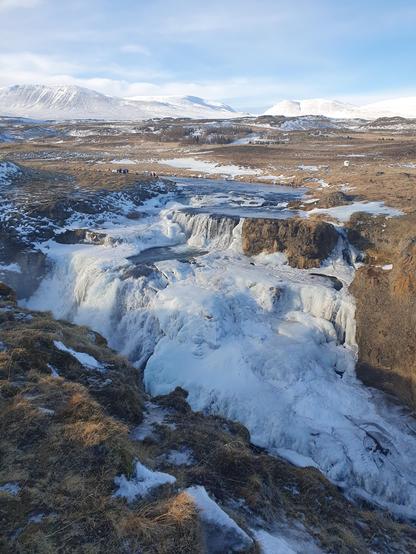
Picture of piscivorous charr (unrelated to talk)
The impact of salinity and temperature on growth and development of Arctic charr
January 30th 2026, from 12:30 to 13:30 in Askja N-130, Tómas Árnason from HAFRO will be giving his Midway PhD Presentation.
#Aquaculture #salmonids #salinity #growth #fish #iceland #MFRI #Hafro
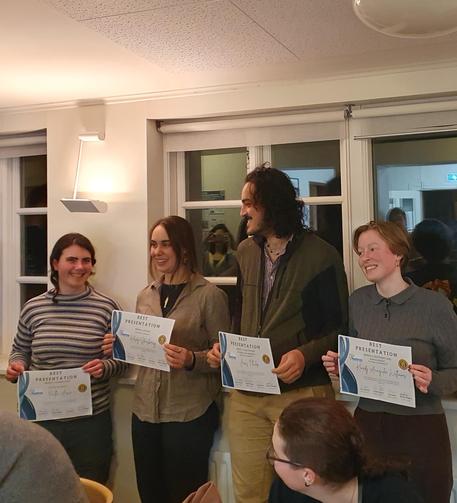
Poster session for limnology projects
4 groups
4 streams
4 research questions
#limnology #studentProject #salmonids #water #IcelandLisa Shama: Do you remember? Transgenerational plasticity to ocean climate change in marine stickleback
Antti Eloranta: Environmental drivers of food webs in high-latitude lakes.
Two talks by PHD examiners this week, May 8th 2025.
#ecology #evolution #transgeneration #epigenetic #plasticity #foodweb #stickleback #salvelinus #salmonids #universityIceland #iceland
https://english.hi.is/lisa-shama-and-antti-eloranta-talk-evolution-and-ecology
Lisa Shama and Antti Eloranta talk evolution and ecology.
"Im only happy when I swim"
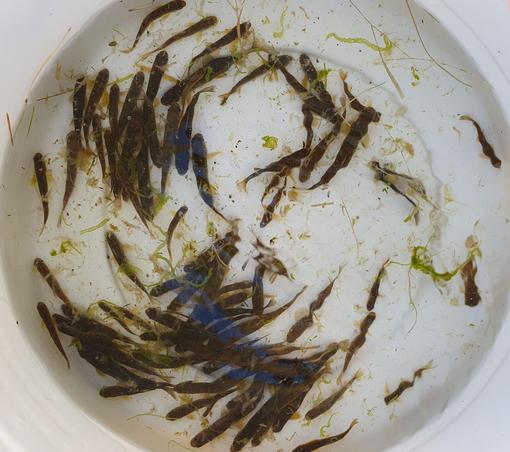
Juvenile dwarf charr from silungapollur spring
Guðbjörg studies their #morphology and #evolution
Focus on feeding bones like in
https://journals.plos.org/plosone/article?id=10.1371%2Fjournal.pone.0300359
#plosOne #salmonids #iceland #ecology

Diversity in the internal functional feeding elements of sympatric morphs of Arctic charr (Salvelinus alpinus)
The diversity of functional feeding anatomy is particularly impressive in fishes and correlates with various interspecific ecological specializations. Intraspecific polymorphism can manifest in divergent feeding morphology and ecology, often along a benthic–pelagic axis. Arctic charr (Salvelinus alpinus) is a freshwater salmonid known for morphological variation and sympatric polymorphism and in Lake Þingvallavatn, Iceland, four morphs of charr coexist that differ in preferred prey, behaviour, habitat use, and external feeding morphology. We studied variation in six upper and lower jaw bones in adults of these four morphs using geometric morphometrics and univariate statistics. We tested for allometric differences in bone size and shape among morphs, morph effects on bone size and shape, and divergence along the benthic-pelagic axis. We also examined the degree of integration between bone pairs. We found differences in bone size between pelagic and benthic morphs for two bones (dentary and premaxilla). There was clear bone shape divergence along a benthic–pelagic axis in four bones (dentary, articular-angular, premaxilla and maxilla), as well as allometric shape differences between morphs in the dentary. Notably for the dentary, morph explained more shape variation than bone size. Comparatively, benthic morphs possess a compact and taller dentary, with shorter dentary palate, consistent with visible (but less prominent) differences in external morphology. As these morphs emerged in the last 10,000 years, these results indicate rapid functional evolution of specific feeding structures in arctic charr. This sets the stage for studies of the genetics and development of rapid and parallel craniofacial evolution.
We investigated the effect of a fishway on the genetic structure of brown trout populations, finding that the fishway *increased* genetic structuring, we think because it enabled fish to move to their preferred spawning sites.
#OA https://onlinelibrary.wiley.com/doi/pdfdirect/10.1111/eva.13660
#trout #FishSci #PopulationGenetics #salmonids #BACI #FishPass #FreshwaterFish
Diversity in the internal functional feeding elements of sympatric morphs of Arctic charr (Salvelinus alpinus)
4 sympatric morphs
Variation in adult size, age and morphology...and their head bones.
Jónsdóttir GÓ, von Elm L-M, Ingimarsson F, Tersigni S, Snorrason SS, Pálsson A, Steele. SE. PLoS ONE 19(5): e0300359.
#charr #evolution #EvolutionaryBiology #salmonids #Iceland #Þingvallavatn
https://doi.org/10.1371/journal.pone.0300359
Diversity in the internal functional feeding elements of sympatric morphs of Arctic charr (Salvelinus alpinus)
The diversity of functional feeding anatomy is particularly impressive in fishes and correlates with various interspecific ecological specializations. Intraspecific polymorphism can manifest in divergent feeding morphology and ecology, often along a benthic–pelagic axis. Arctic charr (Salvelinus alpinus) is a freshwater salmonid known for morphological variation and sympatric polymorphism and in Lake Þingvallavatn, Iceland, four morphs of charr coexist that differ in preferred prey, behaviour, habitat use, and external feeding morphology. We studied variation in six upper and lower jaw bones in adults of these four morphs using geometric morphometrics and univariate statistics. We tested for allometric differences in bone size and shape among morphs, morph effects on bone size and shape, and divergence along the benthic-pelagic axis. We also examined the degree of integration between bone pairs. We found differences in bone size between pelagic and benthic morphs for two bones (dentary and premaxilla). There was clear bone shape divergence along a benthic–pelagic axis in four bones (dentary, articular-angular, premaxilla and maxilla), as well as allometric shape differences between morphs in the dentary. Notably for the dentary, morph explained more shape variation than bone size. Comparatively, benthic morphs possess a compact and taller dentary, with shorter dentary palate, consistent with visible (but less prominent) differences in external morphology. As these morphs emerged in the last 10,000 years, these results indicate rapid functional evolution of specific feeding structures in arctic charr. This sets the stage for studies of the genetics and development of rapid and parallel craniofacial evolution.
This is quite the salmon! 'O. rastrosus fossils have been found along the US west coast and Japan. It swam the North Pacific during the late Miocene (23–5.3 million years ago) and early Pliocene (5.3–2.6 million years ago).'
https://cosmosmagazine.com/history/palaeontology/largest-salmon-tusk-teeth/ #foodhistory #salmonids
Largest ever salmon had tusks, not sabres
Reanalysis of the largest salmon, which lived several million years ago, shows that it sported tusk-like teeth which might have been used for fighting.
 charrvein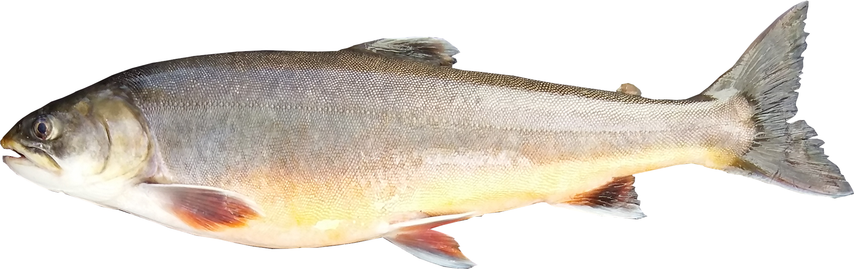
 Charrvein
 Domino Joyce
 GastroHistory