#AI designed a #couch that weighs 22 pounds and fits in an #envelope

“It was a provocation,” says Georgina McDonald of #Space10, the Copenhagen-based independent research and design lab behind the project. “It seemed maybe not achievable.” https://flip.it/YXAtCi

"#Space10 recently collaborated with video journalist #JossFong and designer #ÁronFilkey to explore the potential of using generative #AI for design. Instead of just starting from scratch with a publicly available generative AI model, the duo trained the #StableDiffusion image-generation model on Ikea catalogs from the 1970s and 1980s. "

#Ikea's #GenerativeAI #Furniture designs are trippy, retro, inspiring | #Design
https://www.fastcompany.com/90871133/ikea-generative-ai-furniture-design

Creativity in the Age of AI

YouTube

Oio and Space10 envision IKEA furniture that can evolve and adapt to users' needs

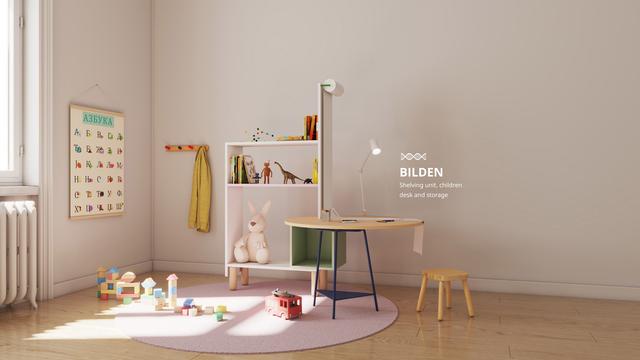
Furniture company IKEA and its research and design lab Space10 have worked with creative studio Oio to create the Updatables concept furniture, which would use artificial intelligence to tell owners how it can be updated.

Oio and Space10 imagined the Updatables furniture pieces being able to communicate when they were getting worn down and suggest adaptations to give them a longer life.

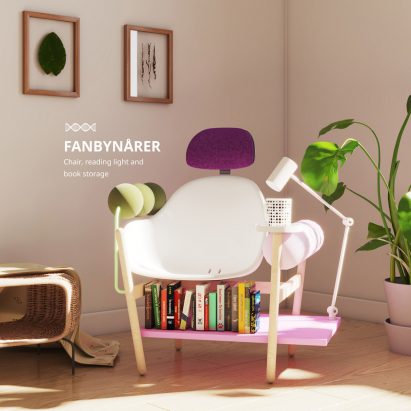
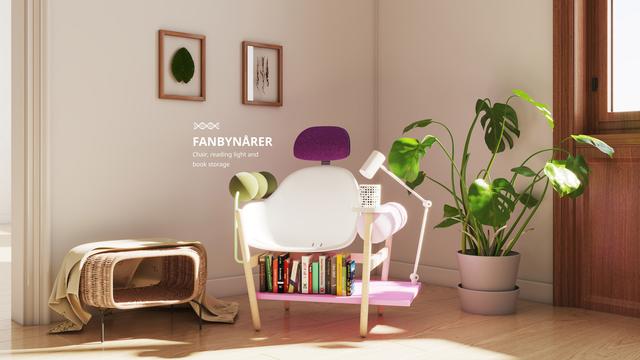
A chair could be turned into a chair-bookshelf hybrid

Users would scan the Updatables furniture using an app, which would use artificial intelligence to give the piece a voice to let its owner know its needs.

Augmented reality technology would be used to visualise how the furniture could be updated using extra parts from other pieces of IKEA furniture. For example, a simple chair could be adapted into a chair-bookshelf hybrid with an added reading light.

Updatable furniture would use parts from other IKEA designs

The conceptual idea would reduce waste, IKEA and Space10 said, as it would help people to better visualise how they could extend the life of their furniture.

"Unfortunately, many objects today are more easily disposed of and replaced than upgraded or downcycled," Oio co-founder Matteo Loglio said.

"We feel Updatables can help inspire people to reduce this waste by giving objects a renewed purpose," he added. "By also giving agency to the object, it can share its point of view and unlock a new relationship with us – one where nurturing it can allow it to become something else and grow with us."

The project would work by scanning the furniture with an app

Describing Updatables as "fully-fledged evolutions of existing IKEA furniture," Space10 said the app would use "an evolutionary algorithm – a piece of machine learning code inspired by biological evolution" to create the new furniture.

Each updated piece of furniture would be unique, with discarded parts added to a circular ecosystem from which they could be used by others for their furniture updates.

[

Read:

Space10 shares platform for people to create "dream home" for bees

](https://www.dezeen.com/2020/05/20/space10-open-source-bee-homes-design/)

"By connecting with people in this way and increasing the circularity of these items, sustainability would only increase," Space10 said.

"Updatables imagines a future where furniture evolves together with other members of the household, creating emotional connections with objects and encouraging a more thoughtful approach towards disposal and waste."

Repairing and changing the furniture could help reduce waste

The initiative is part of Everyday Experiments, an ongoing series by IKEA and Space10 that aims to challenge the role of technology in the home.

Space10 has previously worked with Mexican designers to showcase novel uses for local biomaterials, and it and IKEA also recently developed a series of open-source bee homes that anyone can design for free.

The post Oio and Space10 envision IKEA furniture that can evolve and adapt to users' needs appeared first on Dezeen.

#furniture #all #design #technology #ikea #space10 #conceptualdesign #ai

Five designers in Mexico exhibit new uses for biomaterials

An exhibition in Mexico curated in collaboration with Danish research lab Space10 has showcased five novel uses for local biomaterials.

Called Deconstructed Home, the exhibition was set up as part of a two-week programme organised by Space10, a research arm of IKEA. The lab gave five designers six weeks of experimentation and research to conceptualise "new possibilities and uses for a local biomaterial".

The materials ranged from beeswax to soil and the final projects will travel throughout Mexico after the initial exhibition at LOOT, a gallery in Mexico City, which took place 26 March to 9 April 2022.

"The recent pandemic has highlighted flaws in our global supply chain, and the ongoing climate emergency has revealed further issues with the way we manufacture and transport materials and products around the world," said Elsa Dagný Ásgeirsdóttir, lead creative producer at Space10.

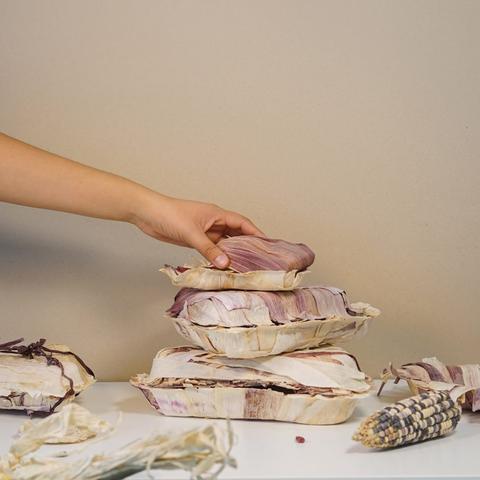
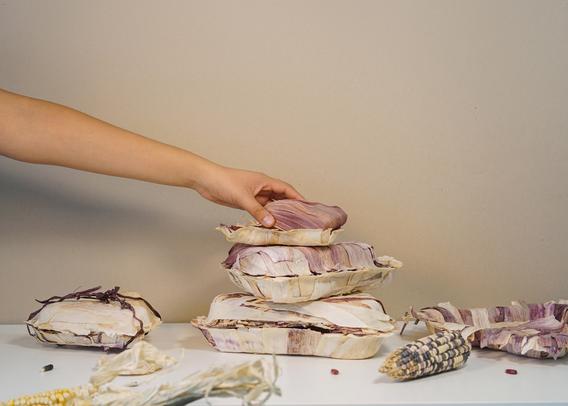
Articles of Protection by Taina Campos

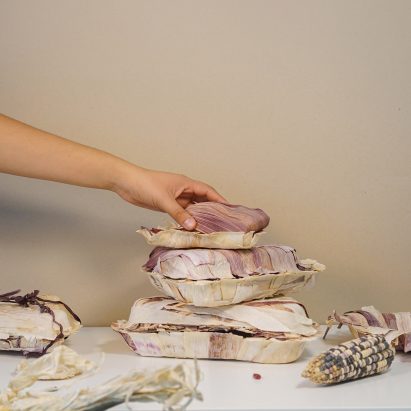
Taina Campos worked with corn from the Milpa Alta, a neighbourhood in Mexico City. The design brief required collaboration with Mujeres de la Tierra, a local community organisation.

The organisation helps women become financially independent through the selling of food and they wanted non-plastic vessels. Campos used waste from the corn harvest in order to produce these vessels for Articles of Protection.

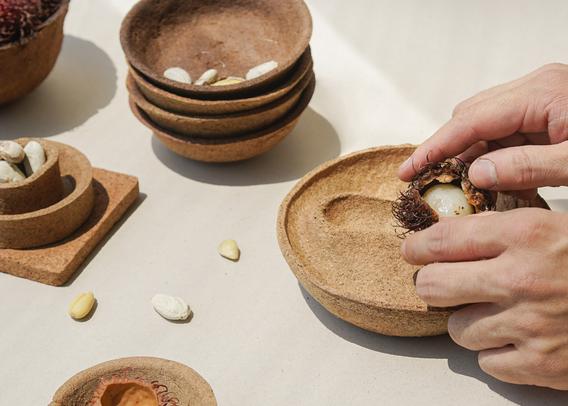
Migrating Objects by Bertín López

The rambutan is a plant native to southeast Asia that moved into Mexico in the 1950s.

Using the plant in the state of Soconusco, Bertín López came up with a line of home goods. The project shows the potential usages of migrating species that come to play a role in local ecosystems.

"What was once foreign has become part of the local identity," said López in a design statement.

Homes for Honey by Gabriel Calvillo

Taking note of the dwindling populations of the melipona, a stingless bee native to Yucatán, Calvillo drew on Mayan apiary techniques used for millennia.

The designer used beeswax from the bees to mould potes and piqueras for what he calls an "interspecies collaboration".

The structures are prefabricated hives that the bees can inhabit and then finish the construction.

Building with Earth by Karen Kerstin Poulain

Designer Karen Kerstin Poulain chose to work with the soil of Naucalpan for her project.

The result was a composite material made by combining tepetate (volcanic soil), water, rice husk in order to reduce energy usages and resource exhaustion in concrete while also taking advantage of agricultural waste.

"To build affordable housing, we need alternative methods and liquid soil has great potential," said the designer.

Weaving Heirlooms by Paloma Morán Palomar

This project uses the fibres of the tamarind in order to create a type of thread.

The husks of the tamarind are often discarded so Palomar, working in her native Jalisco, decided to use the thread to weave rugs.

By using the materials on top of traditional weaving techniques, the design manages to be novel in material usage while drawing on indigenous techniques.

The photography is byAlmendra Isabel.

The post Five designers in Mexico exhibit new uses for biomaterials appeared first on Dezeen.

#all #green #materials #design #technology #sustainabledesign #mexicocity #mexico #exhibitions #ikea #space10 #biomaterials

Space10 pop-up will explore how design can shape "a more desirable future"

Promotion: IKEA's research lab Space10 is hosting a two-week pop-up space in Mexico City, inviting visitors to "redefine what constitutes good design" in a world with climate change and rising inequality.

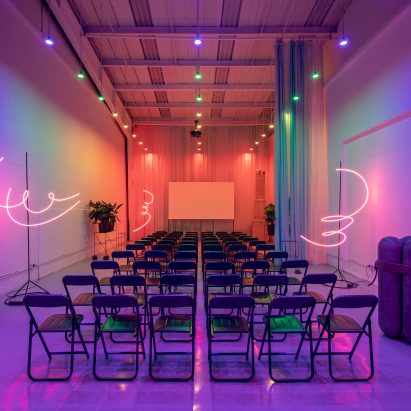
The pop-up takes place from 26 March to 9 April 2022 at the LOOT exhibition space in Roma Norte, Mexico City, where a series of talks, displays, hackathons, and other events will be held.

Focused around a theme called Beyond Human-Centred Design, the event aims to encourage people to reimagine how design and technology can be used to "build better conditions for a more desirable future".

Space10 is IKEA's research lab and is based in Copenhagen

"The biggest and most urgent creative challenge of our time is how we meet the needs and dreams of the many people while remaining within the boundaries of the planet," said Space10 co-founder Simon Caspersen. "We have 'undeliberately' designed ourselves into the mess we find ourselves in today."

"As such, the purpose of setting up Space10 in Mexico City is to create a platform where we can come together as a design community and discuss how we design our way out of it," Caspersen added. "It's pretty clear it's time we redefine what constitutes good design."

The pop-up space aims to "redefine what constitutes good design" in a world with climate change and rising inequality

A two-day hackathon is among the events set to take place at the pop-up, where visitors will brainstorm the ways that technology can be used to improve everyday life.

Space10 will also be launching the latest project, Updatables, from its platform Everyday Experiments at the event, which are focused on sustainable technology for the home.

On 28 March, Space10 will present Thinking Beyond Human-Centered Design, which explores the role of the designer and how collaboration can address complex challenges. Speakers include designer at MIT Media Lab, Edwina Portocarrero; industrial designer Gabo Calvillo; head of R&D at Isla Urbana, Mariana Balderas; and strategic designer and foresight strategist professor at CENTRO Jorge Camacho.

Space10 is carrying out research in Latin America on ways to create conditions for a more sustainable future

In the panel called Tomorrow's Technologies: Everyday Experiments, industrial designer and founder of Studio de la O José de la O and lead design producer SPACE10 Georgina McDonald will discuss how new technologies can be used for environmental sustainability and regeneration.

On 2 April Space10 will present Imagining a New Design Paradigm, which "addresses whether traditional design methods can solve the problems we face today, or whether it's time for an entirely new era of design thinking".

Panelists include design teacher and researcher Mariam Bujalil from Iberoamericana; new business and innovation deployment manager at IKEA, Nanette Weisdal; and executive design director and global lead for sustainability at Frog, Kara Pecknold.

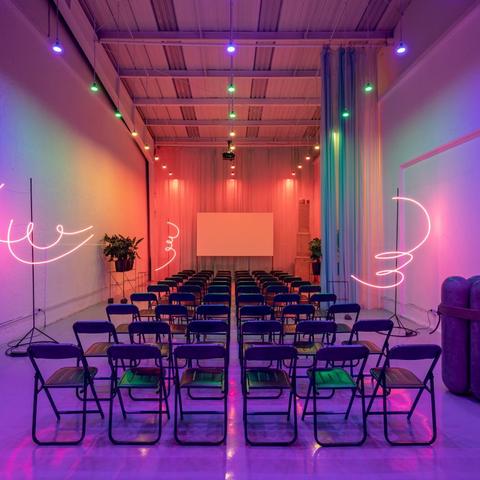
The pop-up will take place from 26 March to 9 April 2022 at the LOOT exhibition space in Roma Norte, Mexico City

The research lab has also teamed up with the multidisciplinary creative studio Niños Heroes to curate the design and layout of the space.

"Our aim is for the pop-up to be a laboratory of ideas for a new type of design thinking," said Space10's editor and curator, Jana Perkovic.

"Our hope is that the program in Mexico will provoke our collective imagination and help us qualify new opportunities, build new partnerships, and design new solutions, all while emboldening people from around the world to take action together for positive change," added Perkovic.

Based in Copenhagen, Space10 is currently carrying out on-ground research in Latin America on ways to create conditions for a more sustainable future.

The pop-up takes place in Mexico City and online

As part of its work in Mexico, Space10 will be hosting a six-week-long residency for five local designers, who will have the chance to explore the country's bio-materials with the support of the lab and material translator Seetal Solanki from Ma-tt-er.

The residency will take place both online and in Mexico City from 28 February to 9 April this year.

For more information on the pop-up program, visit Space10's website.

Partnership content

This article was written by Dezeen for Space10 as part of a partnership. Find out more about Dezeen partnership contenthere.

The post Space10 pop-up will explore how design can shape "a more desirable future" appeared first on Dezeen.

#all #design #promotions #mexicocity #climatechange #space10

SPACE10, IKEA's innovation lab, on designing 'the ideal city'

SPACE10, IKEA's research and design lab, has brought together a host of experts as part of a new publication titled 'the ideal city.'

designboom | architecture & design magazine
IKEA designs future autonomous cars that work as hotels, stores and meeting rooms

The furniture store’s design agency has dreamed up seven ways we might use autonomous vehicles if we don’t actually have to focus on driving.

I have a growing urge to build stuff in the physical realm. Today's urge is inspired by the #GrowRoom created by Danish organisation #SPACE10.
It's basically a wooden sphere for #UrbanGardening, that's also a tiny room for people.
And they've released the design under creative commons:
https://medium.com/space10-the-farm/space10-open-sources-the-growroom-aa7ca6621715