Die US-Handelsaufsicht
#FTC wirft
#Google Parteilichkeit bei
#Gmail-Spamfiltern vor. Angeblich werden konservative Spendenaufrufe gefiltert, während demokratische durchkommen. ##Soam
#Spamfilter https://winfuture.de/news,153298.html?utm_source=Mastodon&utm_medium=ManualStatus&utm_campaign=SocialMedia
US-Regierung droht Google wegen 'Zensur' durch Spam-Filter bei Gmail
Die US-Handelsaufsicht FTC stört sich an Googles Spam-Filtern. Angeblich werden bei Gmail Nachrichten von Spendensammlungen von konservativen Politikern ausgefiltert, während Mails von Vertretern der demokratischen Partei durchkommen. Damit lässt man Verschwörungstheorien aufleben, die schon ...
Heady Melt from the Mann, if not fully extended.
#phish #SOAM #phillymeltAnother perfect song for right now.
#Phish #SOAM#NetworkSovereignty #Commons-based/#mutualistic communities built on
#interdependency, shared public goods. In
#SOAM residence programme we explored collective data stewardship over profit.
#PublicGoods #Blockchain #Governance #Cosmolocalhttps://mdpi.com/1999-5903/16/10/361 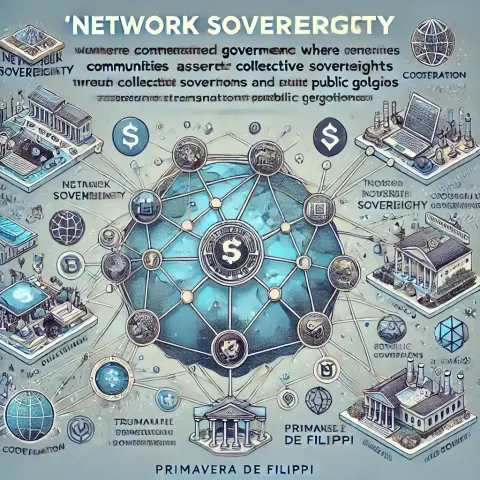

Decentralized Web3 Reshaping Internet Governance: Towards the Emergence of New Forms of Nation-Statehood?
This article explores how decentralized Web3 is reshaping Internet governance by enabling the emergence of new forms of nation-statehood and redefining traditional concepts of state sovereignty. Based on fieldwork conducted in Silicon Valley since August 2022, this article systematically addresses the following research question: How is decentralized Web3 reshaping Internet governance and influencing the rise in new nation-statehood paradigms? It compares three emerging paradigms around Web3: (i) Network States (Srinivasan), envisioning digital entities rooted in crypto-libertarian principles; (ii) Network Sovereignties (De Filippi), emphasizing communal governance aligned with digital commons; and (iii) Algorithmic Nations (Calzada), drawing on Arendtian thought and demonstrating how communities—such as indigenous and stateless groups, as well as e-diasporas—can attain self-determination through data sovereignty. This article contributes a unique conceptual analysis of these paradigms based on fieldwork action research in Silicon Valley, responding to evolving technologies and their potential to reshape Internet governance. This article argues that decentralized Web3 provides a transformative vision for Internet governance but requires careful evaluation to ensure that it promotes inclusivity and equity. It advocates for a hybrid approach that balances global and local dynamics, emphasizing the need for solidarity, digital justice, and an internationalist perspective in shaping future Internet governance protocols.
🗽#NetworkStates by
@balajis as
#Crypto-#Libertarian Worldview
#StartupSociety #TechnoSolutionism #Transactional Is this a exclusivist model?In
#SOAM Residence programme we analyzed potential responses
#Web3 #Blockchain #Governance https://mdpi.com/1999-5903/16/10/361
Decentralized Web3 Reshaping Internet Governance: Towards the Emergence of New Forms of Nation-Statehood?
This article explores how decentralized Web3 is reshaping Internet governance by enabling the emergence of new forms of nation-statehood and redefining traditional concepts of state sovereignty. Based on fieldwork conducted in Silicon Valley since August 2022, this article systematically addresses the following research question: How is decentralized Web3 reshaping Internet governance and influencing the rise in new nation-statehood paradigms? It compares three emerging paradigms around Web3: (i) Network States (Srinivasan), envisioning digital entities rooted in crypto-libertarian principles; (ii) Network Sovereignties (De Filippi), emphasizing communal governance aligned with digital commons; and (iii) Algorithmic Nations (Calzada), drawing on Arendtian thought and demonstrating how communities—such as indigenous and stateless groups, as well as e-diasporas—can attain self-determination through data sovereignty. This article contributes a unique conceptual analysis of these paradigms based on fieldwork action research in Silicon Valley, responding to evolving technologies and their potential to reshape Internet governance. This article argues that decentralized Web3 provides a transformative vision for Internet governance but requires careful evaluation to ensure that it promotes inclusivity and equity. It advocates for a hybrid approach that balances global and local dynamics, emphasizing the need for solidarity, digital justice, and an internationalist perspective in shaping future Internet governance protocols.
Ask and I shall receive...
#soam
I have no idea how Fishman makes it through this song.
#SOAMWho else is making soup and dancing to
#SOAM? 🙋🏼♀️ Just me?
#CouchTour #Phish WinFuture.de
 Phewstepsaway 🌹
 KNS “just relax, you’re doing fine”
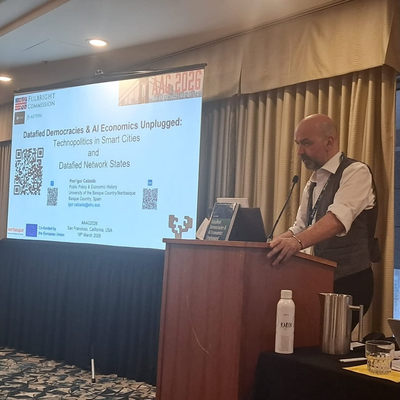 ICalzada
 bobocubed
 CavChris
 just relax, you’re doing fine
 Blue Emu