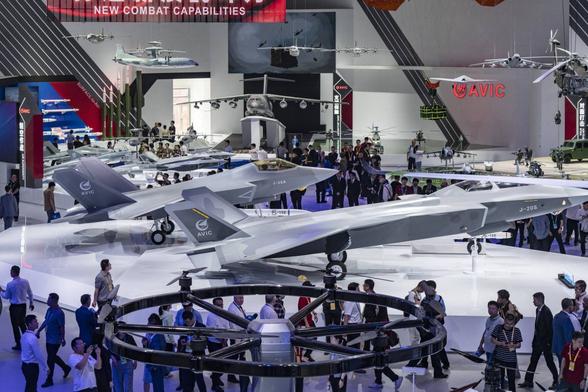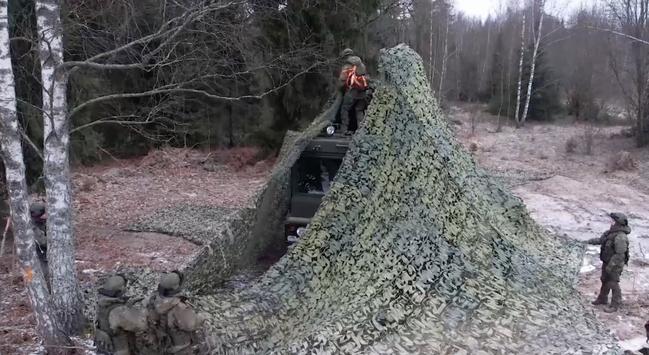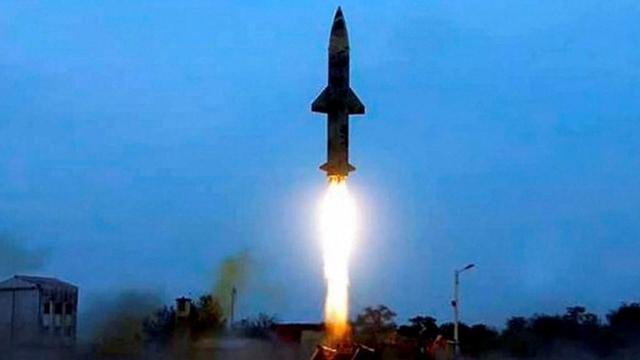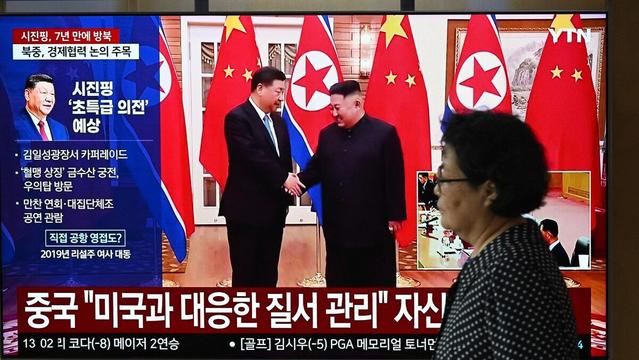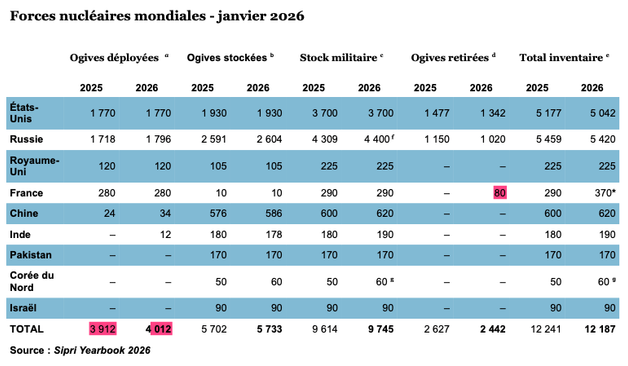
SIPRI raporları, küresel silahlanmanın hızlandığını net bir şekilde ortaya koyuyor. Türkiye, savunma yolunda yerli üretim ve stratejik ortaklıklarla altyapıyı güçlendirmekte. Bu hamleler, uzun vadeli istikrar için kritik.
pov
What are the factors that drive the rise in global military spending? TRT World reports about SIPRI's latest figures. Watch the full discussion with #SIPRI Researcher Lorenzo Scarazzato here:
https://youtube.com/watch?si=Xy2jnsfqIcPUD2J0&v=7BXwH43zdSI&feature=youtu.be

Global Military Spending Surges And Reaches Record High
“DEFENSE NEWS” By Linus Höller
“Global military spending reached a new record of almost $2.9 trillion in 2025 − the 11th consecutive year of growth according to new data published by the Stockholm International Peace Research Institute.
The main engine of growth was Europe, where expenditure surged 14% to $864 billion − the highest level SIPRI has ever recorded for the continent.”
________________________________________________________________________________________________________
“Global military spending reached a new record of almost $2.9 trillion in 2025 − the 11th consecutive year of growth − even as the United States recorded its sharpest single-year decline in decades, according to new data published by the Stockholm International Peace Research Institute.
The main engine of growth was Europe, where expenditure surged 14% to $864 billion − the highest level SIPRI has ever recorded for the continent and, among NATO’s European members, the fastest annual increase since 1953. Germany crossed the 2% of GDP threshold for the first time since 1990, with spending rising 24% to $114 billion; Berlin has since pledged to reach 3.5% by 2029. Spain’s military budget leaped 50% to $40.2 billion, also crossing 2% of GDP for the first time since 1994, while Poland spent 4.5% of its GDP on defense − the highest burden among all NATO members.
The pattern repeated itself in Asia and Oceania, where combined expenditure rose 8.1% to $681 billion, the region’s sharpest increase since 2009. China’s spending grew 7.4% to an estimated $336 billion, marking its 31st consecutive annual increase. Taiwan posted a 14% jump to $18.2 billion − its largest rise since at least 1988 − as Chinese military exercises around the island intensified. Japan’s $62.2 billion budget represented 1.4% of GDP, the highest military burden the longtime pacifist country has carried since 1958.
Russia and Ukraine, now in the fifth year of war, continued to expand their military outlays. Russia allocated an estimated $190 billion − 7.5% of GDP and a record 20% of total government expenditure − while Ukraine spent $84.1 billion, equivalent to a staggering 40% of GDP and 63% of government spending.
The overall 2.9% real-terms increase is the smallest annual rise since 2021, though that’s largely an accounting artifact. The dynamic is almost entirely explained by Washington’s failure to approve new financial military assistance for Ukraine during the year − aid that SIPRI counts as part of the donor country’s expenditure. U.S. spending fell 7.5% year over year to $954 billion, primarily because no new supplemental appropriations for Ukraine-related Defense Department support were passed in 2025, compared to a cumulative $127 billion approved over the previous three years. Outside the United States, global military spending grew by 9.2%.
SIPRI researchers were blunt about the outlook: “The decline in U.S. military expenditure in 2025 is likely to be short-lived,” said program director Nan Tian. Congress has already approved over $1 trillion for 2026, with a potential further rise to $1.5 trillion in 2027 if President Donald Trump’s latest budget proposal passes.
In addition to providing the latest numbers, SIPRI researchers also raised a concern about transparency. The June 2025 NATO summit raised the alliance’s spending target to 5% of GDP by 2035, with up to 1.5% points of that allowed to cover loosely defined “defense- and security-related” expenditures. Researchers warned that vague definitions risk incentivizing “creative accounting” and cited Italy’s reported attempt to count the cost of constructing a bridge to Sicily as military-related spending as an illustration of the problem. Because NATO does not publish disaggregated data, independent verification is becoming increasingly difficult.
Total NATO spending reached $1.581 trillion in 2025, equivalent to 55% of the global total −a figure that, SIPRI cautioned, may not accurately reflect the alliance’s actual operational military capacity.”
Global military spending surges and reaches record high
ABOUT THE AUTHOR:
Linus Höller is Defense News’ Europe correspondent and OSINT investigator. He reports on the arms deals, sanctions, and geopolitics shaping Europe and the world. He holds master’s degrees in WMD nonproliferation, terrorism studies, and international relations, and works in four languages: English, German, Russian, and Spanish.
#STOCKHOLMINTERNATIONALPEACERESEARCHINSTITUTE #NewRecordGlobalMilitarySpending #SIPRIAgenzia Nova: Business news: Arabia Saudita, Sipri, nel 2025 spesa militare a 83,2 miliardi di dollari
03 mag 05:00 - (Agenzia Nova) - Nel 2025 l'Arabia Saudita ha aumentato dell'1,4 per cento la propria spesa militare, raggiungendo 83,2 miliardi... (Res)
Business news: Saudi Arabia, SIPRI, military spending to reach $83.2 billion in 2025
May 3 05:00 - (Agenzia Nova) - In 2025, Saudi Arabia increased its military spending by 1.4 percent, reaching $83.2 billion... (Res)
Agenzia Nova: Business news: Sipri, Algeria e Marocco ai primi due posti Nord Africa per spesa militare nel 2025
03 mag 05:00 - (Agenzia Nova) - La spesa militare dei Paesi del Nord Africa ha raggiunto i 35 miliardi di dollari nel 2025, con un aumento... (Res)
Business news: SIPRI, Algeria and Morocco rank first and second in military spending in North Africa for 2025.
May 3, 5:00 AM - (Agenzia Nova) - Military spending by North African countries reached $35 billion in 2025, with an increase...
#SIPRI #Algeria #Morocco #first #second #NorthAfrica #AgenziaNova #NorthAfrican
Agenzia Nova: Business news: Turchia, Sipri, spesa militare in crescita del 7,2 per cento nel 2025, +94 per cento rispetto a 2016
03 mag 04:00 - (Agenzia Nova) - La spesa militare della Turchia ha raggiunto i 30 miliardi di dollari nel 2025, con un incremento del 7,2 per... (Tua)
Business news: Turkey, SIPRI, military spending up 7.2% in 2025, +94% compared to 2016
May 3, 4:00 - (Agenzia Nova) - Turkey’s military spending reached $30 billion in 2025, an increase of 7.2 per...
Agenzia Nova: Business news: Iraq, Sipri, spesa militare 2025 in aumento dell'1 per cento a 6,4 miliardi di dollari
03 mag 04:00 - (Agenzia Nova) - La spesa militare dell'Iraq si e' attestata a 6,4 miliardi di dollari nel 2025, con un incremento dell'1 per... (Irb)
Business news: Iraq, SIPRI, military spending 2025 up 1% to $6.4 billion
May 3, 4:00 AM - (Agenzia Nova) - Iraq’s military spending reached $6.4 billion in 2025, with a 1 percent... (Irb)
Il nuovo rapporto SIPRI colloca l'Italia al dodicesimo posto mondiale per spesa bellica: 48,1 miliardi di dollari, +20% in un solo anno. Con le risorse questo incremento (8,8 miliardi di euro) di sarebbero potuti assumere 30 mila nuovi medici (3 miliardi) e azzerare le liste di attesa (5 miliardi).
https://www.peacelink.it/disarmo/spese-militari-italiane-rapporto-sipri

Il nuovo rapporto SIPRI colloca l'Italia al dodicesimo posto mondiale per spesa bellica: 48,1 miliardi di dollari, +20% in un solo anno. Con le risorse questo incremento (8,8 miliardi di euro) di sarebbero potuti assumere 30 mila nuovi medici (3 miliardi) e azzerare le liste di attesa (5 miliardi).
Deutschland hat 2025 unter allen europäischen NATO-Mitgliedern die höchsten Militärausgaben verzeichnet (+24 %, SIPRI). Zeitgleich schwächt die Bundesregierung das Vergaberecht.
Transparency Deutschland warnt: Wo mehr öffentliche Mittel fließen, sind starke Kontrollmechanismen unabdingbar. Die Erfahrungen aus der Maskenaffäre zeigen, welche Risiken entstehen.
#Vergaberecht #Transparenz #Antikorruption #SIPRI #Rüstungsausgaben #Bundesregierung