SWANSEA: Rain gardens spreading through Sandfields streets as second phase of flood-busting scheme takes root

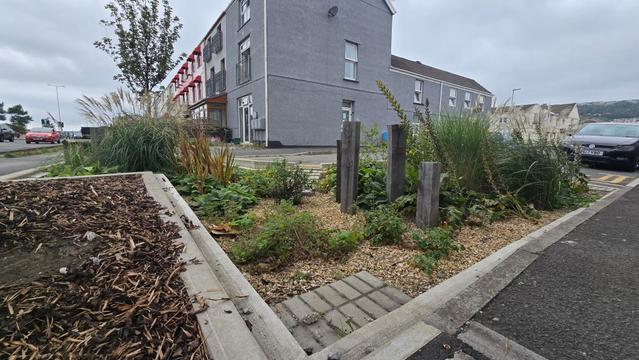
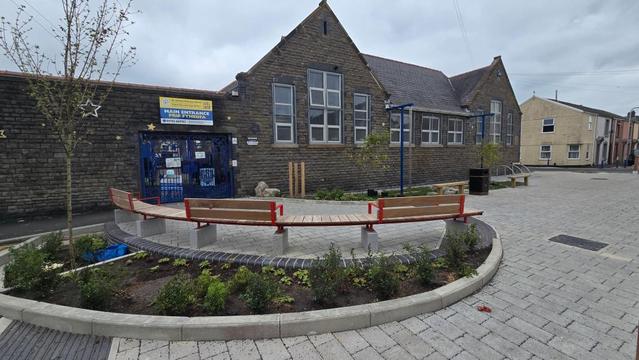
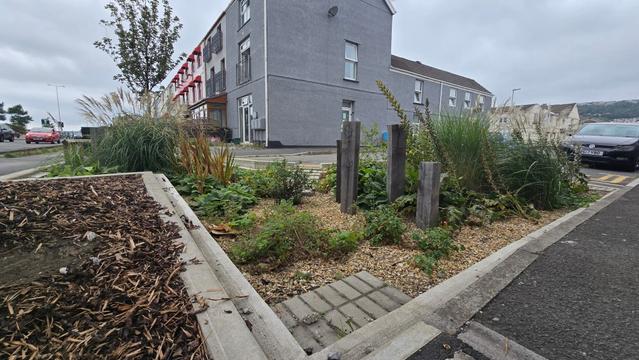
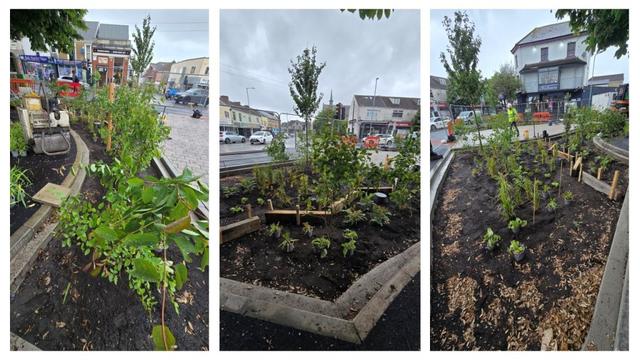
Swansea’s rain garden programme is expanding, with new planting and pedestrian improvements now under way at Phillips Parade and Rodney Street in the Sandfields and St Helen’s area — adding to work already completed outside St Helen’s Primary School.

The scheme was first installed outside the school last year, where trees and shrubs were planted to soak up surface water after heavy rain, alongside improved paving and dropped kerbs to help pupils, parents and residents get around on foot, by bike or by scooter. The latest phase extends those improvements to new locations across the neighbourhood, with a further rain garden also installed at the end of Burrows Road, adjacent to Oystermouth Road.

Rain gardens work by capturing water runoff from roads and pavements before it can pool or cause flooding. The plants, shrubs and specially designed soil absorb the water, filtering out pollutants before they can reach local waterways — protecting the ecosystems that depend on them.

They also provide year-round food and shelter for pollinators including bees and butterflies, and bring seasonal colour to streets that might otherwise feel hard and grey. The combination of flood mitigation, biodiversity benefit and improved aesthetics in a single scheme has made rain gardens an increasingly popular tool for councils looking to improve urban environments on limited budgets.

The improvements form part of Swansea Council’s bid to introduce better walking and cycling infrastructure across the city, following a successful grant application to the Welsh Government’s Active Travel programme. Earlier reporting revealed that around £160,000 was invested in the first phase of the Sandfields scheme, with additional funding drawn from the Welsh Government’s Local Places for Nature fund and Natural Resources Wales.

The latest works were developed with community regeneration experts Urban Foundry, who worked with residents and local businesses to shape the plans. Consultation with the community was carried out before work began, with the scheme designed to reflect local needs and priorities.

Urban Foundry — who are also behind the recently opened Swansea Pottery Collective studio on Alexandra Road — have become a familiar presence in projects that look to transform underused or underperforming spaces across Swansea city centre and surrounding areas.

Stuart Davies, Head of Service for Transport and Highways at Swansea Council, said the measures were delivering a range of benefits for local communities. “These innovative measures are providing local communities with a range of benefits where links between streets for walkers and cyclists are improved,” he said.

“The introduction of rain gardens also provides a green and sustainable solution for spots within communities where standing water can occur during heavy rainfall,” he added.

The Sandfields programme is one of several active travel and green infrastructure projects the council has been delivering across the city. Previous coverage has highlighted similar improvements elsewhere in Swansea, as the council works towards its wider vision of developing greener spaces, cleaner air and lower carbon emissions in communities across the city.

The rain garden and active travel work in Sandfields follows a pattern that has been replicated across south-west Wales — with Carmarthenshire councils also receiving funding in the same grant rounds to deliver drainage and active travel improvements in their communities.

Work is ongoing at Phillips Parade, Rodney Street and Burrows Road. Residents can expect the planting to develop through the coming months as the gardens establish — with the full colour and wildlife benefits expected to be most visible by late summer and into autumn.

Related stories from Swansea Bay News

Rain gardens installed to tackle flooding in Swansea’s Sandfields
Our coverage of the first phase of rain garden installations outside St Helen’s Primary School.

Rain gardens and car park revamps: £100k drainage grants to tackle flooding in Swansea and Carmarthenshire
The grant funding behind the Sandfields scheme and similar projects across south-west Wales.

City streets’ new green feature aims to help combat climate challenge
Earlier coverage of Swansea’s green infrastructure ambitions.
#ActiveTravel #BurrowsRoad #floodPrevention #flooding #OystermouthRoad #PhillipsParade #rainGarden #RodneyStreet #Sandfields #StHelensRoad #Swansea #SwanseaCouncil

🌱 Building a rain garden isn't just about aesthetics—it's a powerful way to manage stormwater and support local wildlife.

Here's how to get started: • Design a depression in your yard to capture runoff.

• Choose native plants that thrive in wet conditions.

• Layer your plants for visual interest and biodiversity.

https://ukpavingtalkgroup.com/go/nmwx

#RainGarden #SustainableLandscaping #StormwaterManagement #NativePlants #EcoFriendlyGardening #WildlifeHabitat #GardeningTips

Rain gardens and car park revamps: £100k drainage grants to tackle flooding in Swansea and Carmarthenshire

Swansea streets in line for rain gardens

Swansea Council has scooped grants to draw up plans for rain gardens and other drainage features around Beach Street, St Helen’s Road and the Brynymor Street junction. The aim is to cut down on surface water flooding in busy city streets and stop polluted run‑off pouring into drains and streams.

Carmarthenshire car parks targeted

Carmarthenshire County Council will use its share of the cash to design drainage improvements at Llandovery Castle car park and Newcastle Emlyn car park. Both sites have long struggled with flooding, and the new schemes are intended to stop dirty water flowing into the Tywi and Teifi rivers — both protected Special Areas of Conservation.

Schools join the fight against flooding

The charity Trees for Cities has also been awarded funding to design drainage projects at three schools — St Cadocs, St Illtyds and Glyncoed — where rain gardens and other SuDS features could help keep playgrounds and classrooms dry while boosting biodiversity.

Sandfields shows what’s possible

The new funding comes hot on the heels of a rain garden already installed in Swansea’s Sandfields area, where planters and green drainage features have been used to soak up excess water and reduce flooding risk for residents. The Sandfields scheme has been hailed as a practical example of how sustainable drainage can transform urban streets — turning problem flood zones into greener, more resilient spaces.

Rain garden installed outside St Helen’s Primary School in Sandfields, Swansea, designed to reduce flooding and boost biodiversity.
(Image: Swansea Council)

Backed by Welsh Government

The grants, worth between £15,000 and £30,000 each, come from the Welsh Government’s Nature and Climate Emergency Capital Programme, which also supports peatland restoration, mine clean‑ups, fisheries and national forests.

“Greener, more resilient communities”

Helen Haider, Lead Specialist Advisor at Natural Resources Wales, said:

“These grants will help the five projects move another step towards creating greener, more resilient communities. Sustainable urban drainage solutions can help us tackle both climate and nature emergencies — reducing surface water flooding, pollution and enhancing biodiversity.”

Related stories from Swansea Bay News

Rain gardens installed to tackle flooding in Swansea’s Sandfields
New green infrastructure helps soak up surface water and reduce flood risk for residents and schools.

Swansea Council launches green infrastructure strategy
New plan outlines how the city will use nature‑based solutions to tackle flooding, heat and biodiversity loss.

#BeachStreet #BrynymorStreet #Carmarthenshire #CarmarthenshireCouncil #CarmarthenshireCountyCouncil #flooding #LlandoveryCastleCarPark #NewcastleEmlynCarPark #NewcastleEmplyn #rainGarden #RiverTeifi #RiverTywi #Sandfields #StHelensRoad #Swansea #SwanseaCouncil #TreesForCities
Fall Into Foliage at Chadwick Arboretum North’s open house Sunday

Chadwick Arboretum & Learning Gardens will host a Fall Foliage open house Sunday. The open house will take place from 1 to 4 p.m. at Chadwick Arboretum North — located at 2235 Fred Taylor Dr. — featuring live tours every hour.  The event features a Buckeye Crepes food truck, a scavenger hunt, music from local […]

The Lantern

Rain gardens installed to tackle flooding in Swansea’s Sandfields

The largest scheme is outside St Helen’s Primary School, where trees and shrubs are being planted in a purpose‑built garden to help soak up surface water after heavy rain. Improved paving and dropped kerbs have also been added to make it easier for pupils, parents and other residents to get around on foot, by bike or scooter.

The council said the work is part of a wider programme to enhance active travel routes across Swansea, backed by Welsh Government’s Active Travel fund and other public and charitable grants. Around £160,000 has been invested in several Sandfields locations, focusing on closing gaps in pedestrian and cycle connections where streets end in cul‑de‑sacs.

Andrew Stevens, Cabinet Member for Environment and Infrastructure, said: “The funding we have secured for walking and cycling, in the main, is used to create new routes that connect communities, enabling people to travel in a more sustainable way.

“Some of this year’s settlement has also been directed towards the introduction of sustainable and innovative measures that not only make it easier for people to walk and cycle but also introduce green infrastructure within local communities. This is a great way of enhancing local communities, encouraging civic pride in where they live, as well as developing better sustainable transport links for those living there.”

A further rain garden has been created at the end of Burrows Road, next to Oystermouth Road. Rain gardens capture run‑off from roads and pavements, reducing the risk of flooding, filtering out pollutants before they reach waterways, and providing habitat for pollinators year‑round.

Cllr Stevens added: “Rain gardens are a great way of tackling minor flooding issues that can occur in streets. They help to capture excess surface water and boost biodiversity in urban areas when shrubs and plants are included in the design.”

#ActiveTravel #CllrAndrewStevens #floodPrevention #flooding #rainGarden #Sandfields #StHelenSPrimary #Swansea #SwanseaCouncil

Spent the morning sowing seeds for our Knob Hill Native Plant Gardens. I'm trying to grow Buttonbush from seed - if it sprouts, this shrub will go in our future #RainGarden.

Rain gardens collect and filter stormwater, reduce flooding, and provide habitat and food to wildlife.

#WinterSowing

Know Your Insects & Save Them, Too: The North American Giant Stag Beetle - CleanTechnica

The new TV series A Real Bug's Life peels back the cover on the secret life of insects, including a never-before-seen Stag Beetle smackdown.

CleanTechnica
Know Your Insects & Save Them, Too: The North American Giant Stag Beetle - CleanTechnica

The new TV series A Real Bug's Life peels back the cover on the secret life of insects, including a never-before-seen Stag Beetle smackdown.

CleanTechnica
Know Your Insects & Save Them, Too: The North American Giant Stag Beetle - CleanTechnica

The new TV series A Real Bug's Life peels back the cover on the secret life of insects, including a never-before-seen Stag Beetle smackdown.

CleanTechnica
Know Your Insects & Save Them, Too: The North American Giant Stag Beetle - CleanTechnica

The new TV series A Real Bug's Life peels back the cover on the secret life of insects, including a never-before-seen Stag Beetle smackdown.

CleanTechnica