Transforming DataFrames in Python: Adding Cumulative Upper and Lower Values
Supercharge your DataFrame manipulation skills in Python! Learn how to add cumulative upper and lower values to your DataFrames for efficient analysis. We'll show you a practical example using Pandas, avoiding complex loops for large datasets. #DataFrameManipulation #PythonPandas #DataAnalysis #DataScience #PandasDataFrame #CumulativeValues
https://tech-champion.com/data-science/transforming-dataframes-in-python-add...

Python Pandas EBCDIC: Importing cp500 Encoded Data
Smoothly handle legacy data encoded in EBCDIC using Python Pandas. Learn efficient methods for importing & processing this data, ensuring data integrity. #PythonPandas #EBCDICencoding #DataScience #LegacyData #Python #PandasDataFrames
https://tech-champion.com/database/db2luw/python-pandas-ebcdic-importing-cp500-encoded-data/
Setting Up a Python 3.10 Virtual Environment with Pyenv and PyO3 on Macbook pro Silicon M1: A Step-by-Step Guide
In preparation for the PyData Amsterdam 2024 workshop on writing Python modules in Rust, I set up my development environment to ensure smooth sailing. If you
https://www.hylkerozema.nl/2024/09/17/setting-up-a-python-3-10-virtual-environment-with-pyenv-and-pyo3-on-macbook-pro-silicon-m1-a-step-by-step-guide/
#PythonPandas #PyDataAmsterdam2024 #pyenv #pyenvvirtualenv #pyo3 #Rust
Setting Up a Python 3.10 Virtual Environment with Pyenv and PyO3 on Macbook pro Silicon M1: A Step-by-Step Guide – Hylke Rozema

Unlock the power of financial data analysis with Python Pandas! Learn essential techniques for inspecting stock market data, understanding data structures, and generating key statistics. #FinancialAnalysis #PythonPandas #DataScience

https://teguhteja.id/mastering-financial-data-analysis-python-pandas/

Mastering Financial Data Analysis with Python: A Deep Dive into Pandas

Financial Data Analysis with Python Pandas. Master data inspection, structure analysis, and summary statistics for better.

teguhteja.id
Setting Up a Python Streamlit Environment on a Synology NAS
In this post, I will walk you through the process of setting up an environment for running Python Streamlit scripts on a Synology NAS as part of my exper
https://www.hylkerozema.nl/2024/05/26/setting-up-a-python-streamlit-environment-on-a-synology-nas/
#Database #LiveUpdates #PythonPandas #BashScripting #DataEngineer #DevOpsEngineer #mongodb #NAS #PackageManagement #Python #SSH #SSHManagement #Streamlit #Synology #SystemEngineer
Setting Up a Python Streamlit Environment on a Synology NAS – Hylke Rozema

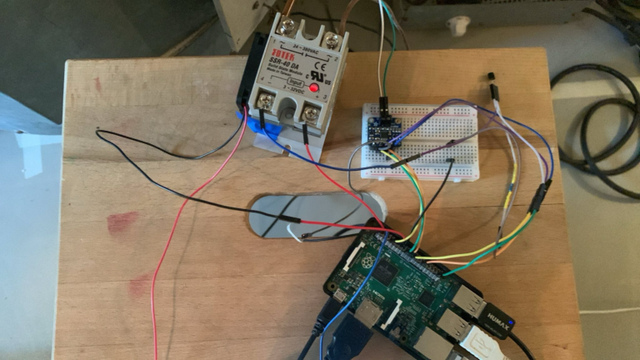
Raspberry Pi controlled kiln (part 2)
In my previous post on making a raspberry pi controlled kiln I reached the point with a script running on my Raspberry PI to measure the temperature and manually switch on and off the kiln. On a first attempt I wasn't able to make the master repo
https://www.hylkerozema.nl/2024/05/04/raspberry-pi-controlled-kiln-part-2/
#Ceramic #LiveUpdates #PythonPandas #blinka #ceramic #kilncontroller #MAX31856 #Python #raspberrypi #Solidstaterelay #thermocouple
Raspberry Pi controlled kiln (part 2) – Hylke Rozema

I need to make a fixed-width text file from a Pandas DataFrame.

I followed a suggestion to use to_string method. I built out my solution only to find it adds a space between the columns in the output. A fixed-width file means each column must be an exact number of characters. I literally can't make the file I need with to_string.

Making a fixed-width text file is a very easy task in SAS. Trying to do this with Pandas has been extremely frustrating.

#PythonPandas #SASProgramming

Spent ages today trying to figure out why the dates in my series weren’t being handled correctly by #PythonPandas to_datetime function.

The default error function for invalid parsing is to raise an exception, and two other values can be set.

The documentation says:

- If 'coerce', then invalid parsing will be set as NaT.
- If 'ignore', then invalid parsing will return the input.

I took ‘ignore’ to mean that an invalid value within a series would be skipped.

It turns out the *entire input series* is skipped, returning the original, unmodified series.

But the *opposite* is true for ‘coerce’, which returns NaT for the invalid value in the series, and processes the valid values.

It felt unintuitive, to say the least (maybe just me?). And I find it odd that there’s not a ‘skip’ option?

Re-reading the docs with the knowledge of what the function actually does, it kinda makes sense? But doesn’t feel sufficiently clear.

Yesterday I learned about, and got to use, one of my favourite #Python #Pandas methods: cumsum.

You cumsum once, and then you cumsum more!

Other top contenders include cumprod, and cummin, but I didn’t get to use those 😂

#PythonPandas

Okay this is kind of absurd but I guess a learning experience. Merging lots of data in #Python using #PythonPandas and a couple hundred frames in, it slows to a crawl. 15+ min and I abort.

Instead do batch processing of a hundred files a piece, then merge the resulting Parquet files again. Less than five minutes.

#TIL