Genetic Structure and Differentiation of Hyla savignyi from the Southern Population in Anatolia - #microsatellite #Anatolia #crypticspecies #Hylasavignyi #populationgenetic #Hyla - https://link.springer.com/article/10.3103/S0095452725010050
Genetic Structure and Differentiation of Hyla savignyi from the Southern Population in Anatolia - Cytology and Genetics

Abstract Genetic diversity and population structure of two populations of Hyla savignyi in Southern Anatolia (İskenderun; Hatay and Bozova; Şanlıurfa) were evaluated using twelve microsatellite loci. The alleles per locus ranged from 3 (Ha-B5R3) to 15 (Ha-T67) for İskenderun (Hatay) and ranged from 2 (Ha-B5R3) to 17 (Ha-T67) for Bozova (Şanlıurfa). The mean number of private alleles was found to be 2.5 and 1.83 for İskenderun (Hatay) and Bozova (Şanlıurfa), respectively. Genetic diversity parameters are nearly the same for the two localities. All two populations of H. savignyi showed no significant excess heterozygosity (p > 0.05) according to three bottleneck test models (IAM, SMM, and TPM). The SMM and TPM found significant heterozygosity deficiency in the İskenderun (Hatay) population and the Bozova (Şanlıurfa) population according to the SMM model. According to Structure analysis, two distinct clusters exist in Southern Türkiye. Previous researchers in H. savignyi mention cryptic speciation and the occurrence of two lineages in the Middle East. This study is the first population genetic study that revealed genetic differences and similarities between these two lineages.

SpringerLink

Join our lab at University of Zurich #UZH!

#PhD #Position in #Molecular #Ecology and Aquatic #Biodiversity

Details: https://apply.refline.ch/673277/1112/pub/en/index.html

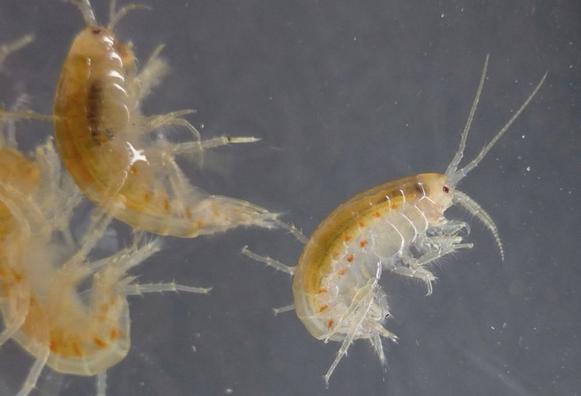
Become part of a larger team on studying taxonomy, genetic biodiversity & ecosystem role of #amphipods.
#PopulationGenetic #DNA
Apply by Dec 10. Please share widely! 1/3

PhD-Position in Molecular Ecology and Aquatic Biodiversity (4 years)

The Altermatt lab at the Department of Evolutionary Biology and Environmental Studies (IEU) at University of Zurich and the Department of Aquatic Ecology at Eawag has a vacancy for a

Eawag

Last week was a productive week! We have two new preprints published back to back with my dear collaborators Peter and Misha.

In the first one, we derived analytically the distribution of distances between heterozygous sites along the human genome. We can use this result to infer the demographic history of a population from a single unphased genome.
#PopulationGenetic #evolution

The preprint is here: https://www.biorxiv.org/content/10.1101/2023.09.20.558510v1

By means of a new method, FitCoal, scientists inferred a remarkable super-bottleneck in the (pre)human population, Homo heidelbergensis, some 1M yrs ago: it seems that for some time (100K yrs!) there were just 1000 people in the world. Full details here:

#Paleoanthropology
#PopulationGenetic
#HumanOrigins

https://www.biorxiv.org/content/10.1101/2021.05.16.444351v3.full.pdf

For any #popgen #scientists, the 56th @popgroup meeting is still accepting abstracts until the 30th Nov: there are still talks & poster slots available!

It will be hybrid: attend from the comfort of your home or witness glorious #London 🌆

Read more at populationgeneticsgroup.org.uk

#populationgenetics #PopulationGenomics #populationgenetic #Genomics #EvolutionaryGenetics #EvolutionaryGenomics please recommend me more tags to get this spread!


The online version of our recent paper on Molecular Ecology is now available.
https://onlinelibrary.wiley.com/share/PASCXNNXSRMQD6IZ9U8I?target=10.1111/mec.16760
We combined existing #microsatellite data with new #SNP -based #microhaplotypes obtained with #RADseq from archived samples of Rio Grande silvery minnow (Hybognathus amarus) across a 20-year time series, comprising bottlenecks and high inputs from hatchery, to evaluate point estimates and trajectories of key #populationgenetic metrics.