Apologetics: Flippin’ Fatwa Friday – A Comparison of Claims About the Insanity of Jesus and the Insanity of Muhammad. (Part 1)
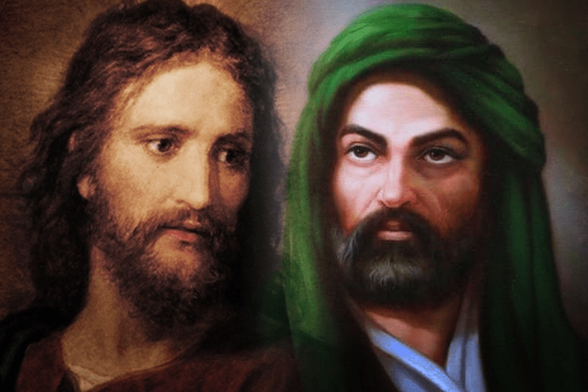
One of the many questions critics of various religions ask when evaluating the validity of the religion’s claims is the question of its founder’s mental health. If it can be proven that the founder’s claims came from delusions, then the religion risks being dismissed as the ramblings of a madman. As C.S. Lewis put it in his famous trilemma regarding Jesus, “A man who was merely a man and said the sort of things Jesus said would not a great moral teacher. He would either be a lunatic – on a level with the man who says he is a poached egg or else he would be the Devil of Hell. […] Either this man was, and is, the Son of God: or else a madman or something worse…You can shut Him up for a fool, you can spit at Him and kill Him as a demon; or you can fall at His feet and call Him Lord and God.” (Paragraph 1, sentences 3-4, 6) (17) A similar framework can be applied to Muhammad, as – like Jesus – he was accused of lunacy both by contemporaries and modern critics. Either Jesus and Muhammad were delusional but sincerely believed what they said, were charlatans, or one of them was telling the truth about who they were. Thus, this paper seeks to examine their lives to see if the accusations of insanity hold historical or psychological weight.
To begin our investigation into if Jesus and Muhammad were insane, we must understand the various disorders that Muhammad and Jesus are believed to have had. Critics of both men have alleged based on various accounts of their lives that they could have had various mental or neurological disorders. (19) In fact, in 2012, a team of psychiatrists, behavioral psychologists, neurologists, and neuropsychiatrists from Harvard Medical School published research that suggested the development of a new diagnostic category of psychiatric disorders related to religious delusions and hyper-religiosity. (19) They claimed that Jesus, Muhammad, and others may have had anything ranging from schizophrenia, schizoaffective disorder, bipolar disorder, delusional disorder, delusions of grandeur, auditory-visual hallucinations, paranoia, Geschwind syndrome, or temporal lobe epilepsy. (19) Thus, we need to understand the symptoms of some of these disorders to compare them to what accounts of Jesus and Muhammad’s life may suggest.
Because critics have long alleged that Jesus and Muhammad had epilepsy, we must understand what it is and understand its key manifestations before comparing them to the historical record. Epilepsy isn’t a mental illness, (4) but is a neurological condition that causes recurring seizures, (5) potentially leading to cognitive or psychological problems depending on its severity or if it’s left untreated. (4) It cannot be caused by volition, suggestion or hypnosis, (7) but is likely caused by genetic influences, head trauma, underlying factors in the brain, infections, injury before birth, or developmental issues. (5) Some potential triggers of epileptic fits include alcohol, flashing lights, drug use, lack of sleep, stress, dehydration, skipped meals, and illness. (5) Due to the unpredictability of epileptic seizures and the disorder’s stigmatized condition, epilepsy patients often experience poor self-esteem, discrimination, social withdrawal, and depression. (6) This was especially true in the ancient world, as Hasan Aziz writes, “The general perceptions then of those affected with epilepsy was of a tainted, incurable victim possessed by an evil spirit or devil, and the claim to Muhammad’s epilepsy was probably in response to this situation to slander him as a false prophet. Men of letters from the subsequent eras picked up these early narrations and quoted them per se without any verification, further substantiating these nonscientific works as the truth.” (Paragraph 9, sentence 3-4) (7)
Epilepsy is diagnosed if the patient has had at least two seizures without a clear cause at least 24 hours apart. (5) In general, epileptic attacks last for a few seconds or a few minutes. (7) Symptoms vary depending on the type of seizure and how it affects different brain processes. (5) Epilepsy patients can experience staring spells, loss of awareness or consciousness, convulsions, muscle stiffness, fear and anxiety, behavioral changes, psychosis, or deja vu. (5) Seizures that cause deja vu or hallucinations usually last for a split second and lack verbal content. (7) Those that cause auditory hallucinations produce a machine-like buzzing or whistling sound. (7) Seizures can also cause repeated movements such as hand rubbing, chewing, swallowing, or walking in circles. (5) Patients usually have the same type of seizure every time they experience an epileptic fit. (5)
On that note, there are different types of epilepsy diagnosed by what types of seizures the patient experiences and which part of the brain they affect. (5) Seizures are split into two groups with various subgroups, based on how they affect the brain. (5) Seizures that involve all areas of the brain are called generalized seizures and are further divided into absence, tonic, atonic, clonic, myclonic, and tonic-clonic seizures. (5)
The second group of seizures are known as focal seizures and result from activity in one part of the brain, such as the temporal, frontal, or occipital lobe. (5) These seizures can be mistaken for migraines, narcolepsy, or mental illness. (5) Like with generalized seizures, these are split into two subcategories based on seizure symptoms. (5) These categories are called preserved or impaired consciousness. (5) During seizures with preserved consciousness, patients may have warning signs known as “auras.” (5) These auras may include a strange feeling in the stomach, fear, deja vu, a taste or smell, a visual effect such as steady or flashing light, color, or shape, dizziness, loss of balance, emotional changes, convulsions, tingling, dizziness, or hallucinations. (5) Seizures that impair consciousness, however, involve a change or loss of consciousness in the patient, sometimes leading to a dreamy state. (5)
From looking at the accounts of Muhammad and Jesus’ lives; it doesn’t appear that they suffered from generalized seizures. If one is to say that either person suffered from epilepsy, they likely would have experienced focal seizures, pointing to a form of epilepsy, either affecting the frontal, occipital, or temporal lobe. Thus, symptoms from those specific seizures must be examined as well.
Starting with occipital and frontal lobe seizures, seizures in the occipital lobe affect patients’ vision, sometimes causing hallucination or loss of some or all their vision. (5) Frontal lobe seizures, on the other hand, begin in the front of the brain and mainly affects motion. (5) Those experiencing a frontal lobe seizure may move their heads or eyes to one side, won’t respond when spoken to, may scream or laugh, extend one arm while flexing the other, or make repeated movements. (5)
Temporal lobe seizures, however, occur in the lobes that process emotions and short-term memory. (5) They may cause a patient to lose awareness of their surroundings. (5) Temporal lobe epilepsy also brings with it a higher risk of developing psychiatric problems than in patients who have more generalized symptoms. (6) Short-term memory loss can come with it, too, potentially since these seizures impair the areas of the brain that process emotion. (4)
Moreover, epilepsy and psychiatric disorders may have shared pathogenic mechanisms. (6) This could mean that, in some cases, the presence of psychiatric disorders may represent the premorbid phase of some epileptic syndromes due to shared neurobiological mechanisms. (6) Studies have found that epileptics have a 2-5 times increased risk of developing any psychiatric disorder with a third of patients having a lifetime psychiatric diagnosis. (6) Epilepsy can cause depression, anxiety, and suicidal thoughts and behaviors, (5) potentially from forcing specific behaviors such as maintaining regular sleep cycles, limited alcohol use, and other lifestyle changes, combined with preexisting stress, frustration, fear, and embarrassment from having seizures. (4) Data from prospective observational studies show that the relationship between epilepsy and psychiatric disorders goes both ways. (6) One study from the United Kingdom involving over 10 million subjects found that depression caused a 2.5-fold increased risk of developing epilepsy and suicide risk increased 2.9-fold even before diagnosis. (6) A meta-analysis of adults in 14 population-based studies that included over a million subjects also showed an overall prevalence of active depression in epilepsy patients of 23.1% with an increased risk of developing depression of 2.7 as compared to the general population. (6) As PubMed writes: “From a neurobiological perspective, neuroimaging studies in people with primary psychiatric conditions such as depression or schizophrenia have shown abnormalities in brain networks overlapping with those involved, for example, in temporal lobe epilepsy (TLE), particularly in the amygdala and the hippocampi.” (Paragraph 4, sentence 3) (6)
Generalized anxiety disorder is another psychiatric issue that’s often present in epilepsy patients, with causes varying from the diagnosis, a symptom of seizures, fear stemming from the first seizure, and social isolation or rejection. (4) However, just like depression, causes of epilepsy can also contribute to anxiety symptoms. (4) One meta-analysis of 27 studies in over three thousand adults with epilepsy showed a pooled prevalence of anxiety disorders of 20.2%, with generalized anxiety disorder being the most common. (6)
Epilepsy can also cause slowness, memory impairment, attention problems, and dementia. (4) Cognitive and intellectual problems caused by epilepsy are often related to it beginning at an early age, the number or frequency of seizures, poor seizure control, the length of the seizure, low oxygen levels, injury, infection at birth, or underlying brain lesions. (4) For young children, development can be delayed due to uncontrolled seizures, and in those with underlying cognitive problems, there are higher rates of brain abnormalities, which can result in different kinds of seizures. (4)
Most concerningly, however, is epilepsy’s effect on psychosis. Psychiatric comorbidities are associated with premature mortality for a variety of reasons, such as an increased risk of substance or alcohol abuse, increased risk of injury, and suicidality. (6) A meta-analysis of 57 studies of psychosis and related disorders including over 40 thousand individuals showed a pooled prevalence of 5.6% in unselected individuals increasing to 7% and in those with mesial temporal lobe epilepsy having a greater risk of 7.8% compared to the general population. (6) These psychiatric symptoms are categorized as preictal, ictal, postictal, paraictal, and interictal according to their relationship with seizures. (6)
Preictal symptoms precede a seizure and mostly occur during tonic-clonic seizures or temporal lobe epilepsy. (6) Preictal psychosis can include irritability, insomnia, and dysphoria that can last anywhere from a few hours to two days. (6)
Ictal symptoms are manifestations of a seizure and may present as focal aware seizures. (6) These can cause nonmotor, emotional dysfunction (ictal fear or depression), and nonconvulsive status epilepticus (ictal psychosis). (6) 4% of epilepsy patients who experience complex partial seizures have religious experiences during psychosis called religious ictal seizures. (7) The symptoms of this vary, but those who experience this describe intense emotions of God’s presence, hearing his voice, feeling connected to the infinite, clairvoyance telepathy, repetition, or a visual hallucination of a religious figure. (7) Emotions felt during these events are generally indescribable. (7) There is also near total amnesia of all ictal events, and memory varies, with those events being followed by periods of sleep or blunted meditations, which distort memory, making it unreliable. (7)
Postictal symptoms typically follow a bilateral tonic-clonic seizure but are also associated with temporal lobe epilepsy. (6) The resulting psychosis only affects about 2% of people. (6) Despite this, postictal psychosis is the most described and investigated form of psychosis and is also associated with temporal lobe epilepsy. (6) Postictal psychosis involves having florid, but brief psychotic episodes lasting hours or weeks, often described as worsening comorbid mood or anxiety disorders. (6) The onset of this psychosis is subtle, coming after 48 hours of lucid interval from the seizure and has a high mortality risk due to high suicidal ideation and violent behavior. (6)
Paraictal symptoms involve forced normalization and behavior disturbance of acute or subacute onset. (6) This involves significant mood changes, anxiety, depersonalization or derealization, and psychogenic, nonepileptic attacks, as well as a reduction in the total number of spikes. (6) After paraictal symptoms have run their course, there can be a complete cessation of seizures for at least one week. (6)
Finally, interictal symptoms can cause personality disorders like Geschwind syndrome characterized by obsessionality, increased philosophical or religious interests, hyposexuality, and hypergraphia. (6) Interictal symptoms – like ictal and postictal symptoms – are usually found in patients with temporal lobe epilepsy. (6) It also involves schizophrenia-like, chronic psychosis with preserved affect and without progressive cognitive deterioration. (6) Interictal symptoms can also come with interictal dysphoric disorder with chronic affective somatoform syndrome, characterized by mood swings with irritability with multiple somatic symptoms. (6)
Now that the symptoms of epilepsy have been laid out, one can move to determining if Jesus or Muhammad had symptoms resembling epilepsy. Starting with Jesus, if it could be proven that He had epilepsy that caused Him to believe that He was hearing from God, then it would cause a massive fracture in the validity of the Christian faith. (21) However, while psychiatrists and religious scholars and writers agree that Jesus was regarded as insane, delusional, or even demon possessed by family, friends, followers, and contemporaries (Mark 3:21, John 7:20, 10:19-21) (3, 19) there is no reference of Jesus ever having epilepsy or anything resembling it. The beliefs of critics such as Jean Meslier, David Straus, Lemuel K. Washburn, Oskar Holtzmann, Henry Leffmann, Georg Lomer, Oskar Panizza, Y.V. Mints, William Hirsh, and others that Jesus had epilepsy (19) are thus woefully unfounded.
The same cannot be said about Muhammad, however. Muhammad was considered epileptic during the Byzantine period, about 200 years after his death. (7) Since then, this diagnosis has become a great theological and philosophical debate, raising questions about the validity of his prophethood, suggesting that he pretended his fits were revelation from Allah passed on through the angel Gabriel. (7, 13, 22) This was first brought up by Byzantine monk and early Greek chronicler, Theophanes, in the 8th century who suggested that Muhammad’s revelations were epileptic episodes. (7) Western historians, theologians, orientalists and physicians such as Humphrey Prideaux, Hottinger (a Swiss philologist and theologian), John Zonaras, Gustav Weil, (who was perhaps the first to probe into the oldest traditional biographies of Muhammad) Sir William Muir, and others believed this theory. (7)
Modern-day, eminent neurologists have also agreed with this assessment, suggesting based on the writings of these orientalists, historians, and chronologists that Muhammad had temporal lobe epilepsy. (7) Prominent American neurologists such as William Gordon Lennox and Roy Freemon made significant contributions to this debate. (7) Lennox wrote in his book Epilepsy and Related Disorders that Muhammad had temporal lobe epilepsy based on hallucinatory auras recorded by Muir, including two losses of consciousness at age 2. (7) Freemon wrote what was possibly the first article on Muhammad’s epilepsy to be published in a scientific journal. (7) He concluded that Muhammad likely had psychomotor seizures from temporal lobe epilepsy, though historical knowledge of his brain function during altered states of consciousness doesn’t allow for an unequivocal diagnosis. (7)
Furthermore, though some incorrect or erroneous translations have been found, reliable hadiths are available to provide evidence that Muhammad was potentially epileptic. (7) Starting with possible accounts of Muhammad having epilepsy from childhood, according to Sahih al-Bukhari 7571, Muhammad had a dream that Gabriel cut open his chest, took out his organs, veins, etc., washed them, put them back, and took him to visit heaven. (1) This hadith may be related to a similar account in Sahih Muslim, which says: “It is narrated on the authority of Anas b. Malik that the Messenger of Allah said: the angels came to me and took me to the Zamzam and my heart was opened and washed with the water of Zamzam and then I was left (at my place).” (Sahih Muslim 162b) (1) This account continues in Sahih Muslim 162c in more detail, saying, “Anas b. Malik reported that Gabriel came to the Messenger of Allah while he was playing with his playmates. He took hold of him and lay him prostrate on the ground and tore open his breast and took out the heart from it and said: That was the part of Satan in thee. And then he washed it with the water of Zamzam in a golden basin and then it was joined together and restored to its place. The boys came running to his mother, i.e. his nurse, and said: Verily Muhammad has been murdered. They all rushed toward him (and found him all right) his color was changed, Anas said. I myself saw the marks of needle on his breast.” (1)
This event, known as Shaq al-Sadar (The Opening of the Chest), happened when Muhammad was a young child, out grazing cattle with his foster brother Abdullah ibn Harith. (10) Muhammad reportedly remembered the incident, as did Abdullah, Muhammad’s other foster siblings, and the other boys present. (10) One report also alleged that Halima, Muhammad’s wet-nurse and foster mother, had a dream about Shaq al-Sadar before it happened and had tried to stop Muhammad from going out. (10)
As one author who calls himself Silas writes regarding Shaq al-Sadar, “Here is the story told by Muhammad’s wet-nurse, related in Guillaume’s translation of Ibn Ishaw, page 72: ‘His [Muhammad’s friends] father said to me, ‘I am afraid that this child has had a stroke, so take him back to his family before the result appears. … She [Muhammad’s mother] asked me what happened and gave me no peace until I told her. When she asked if I feared a demon had possessed him, I replied that I did.” (paragraph 4, sentence 2 – paragraph 5) (13)
Interestingly, Islamic scholars such as al-Tabari and Ibn Sa’d used “fits,” “epilepsy,” “epileptic,” “falling sickness,” or “sara’a” in their chapters about Muhammad’s life, referring to the Shaq al-Sadar. (7) Tabari specifically called it a malady; Ibn Ishaw called it a stroke, and later writers such as Hisham and Sprenger called it an epileptic fit or hysteria respectively. (7) This is significant, as epilepsy was a condition known to Arab physicians at the time, and one hadith even mentions a person with epilepsy going to Muhammad for help, as recorded by Ibn Abbas. (7) William Muir, in his book, Life of Mahomet, similarly interpreted the story of 4-year-old Muhammad having his heart cut out by two angels (as told in Katib al Wackedi) as epilepsy. (7) He also added a comment from Halima’s husband that Muhammad “had a fit (omeeb) and advised his wife to return Muhammad to his mother.” (7)
This is not the only instance where Muhammad had an experience that appears to be like epilepsy. Accounts of Muhammad’s initial revelation and later revelation from authoritative hadiths like Sahih Bukhari and Sahih Muslim sound similar to epileptic symptoms. As written in Sahih Bukhari 4951, “Then Allah’s Messenger returned with that experience; and the muscles between his neck and shoulders were trembling till he came upon Khadija (his wife) and said, ‘Cover me!’ They covered him, and when the state of fear was over, he said to Khadija, ‘O Khadija! What is wrong with me? I was afraid that something bad might happen to me.” (1) Sahih Bukhari 6982 also continues the story of the initial revelation, saying, ““But after a few days Waraqa died and the Divine Inspiration was also paused for a while and the Prophet became so sad as we have heard that he intended several times to throw himself from the tops of high mountains and every time he went to throw himself down, Gabriel would appear before him and say, “O Muhammad! You are indeed Allah’s messenger in truth” whereupon his heart would do as before, but when he used to reach the top of a mountain, Gabriel would appear before him and say to him what he had said before.” (1) From this account, Theophanes writes: “He had an epileptic seizure, and when his wife noticed this, she became very distressed, for she was noble and had now been joined to a man who was not only helpless but epileptic as well. He turned to conciliating her, saying, ‘I see a vision of the angel known as Gabriel, and faint and fall because I cannot bear up under the sight of him.” (paragraph 10, sentence 4-5) (7)
Though the trembling could be explained as being caused by fear and the suicidality from depression about Waraqa’s death, that does not adequately explain other strange symptoms that came before later revelations. Muhammad’s wife, Aisha, is recorded asking Muhammad what it was like receiving revelation from Allah. (1) His response, recorded in Sahih Muslim 2333b was, ““[…] at times it comes to me like the ringing of a bell…” (1) This is statement is corroborated by Sahih Bukhari 2, which says, “Narrated Aisha: […] Al-Harith bin Hisham asked Allah’s Messenger ‘O Allah’s Messenger! How is the Divine Inspiration revealed to you?’ Allah’s Messenger replied, ‘Sometimes it is (revealed) like the ringing of a bell, this form of Inspiration is the hardest of all and then this state passes off after I have grasped what is inspired.’” (1) Sunan an-Nasa’i 933 also records this event. (1)
Already, this is strange, but other pre-revelation symptoms include phobic states such as anxiety, sweating, palpitations, trembling, visual and auditory hallucinations, and fainting. (7) As one hadith records: “At the moment of inspiration, anxiety pressed upon the Prophet and his countenance was troubled. He fell to the ground like an inebriate, or one overcome by sleep. On the coldest day his forehead would be bedewed with large drops of perspiration…To outward appearance inspiration descended unexpectedly, without any previous warning to the Prophet.” (paragraph 18, sentence 3-5) (7) Once again, Sahih Bukhari 2 also corroborates this, with Aisha saying, “Verily I saw the Prophet being inspired divinely on a very cold day and noticed that sweat dropping from his forehead (as the Inspiration was over).” (1)
Muslim apologists argue that these pre-revelation symptoms are simply general discomfort that is to be expected during divine-to-human transfer. (7) However, despite the evidence so closely mirrors temporal-lobe epileptic auras that it’s no surprise that Ibn Sa’d devoted an entire chapter in Tabqat-al-Kabir to the symptoms associated with revelations, from which Freemon based his conclusions that Muhammad had temporal lobe epilepsy. (7) From this, Prideaux’s theory that Muhammad had epileptic fits that he used to compile chapters (surahs) of the Quran becomes plausible. (7)
In response to this, Muslims have several arguments to the contrary. On the Shaq al-Sadar, Hasan Aziz says, “From neurological or any other perspective, this episode extraordinaire of a child surviving splitting open of his chest or belly to be closed within minutes and later relating the details himself or witnessed by his foster [sibling] is probably paranormal and cannot be accepted as epilepsy or any human happening.” (Paragraph 14, sentence 6) (7) Aziz also writes concerning the physical accompaniments of Muhammad’s revelations, quote, “On some occasions at least, there were some physical accompaniments. He would be gripped by a feeling of pain, and in his ears, there would be a noise like the reverberation of a bell. Even on a very cold day the bystanders would see great pearls of sweat on his forehead as the revelation descended upon him. Such accounts led some Western critics to suggest that he had epilepsy, but there are no real grounds for such a view. Epilepsy leads to physical and mental degeneration, and there are no signs of that in Muhammad; on the contrary, he was in full possession of his faculties to the very end of life.” (paragraph 21, sentence 3-7) (7)
Another point that Aziz makes is that after every pre-revelation event, there was a Quranic revelation. (7) He argues that had it been a result of an epileptic attack, the revelations should not have been remembered as epileptic attacks are commonly followed by stupor, confusion, and amnesia. (7) It’s also reported in some hadiths that a buzzing could be heard by others before Muhammad went into one of his revelatory swoons, further refuting the idea that he was simply experiencing epileptic hallucinations. (7)
Further arguments against the idea that Muhammad had epilepsy are that some of the translations of the hadiths are flawed. Sir Syed Ahmed Khan, a scholar of the Arabic language, worked on validating translations of the hadiths, finding inaccuracies and mistranslations. (7) When reviewing Muir’s translation of the Shaq al-Sadar, he pointed out that Muir’s translation of “omeeb” was incorrect, as it’s a word found in no Arabic lexicon and had no meaning. (7) The actual word was oseeb, which has many connotations that express dismay or affliction. (7) Khan also commented on the per se translation of Abilfeda’s work into English by Dr. Edward Pococke, saying that his work was flawed as he added “hypochondriacal” to make the sentence flow more logically and grammatically in Latin, but changed the meaning of the entire sentence. (7) From there, since Prideaux had based his conclusions on Pococke’s work, Khan believed that Prideaux had reached a faulty conclusion from a faulty translation. (7) English historian Edward Gibbon also rejected Theophanes’ statements about Muhammad having epilepsy, calling them “an absurd calumny of the Greeks.” (7) Thomas Carlyle and William Montgomery Watts similarly rejected it, with Carlyle going so far as to paint Muhammad as a hero. (7)
However, though epilepsy could be, at best a plausible explanation for Muhammad’s behavior, there are other explanations to take into account, such as his mental health, which will be discussed in part two.
Until next time,
M.J.
#Apologetics #Bible #Blog #Christian #Christianity #Epilepsy #faith #FlippinFatwaFriday #god #hadith #history #Islam #jesus #Medicine #MentalHealth #Muhammad #Muslim #OpinionPeice #Polemics #Quran #Research #Writing The Tanuki Corner

 Spirituality & Religious Studies
 R.L. Dane

 🍵
🍵 
 John Tinker
 ➴➴➴Æ🜔Ɲ.Ƈꭚ⍴𝔥єɼ👩🏻💻
 Michelle Margolis
 Félicien Breton
 Transit