The #American regime needs its own #glasnost & #perestroika, apparently

#history

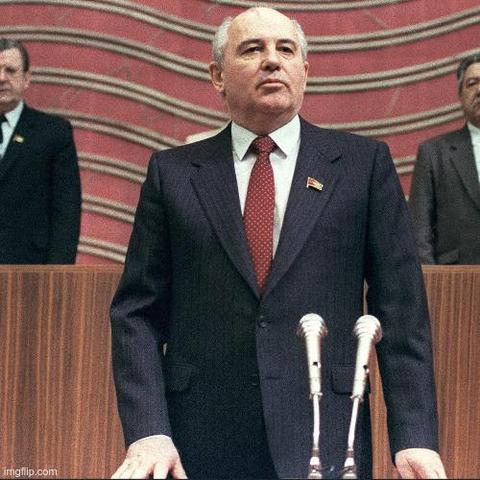
#MikhailGorbachev — the last #Soviet leader and the only one born in the #USSR — was elected to the General Secretary position on #ThisDayInHistory in 1985. His slow move towards #SocialDemocracy, and reform projects #glasnost & #perestroika, accidentally undermined the state.

"Wir sind keine Rowdys"
"Wir bleiben hier"
"Keine Gewalt"
"Wir sind das Volk"
"Schließt euch an!"
"Gorbi,Gorbi..."
"Die Internationale erkämpft das Menschenrecht"

Ab hier gab es einige Zeit die Hoffnung, auf einen demokrat. Aufbruch in der #DDR & einen fairen Weg in Richtung Konföderation/Föderation/Ein-Staalichkeit ;-) Gegenseitiges "Geben&Nehmen",statt "feindlicher Übernahme"/ "Anschluss"...

https://www.
bpb.de/mediathek/video/298127/schluesselmoment-der-friedlichen-revolution-die-leipziger-montagsdemonstration-vom-9-oktober-1989/

#Leipzig #le091089 #Glasnost #Perestroika
#DankeAntifa #solidarity
#AntifaOst

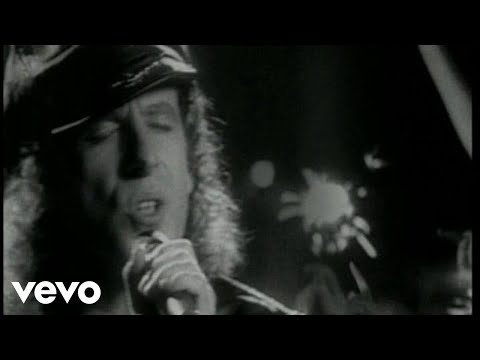
"Wind of Change" is a song by German rock band #Scorpions, recorded for their 11th studio album, #CrazyWorld (1990). A #powerBallad, it was composed and written by the band's lead singer, #KlausMeine, and produced by #KeithOlsen and the band. The lyrics were composed by Meine following the band's visit to the #SovietUnion at the height of #perestroika, when the enmity between the communist.
https://www.youtube.com/watch?v=n4RjJKxsamQ
Scorpions - Wind Of Change (Official Music Video)

YouTube

10/ „Denn da (und obwohl) alles eingerichtet und alles geregelt war, ahnte man, dass es nicht mehr lange so weitergehen konnte, weil alles Eingerichtete und alles Geregelte wie ein unendlich andauerndes Provisorium erschien. Es war eine Zeit des Wartens – worauf, das wusste niemand so genau.“

Doch klar! #Glasnost und #Perestroika.

https://www.youtube.com/watch?v=i9vm_YbU_Ck

#DDR #Gefahrenzone

Gefahrenzone - Öffentlichkeit

YouTube

1/ „Die DDR in ihrem Endstadium war ein Land, dessen Müdigkeit und Verfall auf die in ihm lebenden Menschen abfärbte, die ihrerseits müde und verfallen durch den Tag schwappten, der ein Tag war, dessen Ende man herbeisehnte, aber niemals wirklich erwartete.“

„Diese #Müdigkeit war keine individuelle, keine psychologische, sondern eine strukturelle Müdigkeit. Sie war nicht Ausdruck von Faulheit oder Trägheit, sondern das Ergebnis eines jahrzehntelangen Umgangs mit Forderungen, die ihrerseits entweder aus Unter- oder Überforderungen bestanden; eines Lebens unter Bedingungen, die jedes Versprechen auf Zukunft entwerteten, ehe es ausgesprochen war. Vielleicht, so könnte man sagen, war diese Gesellschaft eine, die das Prinzip Hoffnung durch das Prinzip Erschöpfung ersetzt hatte. Der Mensch, dieser geschundene, vom Produktionsplan genormte Organismus, war im Grunde nichts anderes als eine wandelnde Sollgröße. Seine Funktion bestand darin, zu funktionieren.“

Jetzt also Müdigkeit. Eine neue These über den #Osten. Der Autor Lars Reyer ist 1977 bei #Zwickau geboren, war zur Wende also 12 Jahre alt. Er schreibt über seinen Vater.

Mir ist ja beim Lesen von #KatjaHoyer klar geworden, dass man nicht von DER DDR sprechen darf. Es gab viele DDRen. Einmal zeitlich mit der entsprechende ausgerichteten Politik. Phasen der Entspannung und Anspannung und dann gab es individuell ganz unterschiedliche Erfahrungen. Und es gab lokale Unterschiede.

Mit diesem Vorwort kann ich nun sagen, dass ich mit dem Autor überhaupt nicht übereinstimme. Das ist sicher auf den Altersunterschied zurückzuführen. Lars Reyer berichtet über seinen Vater, der müde und vielleicht resigniert war.

Für mich und viele andere war die Zeit in den 80er Jahren eine Zeit der Empörung aber auch der Hoffnung. In der #Sowjetunion hatte #Gorbatschow übernommen. #Glasnost und #Perestroika zogen ein. Das war auch in den Medien dort wahrnehmbar und schwappt zum Teil auch in die kleine DDR. In der sowjetischen Politzeitschrift Neue Zeit, die es auch in der DDR gab, standen unerhörte Dinge. Der Sputnik wurde verboten, Nummern der Neuen Zeit nicht ausgeliefert. In den Studiokinos der DDR waren Filme wie Vogelscheuche zu sehen, die der sowjetischen Gesellschaft ihr Bild vor Augen hielten in Form vom Umgang von Kindern untereinander. Unglaublich! Jadup und Böl kam in die Kinos. Ein sehr kritischer Film, der jahrelang im Eisschrank gelegen hatte.

Die Menschen äußerten ihren Unmut immer offener. Der Wahlbetrug bei den Kommunalwahlen wurde 1989 von kirchlich organisierten Gruppen zum ersten Mal nachgewiesen. Meine Schwester war bei Auszählungen in Wahllokalen dabei.

Es gab geduldete Untergrundmusik mit kritischen Texten. (#Punk, #dieAnderenBands) Theaterstücke, in denen man Kritik am Staat finden konnte, wenn man genauer hinschaute als die Zensur.

Die ganze Untergrundkunst in Dresden und Berlin (und sicher auch anderswo). Ausstellungen in Wohnzimmern.

Es brodelte und blubberte überall. Es stank, aber das war Teil vom Ganzen.

Es war klar, dass etwas passieren würde, nur nicht genau was. Bei der Armee mussten wir im Juni alle die chinesischen Propaganda-Filme sehen. Meine Kumpels waren dann auch im Oktober mit Schlagstöcken in Dresden. Ich war zum Glück schon raus.

Wir glaubten, dass wir den weiteren Verlauf würden steuern können, wenn sich die chinesische Lösung vermeiden ließe.

Wir lagen falsch.

Wir waren … wir waren alles, nur nicht müde.

Wir waren naiv.

https://www.taz.de/!6152741
Irgendwannkommtwas

Eine große Müdigkeit prägte die letzten Jahre der DDR. Sie schrieb sich in die Körper ein, in die Blicke, Gesichter und Hände. Diese kollektive Erschöpfung ist bis heute zu spüren – und hat auch politische Folgen. Ein Essay

TAZ Verlags- und Vertriebs GmbH

Rescued from an old VHS, "Face to Face: US/USSR" (host Jean Enersen, produced by KING-TV 5, Seattle, broadcast 8/2/1987). In this KING-TV news special, an American family goes to visit a Russian family in Leningrad; then that Russian family comes to visit that same American family in Seattle. Includes all original commercial breaks.

#Glasnost #Perestroika

https://youtu.be/LXWO83CHwQ4

Face to Face: US/USSR

YouTube

Touched Fables, Perestroika, Nuclear Family, Cuck Chair

Casa Del Popolo, Friday, December 12 at 08:00 PM EST

Realidad Absurda cordially invites you to our yearly celebration...
Why hear legends second-hand when you can hurl yourself directly into the absurdity?

Touched Fables (Ottawa)
https://touchedfables.bandcamp.com/

Perestroika
https://perestroika-mtl.bandcamp.com/

Nuclear Family
https://nuclearfamilymtl.bandcamp.com/.../no-thanks-demo...

Cuck Chair
http://ccccuuuuccckkkccchhhaaiirrrrr!!

https://montreal.askapunk.net/event/touched-fables-perestroika-nuclear-family-cuck-chair

Culture And Perestroika

Perestroika is commonly associated with the introduction of a new economic mechanism and the elimination of impediments to economic growth. At the same time emphasis is placed on the importance of “a strong social policy” and the revolutionary role of new thinking. In the process of perestroika we will have to reestablish —on a new foundation!—the economics-politics-culture triad, in which culture is both a highly important condition for the social reforms being carried out in this country and a guarantee of their quality.

This collection will give the foreign reader a chance to see for himself what serious changes are occurring in the social awareness of Soviet men and women due to perestroika . How are these changes revealed?

The battles of ideas being contested by economists, writers, philosophers, journalists, and ordinary readers responding to the ongoing debate in the newspapers and magazines stem not just from differing interests and perceptions of perestroika, but from discrepancies in the shaping of new thinking itself. Clearly, though, there is a trend towards liberation from dogmatism, bureaucratism, lies and half-truths. People are thinking and eagerly seeking the truth. The articles in this collection bear witness to that.

Translated from the Russian
Designed by Vladimir Gordon
Compiled by Galina Dzyubenko

You can get the book here and here.

Twitter: @MirTitles
Mastodon: @[email protected]
Bluesky: mirtitles.bsky.social

Contents

Valentin Tolstykh. In Place of a Foreword. Translated by Sharon Mckee 7
Look for Truth
We Need a New Vision of the World. An Interview with Chinghiz Aitmatov. Translated by Sharon Mckee 15
Look for Truth. An Interview with Alexander Alexandrov. Translated by Sharon Mckee 24
From a Position of Truth and Realism. An Interview with Yuri Afanasyev. Translated by Sharon Mckee 32
Nina Andreyeva. I Cannot Betray My Principles. Translated by Nadezhda Burova 44
The Principles of Perestroika: Revolutionary Thinking and Action. Pravda Editorial. Translated by Nadezhda Burova 57
Alexander Gelman. A Time to Gather Strength. Translated by Sharon Mckee 72
Vladimir Svirsky. History Is Silent. Translated by Sharon Mckee 81
Anatoly Golovkov and Alexei Pavlov. What All This Noise? Translated by Sharon Mckee 87
Yuri Karyakin. “Zhdanov Liquid” or Against Defamation. Translated by Paula Garb 96

Echoes Near and Far
Igor Dedkov. Literature and the New Way of Thinking. Translated by Nadezhda Burova 115
Echoes Near and Far. An Interview with Daniil Granin. Translated by Nadezhda Burova 136
Bulat Okudzhava. I Have Regained Hope. Translated by Nadezhda Burova 151
Readers’ Letters on Anatoly Rybakov’s Children of the Arbat. Translated by Nadezhda Burova 157
Olga Kuchkina. The Water of Life. Translated by Sharon Mckee 164
Olga Kuchkina. The Fierce Word. Translated by Nadezhda Burova 166
Yuri Burtin. “To You, Not of My Generation…”. Translated by Alex Miller 169

So What Can We Do?
Kirill Lavrov. So What Can We Do? Translated by Nadezhda Burova 197
Eldar Ryazanov. Why Did I Leave Television in the Era of Glasnost? Translated by Sharon Mckee 205
Alexei Simonov. A Time to Confess, not Preach. Translated by Sharon Mckee 216
Olga Martynenko. Vladimir Spivakov: A Conversation in the First Person. Translated by Sharon Mckee 222
Andrei Sakharov. I Believe in Reason. Translated by Sharon Mckee 229

Memory
Boris Pilnyak. The Hinterland. Translated by Sharon Mckee 233
Letters by Mikhail Bulgakov. Translated by Sharon Mckee 253
Alexander Kamensky. Color, Purity and Love: An Interview with Marc Chagall. Translated by Sharon Mckee 278
Arkady Strugatsky. As I Knew Him. Translated by Sharon Mckee 287

Notes 293


#1988 #perestroika #sovietAuthors #sovietIdeology #sovietLiterature #sovietSociety

💯 👉"Critics of socialism argue that it is a cop-out to say that the USSR was not socialist. But it seems clear that in practical terms, those running the system were trying to beat capitalism at its own game. They were not only imprisoned in a competitive logic but also bound by its limited horizons.

Of course, this does not tell us what the Soviet economic system was. To pose that question, as some did in the USSR, was to step outside the ruling order and to invite retribution. The job of the economists that Feygin discusses was to help the system work better.

Yet even some of those who were at the center of these “insider” debates could not help wondering exactly what the USSR was. Feygin in particular instances Yakov Kronrod, who spent four decades or more trying to think not only about reform but also about value relations and the question of alienation and exploitation in the Soviet system (David Mandel’s book on Konrod, Democracy, Plan, and Market, is not cited, however).

In the event, the USSR and the wider Soviet-led bloc collapsed, becoming the “ruin” of Feygin’s title. It failed to catch up with (let alone overtake) the West, and it failed to satisfy the aspirations of its own population. The idea of socialism from above, directed by a plan, has not really recovered. When we think, therefore, of going beyond capitalism, we must think about different ends as well as different means.

A bottom-up, participative system might well be messy in different ways, but it would have to engage people. In the USSR, Soviet workers were never the knowing agents of their own fate. They figured only as a constraint..." 👈💯

https://jacobin.com/2025/11/soviet-economic-reform-workers-feygin/

#SovietUnion #USSR #Socialism #Capitalism #StateCapitalism #EconomicDemocracy #Gorbatchev #Perestroika

Why Soviet Economic Reform Couldn’t Save the System

Long before Mikhail Gorbachev, Soviet planners and economists engaged in wide-ranging debates about economic reform. But they never seriously considered the option of a genuinely participatory, democratic model of socialism that would empower workers.