Hype for the Future 132J: Reverend Sam Black

Introduction In West Virginian history, Reverend Sam Black has largely been responsible for the success of the Methodist movement in much of the modern State, having lived from March 3, 1813, to his death on July 13, 1899. Legacy While Sam Black himself was originally from the area around modern Greenbrier County, having resulted in the namesake Sam Black Methodist Church and unincorporated community of Sam Black Church directly along the Midland Trail and modern Interstate 64. Apart from […]

https://novatopflex.wordpress.com/2026/03/12/hype-for-the-future-131j-reverend-sam-black/

Hype for the Future 131J: Reverend Sam Black

Introduction In West Virginian history, Reverend Sam Black has largely been responsible for the success of the Methodist movement in much of the modern State, having lived from March 3, 1813, to hi…

novaTopFlex
https://omdaruliterature.blogspot.com/2026/03/protestantism-and-capitalism-opinion-of.html #PROTESTANTISM AND #CAPITALISM :THE OPINION OF LUTHER'S SPIRIT IN 2026
- Claude.ai Based on the Material from a #Mediumistic Session with the #Spirit of Martin #Luther in March 2026 #channeling #esoterics #spirituality
https://omdaruliterature.blogspot.com/2026/03/the-faith-of-spirit-of-luther.html THE #FAITH OF THE #SPIRIT OF #LUTHER A Spiritual-Psychological and Religious Studies #Essay -Study - Claude.ai Based on Material from a #Mediumistic Session in March 2026 #channeling #esoterics #spirituality #god #protestantism
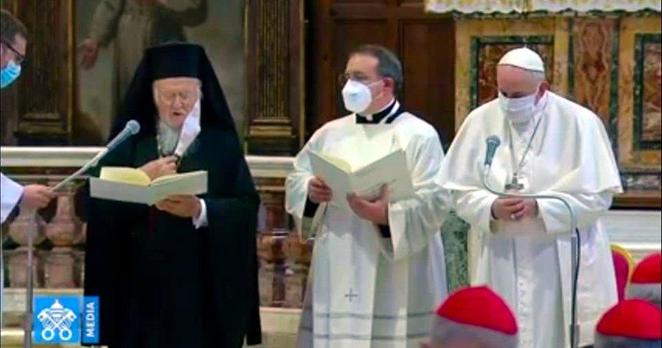
Nu există nici o diferenţă esenţială între papistaşi, protestantism, ecumenism şi alte erezii ale căror nume este “legiune” Ecumenismul este numele comun pentru pseudo-creştinismul pseudo-bisericilor din Europa Occidentală. 👉 https://c.aparatorul.md/jbrij 👈 #CredintaOrtodoxa #Ecumenismul #Erezii #EuropaOccidentala #Legiune #Papistaşi #Protestantism #PseudoCreştinism #SfantulIustinPopovici
https://c.aparatorul.md/jbrij

Arminianism

This is 1 of the most significant theological traditions in Protestantism. This represents a major shift in how Christians understand the relationship between God’s sovereignty & human free will.

It began as a technical debate within the Dutch Reformed Church in the 17th century, it eventually became the dominant “theological engine” for American revivalism & much of modern evangelicalism.

Arminianism is named for Jacobus Arminius (1590-1609), a Dutch pastor & professor at the University of Leiden. Arminius was trained in the strict Calvinism of Geneva, he was actually assigned to defend the Calvinist view of predestination against critics.

As he began researching on his own, he became increasingly unsettled by the idea that God might choose to save some (the “elect”) & condemn others (the “reprobate”) before they were ever born.

He argued that if God’s decree of salvation was “unconditional,” then God would ultimately be the author of sin. Arminius sought to preserve both God’s justice & human responsibility, leading to a system where God’s grace is primary but requires a human response.

After Arminius died, his followers (known as Remonstrants) formulated their beliefs into 5 articles. These points were a direct challenge to the “High Calvinism” of the time. These 5 articles are known as the Five Articles of Remonstrance, 1610:

  • Conditional Election: God chooses people for salvation based on His foreknowledge of those who will believe, not an arbitrary decree.
  • Unlimited Atonement: Jesus died for everyone, not just a select few/elect. However, only those who believe receive the benefit.
  • Total Depravity (with a twist): Like Calvinists, Arminians believe humans are too sinful to save themselves. They need help to even take the 1st step toward God.
  • Resistable Grace: God offers “prevenient grace” (grace that goes before) to everyone. But humans have the free will to reject it.
  • Conditional Preservation: While God empowers believers to stay faithful, Arminians initially left it an open question whether a believer could “fall from grace.” Later Arminians generally argued that they could.

The Dutch authorities called a national council, the Synod of Dort (1618-1619), to settle the dispute. The Remonstrants were condemned as heretics. The council produced the Canons of Dort.

Interestingly enough, the famous “Five Points of Calvinism” (using the acrostic TULIP) didn’t exist before this. They were created specifically as a point-by-point rebuttal to the 5 Arminian articles. Essentially, Arminianism made Calvinism to define itself in the rigid terms we see today.

In American history, Arminianism underwent a HUGE transformation. It made its way across the Atlantic mainly through John Wesley & the Methodist movement. But it truly exploded during the Second Great Awakening (circa 1790-1840).

Preachers like Charles Grandison Finney took to its extreme. Finney argued that a revival wasn’t a miracle from God. But a “result of the right use of means.” By using emotional music, “altar calls,” & “protracted meetings.” He believed he could persuade the human will to choose Christ. This “practical Arminianism” redefined the American religious landscape.

Make a one-time donation

Your contribution is appreciated.

Donate

Make a monthly donation

Your contribution is appreciated.

Donate monthly

Make a yearly donation

Your contribution is appreciated.

Donate yearly

#1590 #1609 #1610 #1618 #1619 #1790 #17thCentury #1840 #AltarCalls #AmericanRevivalism #Arminianism #Calvinism #CanonsOfDort #CharlesGrandisonFinney #Christians #Dutch #DutchReformedChurch #Elect #Evangelicalism #FiveArticlesOfRemonstrance #FivePointsOfCalvinism #Foreknowledge #FreeWill #Geneva #HighCalvinism #JacobusArminius #JohnWesley #MethodistMovement #Predestination #Protestantism #Remonstrants #Reprobate #SecondGreatAwakening #SynodOfDort #TULIP #UniversityOfLeiden

Charles Borromeo

We’re delving into Charles Borromeo because there’s a church named after him in our founder’s hometown. We hope you enjoy this read.

His name in Italian is: Carlo Borromeo. In Latin, his name: Carolus Borromeus. He was an Italian Catholic prelate who served as the Archbishop of Milan from 1564-1584. He became a cardinal in 1560. A prelate is a high-ranking cleric with special jurisdiction or authority, essentially anyone exercising public power or holding a position of prominence above ordinary clergy.

Charles founded the Confraternity of Christian Doctrine together with St. Ignatius of Loyola & St. Philip Neri. In this role, he was responsible for significant reforms in the Catholic Church. Including the founding of seminaries for the education of priests. He was canonized in 1610 & his feast day is November 4.

Charles was a descendant of nobility. The Borromeo family was 1 of the most ancient & wealthiest in Lombardy. The family coat of arms included the Borromean rings, sometimes taken to symbolize the Holy Trinity.

Charles’ dad, Gilbert, was the Count of Arona. His mom, Margaret, was a member of the Milanese branch of the House of Medici. He was the 2nd son in a family of 6 kids. He was born in the castle of Arona on Lake Maggiore 36 miles from Milan on October 2, 1538.

Charles received the tonsure when he was about 12 years old. At this time, his paternal uncle (dad’s brother), Giulio Cesare Borromeo turned over to him the income from the rich Benedictine abbey of Saints Gratinian & Felin, 1 of the ancient requirements of the family.

Charles let his dad know on no uncertain terms that all revenues from the abbey beyond what was required to prepare him for a career in the church belonged to the poor & couldn’t be applied to secular use.

Charles went to the University of Pavia. He applied himself to the study of civil & canon law. Because of a slight speech impediment, he was thought of as slow but his thoroughness & industry meant that he made fast progress.

In 1554, his dad died. Although he had an older brother, Count Federico, he was requested by the family to take the management of their domestic affairs. After a time, he restarted his studies. On December 6, 1559, he earned a doctorate in canon & civil law.

On December 25, 1559, Charles’ uncle, Cardinal Giovanni Angelo Medici, was elected as Pope Pius IV. The newly elected Pope requested his nephew to go to Rome. On January 13, 1560, Pope Pius IV appointed him as protonotary apostolic. Protonotary apostolic is the title for a member of the highest non-episcopal college of prelates in Roman Curia, or outside Rome.

Shortly after, on January 31, 1560, the Pope made him a cardinal. This made Charles a cardinal-nephew. He was entrusted with both the public & the privy seal of the ecclesiastical state. A cardinal-nephew was a high-ranking Cardinal in the Catholic Church. Usually the pope’s actual nephew or another close relative(s), who served as the pontiff’s chief assistant & confidant. He was also brought into the government of Papal States & appointed a supervisor of the Franciscans, Carmelites, & Knights of Malta.

During his 4 years in Rome, Charles lived in austerity, required the Roman Curia to wear black (The Roman Curia is the administrative arm of the Holy See.), & established an academy of learned persons, the Academy of the Vatican Knights.

Charles organized the 3rd, & last, session of the Council of Trent, in 1562-63. He had a large hand in making the Tridentine Catechism (Catechismus Romanus). In 1561, Charles founded & endowed a college at Pavia. Today the college is known as Almo Collegio Borromeo. Charles dedicated the college to Justina of Padua.

On November 19, 1562, Charles’ older brother, Federico, suddenly died. His family urged Charles to seek permission to return to the laity (laicization), to marry & have kids so that the family name wouldn’t become extinct. But he decided not to leave the ecclesiastic state.

His brother’s death, along with his contacts (with the Jesuits, the Theatines, & the example of bishops such as Bartholomew of Braga) were causes of the conversion Charles towards a more strict & operative Christian life. His aim became to put into practice the dignity & duties of the bishop as drafted by the Council of Trent.

After the death of his uncle, Pope Pius IV (1566), Charles sent a galley (a type of ship) to get Cardinal Ugo Boncompagni, the Nuncio of Spain. The nuncio (or apostolic nuncio) is the Pope’s personal ambassador (like an embassy’s ambassador) to a country & plays a key role in appointing bishops.

But the Cardinal didn’t arrive in time to be considered at the conclave. Charles reached an agreement with Alessandro Farnese, who held a significant number of conclave votes, to support Antonio Ghislieri (who was rumored to have the support of King Philip II of Spain). Ghislieri was elected Pope & took the name: Pius V.

He devoted himself to the reformation of his diocese which had deteriorated in practice owing to the 80-year absence of previous archbishops. Milan was the largest archdiocese in Italy at the time, with more than 3,000 clergy & 800,000 people. Both its clergy & laity had drifted from church teaching. The selling of indulgences & ecclesiastical positions was prevalent.

Charles believed that abuses in the church arose from ignorant clergy. His emphasis on Catholic learning greatly increased the preparation of men for the priesthood & benefited their congregations.

He founded the fraternity of Oblates of St. Ambrose (a society of secular men who didn’t take orders), but devoted themselves to the church & followed a discipline of monastic prayers & study. The new archbishop’s efforts for catechesis & the instruction of youth included the initiation of the 1st Sunday School classes & the work of the Confraternity for Christian Doctrine.

Charles’ diocesan reforms faced opposition from several religious orders. Particularly that of the Humiliati (Brothers of Humility), a penitential order which owned some 90 monasteries. Some members of that society formed a conspiracy against his life.

A shot was fired at him with an arquebus in the archepiscopal chapel. His survival was considered miraculous.

Even though the Diet of Ilanz of 1524 & 1526 had proclaimed freedom of worship in the 3 Leagues, Charles repressed Protestantism in the Swiss valleys. During his pastoral visit to the region, 150 people were arrested for practicing witchcraft. 11 women & the provost were condemned by the civil authorities to be burned alive.

Reacting to the pressure of the Protestant Reformation, Charles encouraged Ludwig Pfyffer in his development of the “Golden League” but didn’t live to see its formation in 1586.

Based in Lucerne, the organization (also called the Borromean League) linked activities of several Swiss Catholic cantons of Switzerland. This became the center of Catholic Counter-Reformation efforts & caused the break-up of Appenzell canton along religious lines.

Following his departure from this mortal coil, devotion to Charles grew quickly & continued to grow. The Milanese memorializes his anniversary as though he were already a saint. Supporters in a number of cities collected documentation to support his canonization.

In 1602, Pope Clement VIII beatified Charles. 2 years later, his “case” was sent to the Congregation of Rites. On November 1, 1610, Pope Paul V canonized Charles. 3 years later, the church added his feast day to the General Roman Calendar for celebration on November 4.

Along with Guarinus of Palestrina & Anselm of Lucca, he’s 1 of only 2-3 cardinal-nephews to have been canonized. Charles Borromeo is the patron saint of bishops; catechists; seminarians; against ulcers; apple orchards; bishops; catechumens; colic; intestinal disorders; Lombardy, Italy; Monterey, California; cardinals; seminarians; spiritual directors; spiritual leaders; starch makers; stomach diseases; & Sao Carlos (Brazil).

Charles’ emblem is the Latin word humilitas (humility), which is a portion of the Borromeo shield. He’s usually represented in art in his robes, barefoot, carrying the cross as archbishop, a rope around his neck and 1 hand raised in blessing. Thus recalling his work during the plague.

A large number of churches dedicated to St. Charles Borromeo exist in: Austria; Sheffield, England; Scotland; Belgium; Italy; Serbia; Poland; Switzerland; Vienna; Ireland; England; Indiana; Louisiana; Canada, California; Florida; Illinois; New York; Texas; Missouri; Minnesota; North Dakota; Ohio; Maryland; Massachusetts; Nebraska; New Jersey; North Carolina; Pennsylvania; Rhode Island; Virginia; Washington; Oklahoma; New Hampshire; Argentina; Brazil; Peru; Uruguay; Venezuela; & Chile.

Make a one-time donation

Your contribution is appreciated.

Donate

Make a monthly donation

Your contribution is appreciated.

Donate monthly

Make a yearly donation

Your contribution is appreciated.

Donate yearly

#1November1610 #13January1560 #1526 #1554 #1560 #1561 #1562 #1563 #1564 #1566 #1584 #1586 #1602 #1610 #19November1562 #2October1538 #25December1559 #31January1560 #6December1559 #AcademyOfTheVaticanKnights #AlessandroFarnese #AlmostCollegioBorromeo #AnselmOfLucca #AntonioGhislieri #ApostolicNuncio #Appenzell #ArchbishopOfMilan #Argentina #Arona #Austria #BartholomewOfBraga #Belgium #BorromeanLeague #Brazil #BrothersOfHumility #Califronia #Canada #CanonLaw #Cantons #Cardinal #CardinalGiovanniAngeloMedici #CardinalUgoBoncompagni #CardinalNephew #CardinalNephews #CarloBorromeo #Carmelites #CarolusBorromeus #Catechesis #CatechismusRomanus #Catholic #CatholicChurch #CatholicCounterReformation #CharlesBorromeo #Chile #CivilLaw #Conclave #ConfraternityForChristianDoctrine #ConfraternityOfChristianDoctrine #CongregationOfRites #CouncilOfTrent #CountFederico #CountOfArona #DietOfIlanzOf1524 #England #Franciscans #GeneralRomanCalendar #GilbertBorromeo #GiulioCesareBorromeo #GoldenLeague #GuarinusOfPalestrina #HolySee #HolyTrinity #Humiliati #Illinois #Indiana #Ireland #Italy #Jesuits #JustinaOfPadua #KingPhilipIIOfSpain #KnightsOfMalta #Laicization #LakeMaggiore #Lombardy #Louisiana #LudwigPfyffer #MargaretBorromeo #Massachusetts #MilaneseHouseOfMedici #Missouri #Nebraska #NewHampshire #NewJersey #NorthCarolina #NorthDakota #November4 #Nuncio #Ohio #Oklahoma #PapalStates #Pavia #Pennsylvania #Peru #PiusV #Poland #PopePaulV #PopePiusIV #Prelate #ProtestantReformation #Protestantism #ProtonotaryApostolic #RomanCuria #Rome #Scotland #Serbia #StAmbrose #StFelin #StGratinian #StIgnatiusOfLoyola #StPhilipNeri #SundaySchool #SwissValleys #Switzerland #Texas #Theatines #ThreeLeagues #Tonsure #TridentineCatechism #UniversityOfPavia #Uruguay #Venezuela #Vienna #Washington

Nu există nici o diferenţă esenţială între papistaşi, protestantism, ecumenism şi alte erezii ale căror nume este “legiune” Ecumenismul este numele comun pentru pseudo-creştinismul pseudo-bisericilor din Europa Occidentală. 👉 https://c.aparatorul.md/7p5db 👈 #CredintaOrtodoxa #Ecumenismul #Erezii #EuropaOccidentala #Legiune #Papistaşi #Protestantism #PseudoCreştinism #SfantulIustinPopovici
https://c.aparatorul.md/7p5db
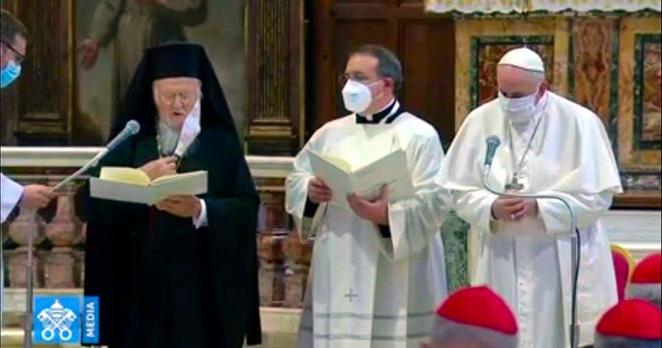
Nu există nici o diferenţă esenţială între papistaşi, protestantism, ecumenism şi alte erezii ale căror nume este “legiune” Ecumenismul este numele comun pentru pseudo-creştinismul pseudo-bisericilor din Europa Occidentală. 👉 https://c.aparatorul.md/0lw0t 👈 #CredintaOrtodoxa #Ecumenismul #Erezii #EuropaOccidentala #Legiune #Papistaşi #Protestantism #PseudoCreştinism #SfantulIustinPopovici
https://c.aparatorul.md/0lw0t
Nu există nici o diferenţă esenţială între papistaşi, protestantism, ecumenism şi alte erezii ale căror nume este “legiune” Ecumenismul este numele comun pentru pseudo-creştinismul pseudo-bisericilor din Europa Occidentală. 👉 https://c.aparatorul.md/2q5g3 👈 #CredintaOrtodoxa #Ecumenismul #Erezii #EuropaOccidentala #Legiune #Papistaşi #Protestantism #PseudoCreştinism #SfantulIustinPopovici
https://c.aparatorul.md/2q5g3