Waves 🌊 are everywhere, and understanding their behavior leads us to understand nature. The goal of CRC 1173 "Wave Phenomena" (https://www.waves.kit.edu) at #KITKarlsruhe is to analytically understand, numerically simulate, and eventually manipulate wave propagation under realistic scenarios by intertwining #analysis and #numerics.

Extended version of this video (YouTube): https://youtu.be/NsHWaKIpH80?si=fiqy4wBWro6OgSkU
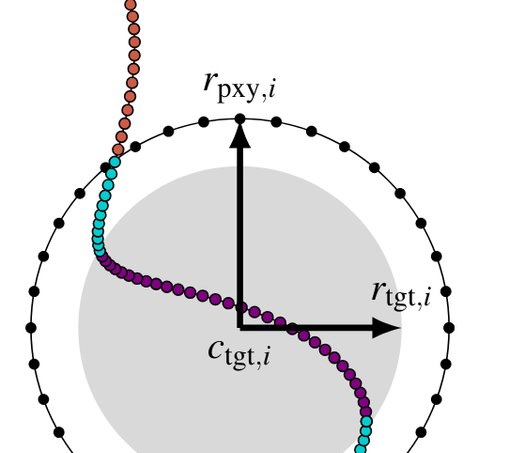
Ever wondered whether fast direct solvers are compatible with Quadrature by Expansion, a method for the evaluation of singular layer potentials? Wonder no more 🙂 In https://arxiv.org/abs/2504.13809, we offer an algorithmic recipe, analysis, an end-to-end error model, and some weighting tricks, the latter two applicable beyond QBX, along with numerical experiments. #layerpot #fastalg #fastalgorithm #numpde #numerics #scicomp #paper 🎓 📖
A Fast Direct Solver for Boundary Integral Equations Using Quadrature By Expansion

We construct and analyze a hierarchical direct solver for linear systems arising from the discretization of boundary integral equations using the Quadrature by Expansion (QBX) method. Our scheme builds on the existing theory of Hierarchical Semi-Separable (HSS) matrix operators that contain low-rank off-diagonal submatrices. We use proxy-based approximations of the far-field interactions and the Interpolative Decomposition (ID) to construct compressed HSS operators that are used as fast direct solvers for the original system. We describe a number of modifications to the standard HSS framework that enable compatibility with the QBX family of discretization methods. We establish an error model for the direct solver that is based on a multipole expansion of the QBX-mediated proxy interactions and standard estimates for the ID. Based on these theoretical results, we develop an automatic approach for setting scheme parameters based on user-provided error tolerances. The resulting solver seamlessly generalizes across two- and tree-dimensional problems and achieves state-of-the-art asymptotic scaling. We conclude with numerical experiments that support the theoretical expectations for the error and computational cost of the direct solver.

arXiv.org

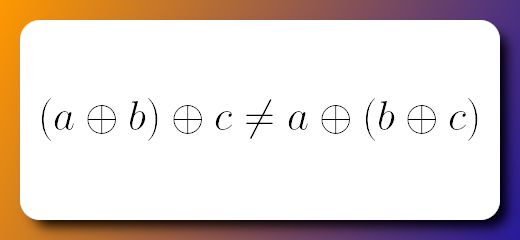
If you are into numeric representations and error arithmetic, you’ll like this post.

https://chadnauseam.com/coding/random/calculator-app

/ht @brucelawson

#numerics #NumericalRepresentation #computation

calculator-app - Chad Nauseam Home

"A calculator app? Anyone could make that." (this was originally a https://x.com/ChadNauseam/status/1890889465322786878, and has since been turned into an asterisk article) "A calculator app? Anyone …

Chad Nauseam Home
[New Blog Post] Oscillator Etudes: Frequency Sweeping https://philipzucker.com/oscillate/ #physics #numerics
Oscillator Etudes: Frequency Sweeping

We have a concept of a “frequency response” of a system we learn about. This is the “steady state” response of an input to a sinusoidal input.

Hey There Buddo!

Single, Double, and Decimal - the three floating-point types available in .NET. But did you know there's a fourth type?

Half is a fourth type that was introduced in .NET 5. To be honest I've must have missed it myself. It is 2 bytes in size and allows storing values up to around 65k. It also allows representing positive and negative zeros, +∞, -∞, and of course, NaN.

For the Half type, there are a few constants defined that represent common values used in calculations like E, Pi, and tau.

Docs 📑: https://learn.microsoft.com/en-us/dotnet/standard/numerics#floating-point-types
https://learn.microsoft.com/en-us/dotnet/api/system.half?view=net-8.0

Did you know about this type? Or maybe you've already used it?

#dotnet #numerics #halftype
---
If you find this useful, consider giving a like & share ♻

Numerics in .NET

Learn more about: Numerics in .NET

This week, the first ever cohort of students started in our two new master programs #ComputationalScience and ”Applied computational Science” at #LundUniversity. Students come in with a Bachelor in a natural science and proceed to take advanced courses in it. However, they also learn physics based modelling with differential equations and #numerics, statistical modelling with #Monte-Carlo-Methods, and data based modelling with #machinelearning. 1/

Want to work on computation plasma physics and #fusion? Apply to our collaborators' new posting and work with us on cutting edge #numerics and #Exascale!

#postdoc #hpc #hed #ICF #IFE #jobalert
https://jobs.smartrecruiters.com/LLNL/3743990002335986-plasma-physics-postdoctoral-researcher

Plasma Physics - Postdoctoral Researcher

Company Description: Join us and make YOUR mark on the World!Are you interested in joining some of the brightest talent in the world to strengthen the United States’ security? Come join Lawrence Livermore National Laboratory (LLNL) where our employees apply their expertise to create solutions for BIG ideas that make our world a better place.We are committed to a diverse and equitable workforce with an inclusive culture that values and celebrates the diversity of our people, talents, ideas, experiences, and perspectives. This is important for continued success of the Laboratory’s mission.Pay Range$108,840 Annually Job Description: We have an opening for a Postdoctoral Researcher to perform theoretical and computational research in the field of plasma physics with an emphasis on particle-in-cell (PIC) and fluid modeling of high energy density (HED) plasmas relevant to inertial confinement fusion (ICF) experiments. Your responsibilities will include the development of new theoretical models and numerical simulation capabilities and the application of these capabilities to study burning plasmas. The work will be performed within the LLNL Fusion Energy Sciences Program’s (FESP) Theory and Computation group, within the Physics Division.You will * Conduct research to develop new algorithms and techniques for PIC/fluid simulations of burning ICF plasmas. * Contribute to and actively participate in the conception, design, and execution of research to address defined problems. * Develop, implement, and apply numerical simulation techniques to advance existing kinetic and/or fluid modeling codes. * Collaborate with others in a multidisciplinary team environment to accomplish research goals. * Maintain an awareness of technical literature in assigned areas. * Pursue independent (complementary) research interests and interact with a broad spectrum of scientists internally and externally to the Laboratory. * Organize, analyze, and present data from research. * Publish research results in peer-reviewed scientific journals and present results at conferences, workshops, seminars and/or technical meetings. Perform other duties as assigned. Qualifications: * PhD in Plasma Physics or related discipline. * Experience developing theoretical and computational models of physical systems involving plasmas and/or fluid dynamics. * Experience implementing and applying computational models to such physical systems and analyzing and interpreting the results of the models. * Ability to develop independent research projects as demonstrated through publication of peer-reviewed literature. * Proficient verbal and written communication skills to collaborate effectively in a multidisciplinary team environment and present and explain technical information. Qualifications We Desire* Programming proficiency in C++, Fortran, Python and/or other scripting languages. Experience working with high-performance computing and/or GPU-based programming.* Familiarity with standard coding practices (e.g., Git, CI, Unit testing). Additional Information: All your information will be kept confidential according to EEO guidelines.Position InformationThis is a Postdoctoral appointment with the possibility of extension to a maximum of three years, open to those who have been awarded a PhD at time of hire date. Why Lawrence Livermore National Laboratory?Flexible Benefits Package* 401(k) * Relocation Assistance * Education Reimbursement Program * Flexible schedules (*depending on project needs) Inclusion, Diversity, Equity and Accountability (IDEA) - visit https://www.llnl.gov/diversityOur core beliefs - visit https://www.llnl.gov/diversity/our-values Employee engagement - visit https://www.llnl.gov/diversity/employee-engagement Security ClearanceNone required.  However, if your assignment is longer than 179 days cumulatively within a calendar year, you must go through the Personal Identity Verification process.  This process includes completing an online background investigation form and receiving approval of the background check.  (This process does not apply to foreign nationals.)  Pre-Employment Drug TestExternal applicant(s) selected for this position must pass a post-offer, pre-employment drug test. This includes testing for use of marijuana as Federal Law applies to us as a Federal Contractor. How to identify fake job advertisementsPlease be aware of recruitment scams where people or entities are misusing the name of Lawrence Livermore National Laboratory (LLNL) to post fake job advertisements. LLNL never extends an offer without a personal interview and will never charge a fee for joining our company. All current job openings are displayed on the Career Page under “Find Your Job” of our website. If you have encountered a job posting or have been approached with a job offer that you suspect may be fraudulent, we strongly recommend you do not respond.To learn more about recruitment scams: https://www.llnl.gov/sites/www/files/2023-05/LLNL-Job-Fraud-Statement-Updated-4.26.23.pdf Equal Employment OpportunityWe are an equal opportunity employer that is committed to providing all with a work environment free of discrimination and harassment. All qualified applicants will receive consideration for employment without regard to race, color, religion, marital status, national origin, ancestry, sex, sexual orientation, gender identity, disability, medical condition, pregnancy, protected veteran status, age, citizenship, or any other characteristic protected by applicable laws.We invite you to review the Equal Employment Opportunity posters which include EEO is the Law and Pay Transparency Nondiscrimination Provision.Reasonable AccommodationOur goal is to create an accessible and inclusive experience for all candidates applying and interviewing at the Laboratory.  If you need a reasonable accommodation during the application or the recruiting process, please use our online form to submit a request.  California Privacy NoticeThe California Consumer Privacy Act (CCPA) grants privacy rights to all California residents. The law also entitles job applicants, employees, and non-employee workers to be notified of what personal information LLNL collects and for what purpose. The Employee Privacy Notice can be accessed here.

LLNL
After ELF 🧝🏻‍♀️comes PIXIE 🧚‍♀️ -- a new way to perform cross-language AND cross-module optimization. Come join the demo during our public meeting next week: https://numba.discourse.group/t/pixie-demo-on-july-25th/2014 #python #compiler #jit #numba #llvm #pydata #numerics #hpc
PIXIE demo on July 25th

We planned to have a demo of the PIXIE component during the public Numba meeting next week on July 25th. PIXIE is a new component that is part of this year’s MVP. PIXIE enables Numba to perform cross-language cross-module optimization. You can find and preview the demo code and notebook at https://github.com/numba/pixie/tree/poc/numba_mvp/mvp. You can find link to the meeting event at this calendar.

Numba Discussion
Ever been irritated that Fast Multipole Methods require lots of special, problem-specific code for efficiency (e.g. specific to the Coulomb potential?) My student Isuru Fernando has fixed that for you: https://arxiv.org/abs/2305.17867 #fmm #paper #fastmultipole #pde #numerics #scicomp
Automatic Synthesis of Low-Complexity Translation Operators for the Fast Multipole Method

We demonstrate a new, hybrid symbolic-numerical method for the automatic synthesis of all families of translation operators required for the execution of the Fast Multipole Method (FMM). Our method is applicable in any dimensionality and to any translation-invariant kernel. The Fast Multipole Method, of course, is the leading approach for attaining linear complexity in the evaluation of long-range (e.g. Coulomb) many-body interactions. Low complexity in translation operators for the Fast Multipole Method (FMM) is usually achieved by algorithms specialized for a potential obeying a specific partial differential equation (PDE). Absent a PDE or specialized algorithms, Taylor series based FMMs or kernel-independent FMM have been used, at asymptotically higher expense. When symbolically provided with a constant-coefficient elliptic PDE obeyed by the potential, our algorithm can automatically synthesize translation operators requiring $\mathrm{O}(p^d)$ operations, where $p$ is the expansion order and $d$ is dimension, compared with $\mathrm{O}(p^{2d})$ operations in a naive approach carried out on (Cartesian) Taylor expansions. This is achieved by using a compression scheme that asymptotically reduces the number of terms in the Taylor expansion and then operating directly on this ``compressed'' representation. Judicious exploitation of shared subexpressions permits formation, translation, and evaluation of local and multipole expansions to be performed in $\mathrm{O}(p^{d})$ operations, while an FFT-based scheme permits multipole-to-local translations in $\mathrm{O}(p^{d-1}\log(p))$ operations. We demonstrate computational scaling of code generation and evaluation as well as numerical accuracy through numerical experiments on a number of potentials from classical physics.

arXiv.org