 David Ojcius
Lactic acid drives #NLRP3 #inflammasome activation and caspase-1–like cytokine cleavage via intracellular acidification
https://www.nature.com/articles/s41419-026-08708-y #OpenAccess #immunology
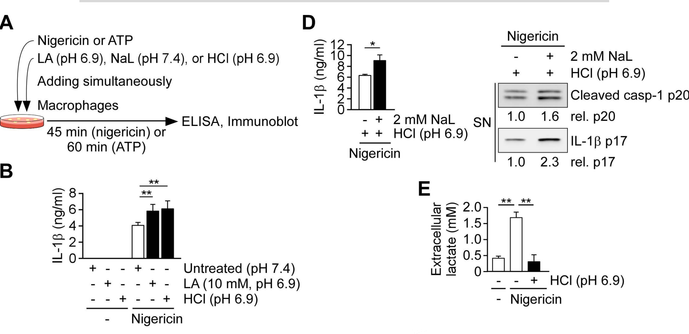
Lactic acid drives #NLRP3 #inflammasome activation and caspase-1–like cytokine cleavage via intracellular acidification
https://www.nature.com/articles/s41419-026-08708-y #OpenAccess #immunology
Which #immune pathways (beyond #TLRs) control #otitis media and #COPD-inducing #Moraxella catarrhalis #infection?
Si-Ming Man and colleagues from Australian National University reveal requirement for #guanylate-binding GBP proteins and #caspase11-#NLRP3 #inflammasomes
'Gefitinib (GF), the tyrosine kinase inhibitor (TKI) targeting epidermal growth factor receptor, initiates lung #inflammation through the NLR family pyrin domain containing 3 (NLRP3) inflammasome. However, the molecular targets and mechanisms underlying the inflammatory action of GF remain unknown. In this study, we identified mitochondrial Src family kinases (mSFKs) as key determinants of GF-induced #NLRP3 #inflammasome activation.'

Key Points. The tyrosine kinase inhibitors (TKIs) act as agonists for the NLRP3 inflammasome.The TKIs exhibit off-target activity against c-Src, Fgr, and Fyn.Hy
 The EMBO Journal
 Giuseppe Michieli
 Thiago Carvalho
 C. Harris Floudas
 Filip Janku