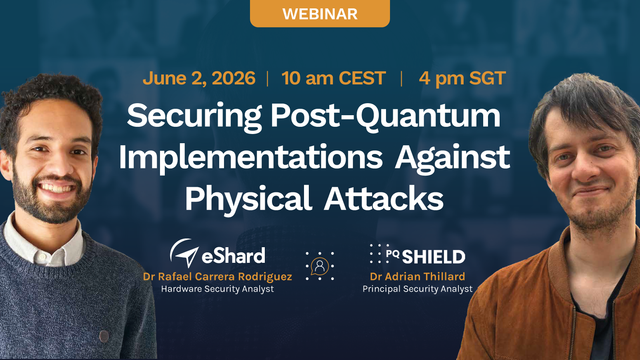
Last call to join us at our webinar about securing #PQC implementations against physical attacks 📢

🗓 June 2nd, 10 am CEST | 4 pm SGT
🔗 https://zoom.us/meeting/register/NIX4FovvREe3n6KJ2JbrqA

#postquantum #postquantumcryptography #pqc #hardware #hardwarehacking #nist #mlkem #cpa

Apple Bolsters Encryption with Quantum-Resistant Code Release

Apple is taking a major leap in securing our digital lives by releasing quantum-resistant code, adding an extra layer of protection against potential future threats. By integrating this advanced encryption into its corecrypto library, the company is safeguarding the data of over 2.5 billion active devices worldwide.

https://osintsights.com/apple-bolsters-encryption-with-quantum-resistant-code-release?utm_source=mastodon&utm_medium=social

#QuantumresistantEncryption #Apple #Corecrypto #Mlkem #Mldsa

Apple Bolsters Encryption with Quantum-Resistant Code Release

Boost your device's security with Apple's quantum-resistant code release, enhancing encryption and protecting user data - learn how to upgrade now securely.

OSINTSights

Apple udostępnia kod kryptografii postkwantowej dla iPhone’a i Maka na GitHubie

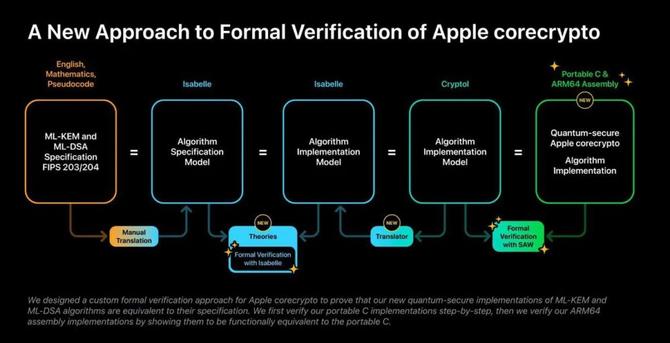
Apple opublikowało na GitHubie kod źródłowy biblioteki corecrypto wraz ze szczegółowym opisem technicznym swojej pracy nad kryptografią postkwantową. To kolejny krok po wprowadzeniu protokołu PQ3 w iMessage w 2024 roku.

Jak podaje 9to5Mac, Apple opublikowało na GitHubie kod źródłowy biblioteki corecrypto — niskopoziomowej biblioteki kryptograficznej używanej przez Security framework, CryptoKit i CommonCrypto we wszystkich urządzeniach Apple. Biblioteka odpowiada za szyfrowanie, haszowanie, generowanie liczb losowych i podpisy cyfrowe.

Repozytorium zawiera implementacje algorytmów ML-KEM i ML-DSA — dwóch standardów postkwantowych zatwierdzonych przez NIST, zaprojektowanych z myślą o ochronie przed zagrożeniami ze strony przyszłych komputerów kwantowych. Publikacja to kontynuacja prac rozpoczętych w 2024 roku, gdy Apple wprowadziło protokół PQ3 w iMessage, zapewniający ochronę postkwantową zarówno przy nawiązywaniu szyfrowanej rozmowy, jak i przy odświeżaniu kluczy szyfrowania.

Apple podkreśla, że opracowało własne narzędzia do formalnej weryfikacji kodu — istniejące rozwiązania nie spełniały wymagań firmy, bo corecrypto musi działać na całym portfolio sprzętowym Apple, w tym na urządzeniach z różnymi układami Apple Silicon. Dzięki tej weryfikacji udało się wykryć m.in. brakujący krok w wczesnej implementacji ML-DSA, który w skrajnych przypadkach mógłby prowadzić do cichego błędu kryptograficznego — niewidocznego dla standardowych zestawów testów.

<h2 class="text-text-100 mt-3 -mb-1 text-1 font-bold” style=”text-align: center;”>Co to oznacza dla zwykłego użytkownika? <p class="font-claude-response-body break-words whitespace-normal leading-2„>Dzisiejsze szyfrowanie — to, które chroni Twoje wiadomości, dane bankowe i hasła — opiera się na zadaniach matematycznych, których obecne komputery nie są w stanie rozwiązać w rozsądnym czasie. Problem w tym, że komputery kwantowe, nad którymi pracują dziś rządy i największe korporacje technologiczne, mogłyby te zadania rozwiązać w ciągu minut. To nie jest odległa science fiction — specjaliści szacują, że wystarczająco wydajne komputery kwantowe mogą pojawić się w ciągu najbliższej dekady.

Apple zablokowało oszustwa w App Store warte ponad 2,2 mld dolarów w 2025 roku

<p class="font-claude-response-body break-words whitespace-normal leading-2„>Co więcej, istnieje realne zagrożenie zwane atakiem „zbierz teraz, odszyfruj później” — służby wywiadowcze i cyberprzestępcy mogą już dziś przechwytywać zaszyfrowane dane i przechowywać je do czasu, gdy będą dysponować wystarczającą mocą obliczeniową, żeby je odczytać. Twoje dzisiejsze wiadomości czy dokumenty mogłyby zostać odszyfrowane za kilka lat.

<p #AppleBezpieczeństwo #AppleKryptografiaPostkwantowa #AppleSecurityResearch #AppleSzyfrowanie #corecryptoGitHub #iMessagePQ3 #kryptografiaKwantowa #MLDSA #MLKEM #NISTKryptografia

Java и постквантовый TLS

В JDK 27 появится JEP 527: гибридный post-quantum key exchange для TLS 1.3. Разбираем, что меняется в JSSE, зачем нужен X25519MLKEM768 и какие проблемы могут всплыть при миграции. А ты готов к квантовым атакам ?

https://habr.com/ru/articles/1038654/

#Java #JDK_27 #JEP_527 #TLS_13 #JSSE #PostQuantum_Cryptography #MLKEM #Hybrid_Key_Exchange #X25519MLKEM768 #javaxnetssl

Java и постквантовый TLS

Привет, Хабр! JEP 527 добавляет в JDK 27 поддержку post-quantum hybrid key exchange для TLS 1.3. Если приложение на стандартном JSSE-стеке через javax.net.ssl , то после перехода на JDK 27 с JEP 527...

Хабр
Seitenkanäle werden uns mit #MLKEM noch viel Freude auf mobilen Endgeräten machen.

Ansonsten sind die #AirGap Experimente von Mordechai Guri et. al. auch recht interessant: https://www.covertchannels.com/

Oder halt https://magdeburger-institut-fuer-sicherheitsforschung.de/#MJS-055 😉
Home | Air Gap Research Page

Air-Gap Research Page

Air Gap Research Pag
Using seeds as ML-KEM keys is one of those ideas that sounds elegant at first glance — and then the cryptographic rabbit hole opens up. Determinism, reproducibility, key derivation... each choice ripples through the whole system. The beauty of cryptography: every shortcut has a story to tell. 🔑 #cryptography #infosec #MLKEM
https://words.filippo.io/ml-kem-seeds/
Let’s All Agree to Use Seeds as ML-KEM Keys

ML-KEM private key seeds are vastly preferable to expanded decapsulation keys as a storage format. A plea to standardize on them.

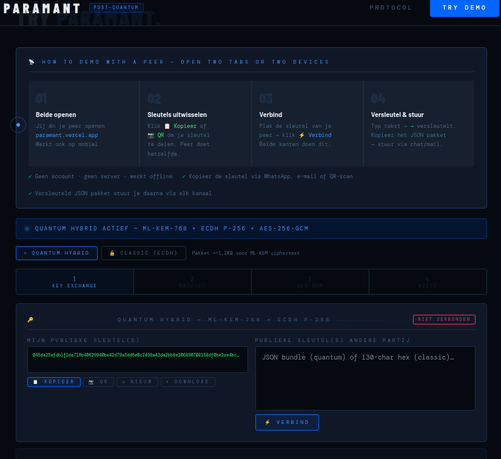
Feedback gezocht op:
→ Protocolontwerp & dreigingsmodel
→ Bekende beperking: nog geen Double Ratchet
→ Side-channel analyse

Whitepaper + demo: paramant.vercel.app

#PostKwantum #Cryptografie #MLKEM #PeerReview #InfoSec #WebCrypto

TLDR: I’ve implemented #QuantumResistant #Encryption into my #P2P messaging #webapp using #MLKEM (#Kyber) to protect against future #QuantumComputing threats. Read my latest #Blog post to see how I’m securing #DataPrivacy today.

My journey into #PostQuantum #Security
I’ve been working hard on my latest project update, focusing on how we can protect our #Privacy from the looming threat of "harvest now, decrypt later" attacks. I just finished writing a technical deep dive into how I’ve implemented #QuantumResistant #Cryptography into my #P2P messaging platform.

The core of my approach involves using #MLKEM (formerly #Kyber) to ensure long-term #DataSecurity. I’m particularly proud of the #CascadingEncryption layer I’ve built; by combining #NIST standards with the #SignalProtocol, I'm ensuring that your #Communications remain #Secure even if a single algorithm is compromised in the future.

If you are into #OpenSource, #InfoSec, or #Decentralized #Tech, I’d love for you to read about my implementation and the challenges of bringing #QuantumResistance to the #Browser using #JavaScript.

Read my write-up here:
https://positive-intentions.com/blog/quantum-resistant-encryption

Demo: https://cryptography.positive-intentions.com/?path=/story/cascading-cipher-ml-kem-demo--mlkem-standalone

Crash course in ML-KEM: https://positive-intentions.com/blog/ml-kem-beginner-tutorial

I'm excited to hear what the #Developer and #CyberSecurity community thinks about this #PrivacyFirst milestone!

Introducing Quantum-Resistant Encryption in JavaScript | positive-intentions

We're excited to announce that our P2P messaging application now supports quantum-resistant encryption using ML-KEM (CRYSTALS-Kyber), a NIST-standardized post-quantum key encapsulation mechanism. This addition brings quantum-resistant security to our cascading cipher system, providing protection against future quantum computing attacks.

positive-intentions
Hanno Becker is teaching #mlkem/#mldsa-native at the #PQCSA workshop Open-Source #PQC Libraries and Implementations today in Brussels.
https://www.esat.kuleuven.be/cosic/events/pqcsa-workshop-pqc-migration/program/
#quantum #postquantum #cosic #kuleuven