💚Passend zum Ende der "Love Data Week" haben wir noch ein Update zu #RADAR, unserem Forschungsdatenrepository: Zukünftig können auch Institutionen außerhalb Deutschlands ganz unkompliziert ein eigenes institutionelles #Repository in der #Cloud anbieten.

👉Mehr Details in unserer News! https://www.fiz-karlsruhe.de/de/nachricht/radar-update-erweiterte-nutzungsmoeglichkeiten-und-flexible-zahlungsoptionen

Allen einen schönen Ausklang der Love Data Week und ganz viel Datenliebe - passend zum Valentinstag! 🥰

#teamFIZ #FDMPower #FDM_LDW #LoveData24 #langzeitarchivierung
@RADAR

RADAR Update: Erweiterte Nutzungsmöglichkeiten und flexible Zahlungsoptionen | FIZ Karlsruhe

Gute Nachrichten pünktlich zur internationalen Love Data Week: RADAR, das Forschungsdatenrepository von FIZ Karlsruhe, öffnet sich einem internationalen Nutzerkreis.

My Data, My Love: In case you missed it or want to re-view our workshop on #datapublication during #loveData24 - materials are now online.
Watch it on Youtube and check the slides on Zenodo: https://t1p.de/6hvsb
#LoveDataWeek #rdm
Video and slides for the "My Data, my Love: How to Wow the World with Your Data Publications" are online! - Network of Expertise for Research Data in Thuringia

Workshop materials are now available online!

Die Materialien unseres Workshops zur Publikation von #Forschungsdaten während der #LoveDataWeek sind online -
Mitschnitt auf https://youtu.be/i7n7eDVqnyY und Folien bei https://zenodo.org/records/10657568
#loveData24 #datapublication #fdm
My Data, My Love: How to Wow the World with Your Data Publications - a Love Data Week 2024 Workshop

YouTube
@coulmont Baptiste, tu n’as rien à ajouter sur le sujet ? #LoveDataWeek #lovedata24
Celebrate International #LoveDataWeek with RGD's free, open biological data at https://rgd.mcw.edu/. Access structured, standardized data for rat, mouse, human & 7 other mammalian species, supporting genetics, genomics, phenotypes & disease-related research #lovedata24
Rat Genome Database

The Rat Genome Database houses genomic, genetic, functional, physiological, pathway and disease data for the laboratory rat as well as comparative data for mouse and human. The site also hosts data mining and analysis tools for rat genomics and physiology

❤️ We love thee with a love who’s
Only ever FAIR and open. We love thee with the breadth
Including not only neuroscience data, but any you choose,
And we shall but love thee better after death.❤️

https://incf.org/resources/working-groups

#LoveData24 #LoveDataWeek #OpenData #FAIR #OpenNeuro #neuroscience #neuroinformatics #neuroinformagical

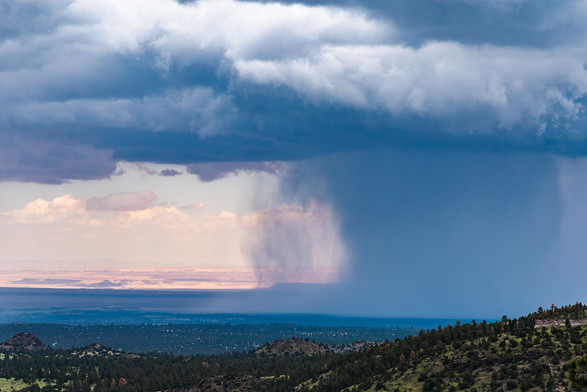
Ready to unravel the connection between the North American Monsoon and Saguaro #cactus? 🌵 Let Frank Reichenbacher and William Peachey guide you into the hidden world of the North American Monsoon's onset in south-central #Arizona, intertwined with the fascinating phenology of Saguaro cactus (Carnegiea gigantea). https://doi.org/10.25422/azu.data.23925957. Image Deborah Lee Soltez CC0🌵🌧️ #LoveData24 #MonsoonMysteries #OpenData #OpenScience #climate #UArizona
Raw data: Unreported Characteristics of the North American Monsoon

Raw data for "Unreported Characteristics of the North American Monsoon". The North American Monsoon (NAM) in southern Arizona continues to be a topic of interest to ecologists, climatologists, and citizens as well as the triggers and characteristics of plant growth and reproduction in relation to the onset of the monsoon. In researching the onset of the North American Monsoon (NAM) in south-central Arizona relative to the phenology of Saguaro cactus (Carnegiea gigantea) and other Sonoran Desert species we identified interesting and previously unreported features in the NAM rainfall data. We present preliminary descriptive analyses of (1) monsoon onset as measured by the first day after June 1 with precipitation ≥10 mm (1990-2022), (2) first day of year warming of Sea Surface temperatures (SST) in the Gulf of California to ≥29º C measured across five open-sea blocks (mean 9452 km2), and (3) El Niño Southern Oscillation (ENSO) anomaly with a threshold of +/- 0.5º C for the Oceanic Niño Index (ONI) in the Niño 3.4 region (5ºN-5ºS, 120º-170ºW). Three patterns emerge from our analyses: (1) The day of the year of monsoon onset occurs approximately 12 days earlier in the year from 1990-2022 in Pima County, Arizona. (2) There appears to be a signal in the rainfall onset data very roughly approximating cycles of ENSO Oceanic Niño Index (ONI) anomalies in Niño region 3.4. (3) Gulf of California sea surface temperature (SST) and monsoon onset data support an expected link between the timing of SST warming and monsoon rainfall onset.For inquiries regarding the contents of this dataset, please contact the Corresponding Author listed in the README.txt file. Administrative inquiries (e.g., removal requests, trouble downloading, etc.) can be directed to [email protected]

figshare

We have enjoyed celebrating International Love Data Week all week with our community. 😍

We’re curious. What is your favorite part of your ORCID Record?

Take a screenshot or just tell us about it. Use the hashtag #ORCIDLovesData and we’ll share some responses from the community.
#LoveData24

Curated data is our kind of data. Why? Because Dryad curators help connect datasets with related outputs like research articles to ensure data is viewed in context. #LoveData24

❤️ We love thee with a love who’s
Only ever FAIR and open. We love thee with the breadth
Including not only neuroscience data, but any you choose,
And we shall but love thee better after death.❤️

https://incf.org/resources/working-groups

#LoveData24 #LoveDataWeek #OpenData #FAIR #OpenNeuro #neuroscience #neuroinformatics #neuroinformagical