Light intensity steers molecular assemblies into 1D, 2D or 3D structures
Constructing out-of-equilibrium molecular assemblies that deviate from thermodynamic equilibrium is a central challenge in materials science. While numerous studies have reported the creation of such states using external energy sources such as chemical fuels or light, few systems can adaptively access different states depending on how much energy is input. Developing such systems could offer new design principles for advanced functional materials capable of flexibly adapting to environmental changes, much like biological systems.
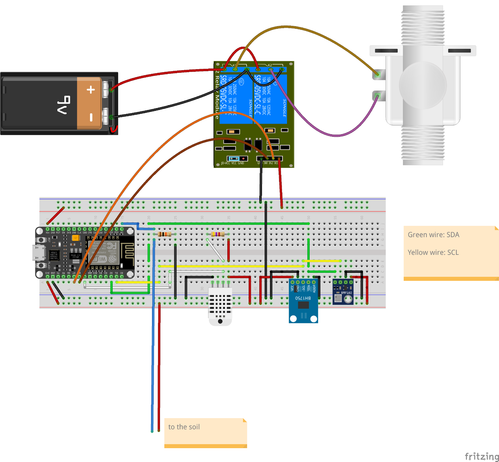
How to make an automatic sprinkler with ESP8266 controlled by Arduino Cloud
https://www.techrm.com/how-to-make-an-automatic-sprinkler-with-esp8266-controlled-by-arduino-cloud/
#arduinocloud, #atmosphericpressure, #atmosphericpressuresensor, #BH1750, #BMP180, #breadboard, #cloud, #datalogger, #DHT22, #Dupontcables, #esp8266, #humidity, #internetofthings, #iot, #KiCad, #library, #lightintensity, #lightintensitysensor, #platformio, #resistor, #scheduler, #sensor, #sensors, #temperature, #tutorial, #wifi

How to make an automatic sprinkler with ESP8266 controlled by Arduino Cloud - Techrm
In this article, we will introduce an automatic sprinkler with ESP8266 controlled by Arduino Cloud.
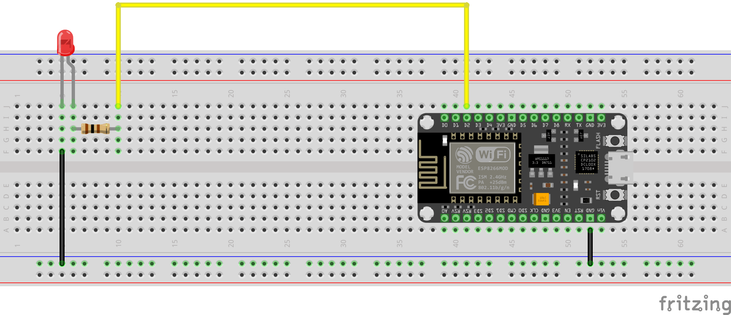
How to use the Arduino Cloud scheduler with an ESP8266 on PlatformIO
https://www.techrm.com/how-to-use-the-arduino-cloud-scheduler-with-an-esp8266-on-platformio/
#arduinocloud, #breadboard, #cloud, #Dupontcables, #esp8266, #internetofthings, #iot, #led, #LEDdiode, #library, #lightintensity, #platformio, #PWM, #redLED, #resistor, #tutorial

How to use the Arduino Cloud scheduler with an ESP8266 on PlatformIO - Techrm
In this article we will explore one of the elements of the Arduino Cloud dashboard: the scheduler. We will use this element to command a red LED driven by our
How to create a remote control system of two LEDs with ESP8266,Arduino Cloud and PlatformIO
https://www.techrm.com/how-to-create-a-remote-control-system-of-two-leds-with-esp8266arduino-cloud-and-platformio/
#arduinocloud, #breadboard, #cloud, #digital, #digitalelectronics, #Dupontcables, #esp8266, #internetofthings, #iot, #led, #LEDdiode, #library, #lightintensity, #NodeMCU, #oscilloscope, #platformio, #PWM, #redLED, #resistor, #tutorial
How to create a remote control system of two LEDs with ESP8266,Arduino Cloud and PlatformIO - Techrm
Welcome to the article dedicated to the creation of an interactive circuit that exploits the potential of Arduino Cloud and the ESP8266, a microcontroller
How to control the brightness of two independent LEDs via PWM signal adjusted by two potentiometers with ESP32 and PlatformIO
https://www.techrm.com/how-to-control-the-brightness-of-two-independent-leds-via-pwm-signal-adjusted-by-two-potentiometers-with-esp32-and-platformio/
#breadboard, #digital, #digitalelectronics, #Dupontcables, #esp32, #internetofthings, #iot, #led, #LEDdiode, #library, #lightintensity, #linux, #NodeMCU, #oscilloscope, #platformio, #potentiometer, #PWM, #redLED, #resistor, #tutorial


How to control the brightness of two independent LEDs via PWM signal adjusted by two potentiometers with ESP32 and PlatformIO - Techrm
The control of the brightness of the LEDs (for example by means of potentiometers) is a fundamental element in the design of electronic systems and in the field of the Internet of Things (IoT). Thanks to PWM (Pulse Width Modulation) technology, it is possible to regulate the brightness of an LED in a precise and controlled way. In this article, we will explore how to use ESP32, a powerful IoT development board, together with the PlatformIO development environment, to control the brightness of two independent LEDs based on the reading of two independent potentiometers.
 Hacker News
 Techrm