 Wintermute_BBS
My4TH discrete cpu computer uses I2C devices and custom FORTH code by myself to do some show off ...
https://diode.zone/videos/watch/8c457253-4a1c-4ca3-92ee-508c105f6d81

My4TH discrete cpu computer uses I2C devices and custom FORTH code by myself to do some show off ...
https://diode.zone/videos/watch/8c457253-4a1c-4ca3-92ee-508c105f6d81
How to make an automatic sprinkler with ESP8266 controlled by Arduino Cloud
https://www.techrm.com/how-to-make-an-automatic-sprinkler-with-esp8266-controlled-by-arduino-cloud/
#arduinocloud, #atmosphericpressure, #atmosphericpressuresensor, #BH1750, #BMP180, #breadboard, #cloud, #datalogger, #DHT22, #Dupontcables, #esp8266, #humidity, #internetofthings, #iot, #KiCad, #library, #lightintensity, #lightintensitysensor, #platformio, #resistor, #scheduler, #sensor, #sensors, #temperature, #tutorial, #wifi
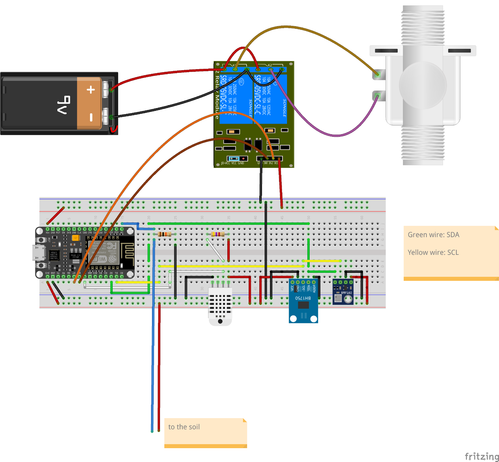
Come creare un sistema di irrigazione automatica con ESP8266 controllato da Arduino Cloud
#arduinocloud, #BH1750, #BMP180, #breadboard, #caviDupont, #cloud, #datalogger, #DHT22, #digitale, #elettronicadigitale, #esp8266, #intensitàdiluce, #internetdellecose, #iot, #KiCad, #libreria, #NodeMCU, #platformio, #pressioneatmosferica, #resistenza, #scheduler, #sensore, #sensorediintensitàdiluce, #sensoredipressioneatmosferica, #sensori, #temperatura, #tutorial, #umidità, #wifi

Hat schon mal jemand einen frischluft.works mit einem #BMP180- (Luftdruck) und einem #AHT10-Modul (Temperatur und Feuchtigkeit) zum laufen gebracht.
Auf dem Board is dies ja angedacht, im Code¹ auskommentiert mit der Bemerkung "NO MORE MEMORY :(". War da zufällig noch jemand findig und hat das magisch hingebogen?
#co2 #sensor #frischluftWorks
Arduino Variometer in a Mint Tin
While humans have done a pretty good job of figuring out how to fly with various mechanical contrivances, the fact remains that our natural senses aren't really well suited to being off the ground. For example, unless you have a visual reference point, determining which way is up is quite a bit harder than you might think. Which is why pilots rely on instruments such as the variometer, that determines the current rate of climb and descent, to guide them when their eyes can't be trusted.
It's also a very handy thing to have when paragliding, which is why [mircemk] decided to build a hand-held version using the Arduino Nano and a BMP180 pressure sensor. Since you don't want to be staring at a little screen in mid-air, the device conveys changes in altitude with audio tones. A rising tone means you're moving upwards, while a lower tone indicates downward travel. In the video below, you can see that it only takes a meter or two of vertical movement before the device picks up on the change.
Looking for a simple yet rugged enclosure for the device, [mircemk] found a metal mint tin that would hold the microcontroller, sensor, buzzer, and the 9 V battery that powers it all. We know what you're thinking, but don't worry; holes have been popped in the sides to make sure there's no pressure difference inside the tin. There's plenty of room to replace the alkaline battery with a rechargeable pack and associated charge controller, but we imagine there's a certain security in tossing in a fresh new primary cell before slipping the surly bonds of Earth.
If you're in interested DIY instrumentation for a glider or other aircraft that actually has a proper cockpit, this sunlight readable flight computer made from a Kobo e-reader would be a great start.
#arduinohacks #altitude #arduinonano #bmp180 #pressuresensor #variometer

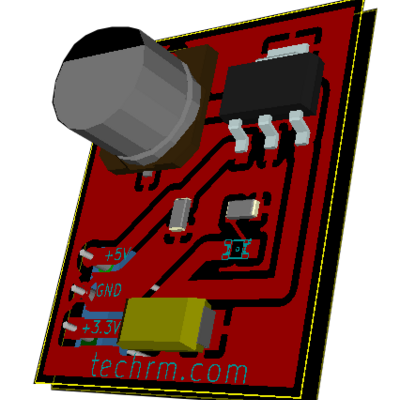 Techrm
 minzmade

 hackaday unofficial
 Haru
Haru