Wozu sollte ich da mir da #VME antun? Das läuft seit Jahren ohne großen Probleme seit #CentOS 5, 6, 7, 8, Stream und nunmehr #Archlinux out oft the box, Lizenzkostengedöns.

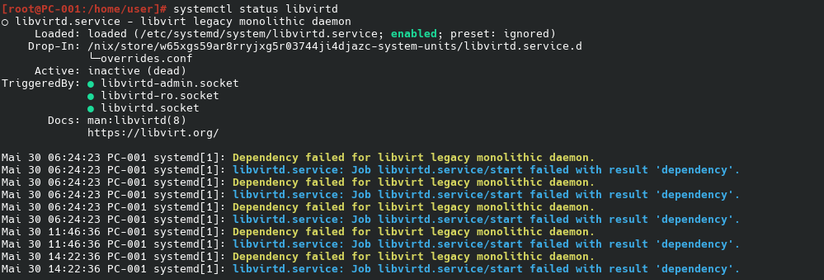
Just an fyi when you're updating from 25.11 to 26.05, are using #libvirt and have been too lazy to properly setup your TPM (e.g. because you're using it for the other OS on a dual boot system)
Then it won't start after updating to 26.05 anymore thanks to some change in the systemd this gem here now shows up in the logs....
(virt-secret-init-encryption.service is a dependency of the libvirtd.service unit)
Anyone know how to configure the TPM so that it works for both OSes?
My favorite hobby is my #homelab. It’s where I continuously improve my Unix administration and networking skills. It took me basically all weekend but I have my home lab completely isolated and virtualized on an 8th gen i7 Dell OptiPlex 7060 with 32GB of RAM. I also have a 14TB Iron Wolf HD
The hardest part was setting up the virtual network. I’d never done that kind of thing manually. I’d just used whatever default network that #libvirt created for me. This was hard and did require googling and reading #manpages. The problem with the wizard that creates networks is there’s no option for both DNAT and SNAT.
I learned a lot and got it working perfectly despite the garbage #verizon CR1000A router and its notorious bug. Yeah, you can’t add static routes. So I’m in a double NAT situation. Turns out this is okay because it effectively isolates the homelab. All I had to do was add static routing on my laptop and desktop.
Nobody else will be able to access my homelab unless they know its network and gateway addresses, much less how to configure a static route. It’s basic but works.
I'm using vCPU tuning now.
It looks like this:
<cputune>
<shares>10000</shares>
</cputune>
That's the max amount of shares #libVirt / #VirtManager lets me allocate.
More shares = more priority (bigger fish).
The #PiHole #VM gets the max, because it runs DNS & DHCP - when it needs CPU cycles, it bloody well gets 'em!
#Nextcloud gets 5000, #HomeAssistant 4000, and #Jellyfin 1000 - they all can have the whole CPU, as long as there's no bigger fish around.
I think I've worked out what was wrong with my VMs on Fedora 44.
Looks like the firewall rules that Docker sets up do not play well with the ones libvirtd adds.
Forcing Docker to use nftables rather than iptables/firewalld appears to fix things
https://github.com/moby/moby/issues/52612

Description After installing docker engine on a fresh Fedora 44 install all my lobvirt/boxes VMs are unable to connect to the internet via the default nat virtual network. I installed using the ins...
Anybody else seeing network problems with Boxes/Libvirt VMs on Fedora 44?
I imported an existing disk image and tried to create a new from a Ubuntu ISO and neither get NAT network access.
If so please add any details from here:
Ansible roles: proxy_env, ssh, etc_hosts, libvirt released
https://blog.wagemakers.be/blog/2026/05/03/ansible-proxy_env-ssh-etc_hosts-libvirt_released/
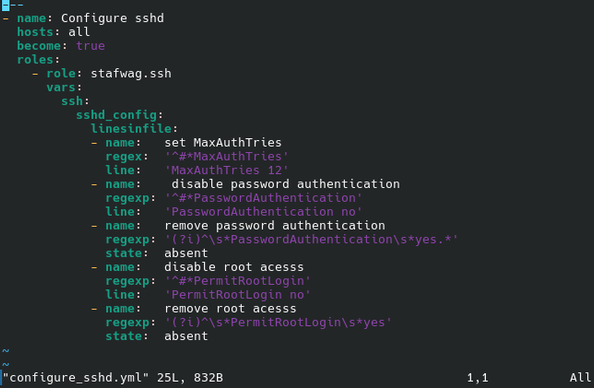
Made some time to do some work for a few #ansible roles that I maintain. You’ll find the new releases in this blog post.
* stafwag.proxy_env 2.1.0
* stafwag.ssh 1.1.1
* stafwag.libvirt 2.1.0
* stafwag.etc_hosts 1.1.1