#Writing, #Knitting, #LearningJapanese, #Taekwondo... I have too many hobbies, yet I don't want to give up on any of them. This has prompted me to consider what I want from each of these activities and where my priorities actually lie.
I will share more in my #newsletter post for July.
#Hobby #Priorities #Thoughts

#Japanese #LanguageLearning #pronunciation #voice #learningJapanese

So I started taking speaking lessons for Japanese. A teacher is helping me with my voice, pronunciation and intonation.

It turns out that I've been speaking with "an english like voice" the whole time. I use my voice box too much, and I should have been using my breath more.

Normal speech in Japanese is something between speaking (all voice) and a whisper (all breath).

On top of that, my tongue was in the wrong position the whole time. It should have been further to the back, almost touching the back of my throat.

When I put it in the right place and speak, the teacher says I sound a lot better but it feels super unnatural to do. I'm just not used to speaking from that position.

I think I need to just get used to it, almost closing the throat with the tongue means the air vibrates more in the mouth and that compensates for the voice box doing less work.

Next goals are:
- Getting used to speaking from the right position
- Learning to hear the difference in my speech
- Learning to hear it in other speech (there's like a vibratey buzzy quality in english that is largely absent in Japanese)
Watching the latest episode of 田鎖ブラザーズ (Tagusari Bros.), I noticed I'm finally picking up the different levels of polite speech I struggled with for so long (I still do, but it's a start 😅).

When one detective asks a medical examiner if she can talk to him for a moment, she asks 少しお話しいただけますか。 Later on, another detective asks a 19-year old the same question, but this time it's ちょと話せるか。

I take it as a good sign that I'm noticing these subtleties now (although I'm sure Japanese people do not consider them subtleties 😉).

#LearningJapanese #日本語を勉強する

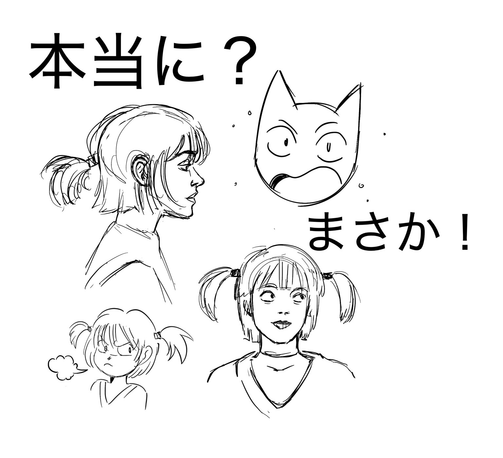
Doodle
Dodo in che senso stai imparndo il giapponese?
#doodle #japanese #イラスト #learningjapanese

For #LearningJapanese I have an #anki deck full of Heisig's #Kanji meanings - showing the keyword so I have to draw the Kanji. I've been using it for literally years, and I still mess it up a lot.

It occurred to me that maybe I keep making mistakes because my deck is one-sided, so I decided to get a second deck that shows me the Kanji and forces me to identify the keyword.

Unfortunately, the second deck is from a later edition of the book, often with different keywords 🤦

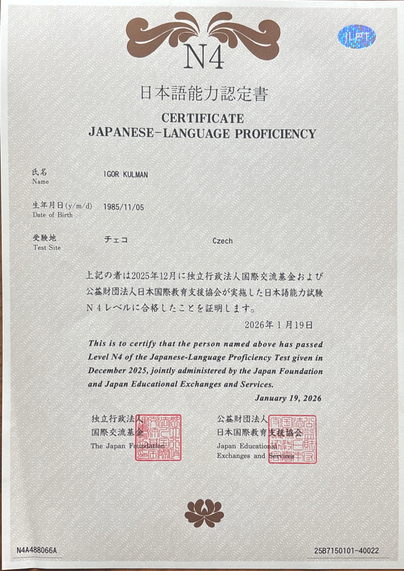
Finally got my certificate for passing the Japanese Language Proficiency Test for the N4 level in December. Now I passed N5 and N4 with a year between them but N3 will not be that easy, or that fast.

#JLPT #JLPTN4 #learningjapanese #japanese

I usually think Japanese is a more poetic, or at least more complex, language than English or German (the only two languages I'm fluent in), but sometimes you find it's the other way around.

I came across 盗作 (tōsaku) today, meaning "plagiarism", and realised that I can't think of a native single English or German word for this, only the Latin-derived term.

盗作 on the other hand is nicely simple - 盗 means "steal" and 作 means "make" or "production", so 盗作 is stealing what someone has made or produced. Related, the 作 kanji is also used in 作家 (sakka), meaning "author". I like these terms because they're easy to remember. 😊

BTW, there is another tōsaku, but written with different characters (倒錯), meaning "perversion" - but this, as they say, is a story for another day. 😅

#LearningJapanese #日本語を勉強する