Amn’t I glad we use “amn’t” in Ireland
From ‘An Irish Childhood in England: 1951’ by Eavan Boland (full poem on my Tumblr):
let the world I knew become the space
between the words that I had by heart
and all the other speech that always was
becoming the language of the country that
I came to in nineteen fifty-one:
barely-gelled, a freckled six-year-old,
overdressed and sick on the plane,
when all of England to an Irish child
was nothing more than what you’d lost and how:
was the teacher in the London convent who,
when I produced “I amn’t” in the classroom
turned and said—“You’re not in Ireland now.”
I grew up in Ireland using expressions and grammatical constructions that I took to be normal English, only to discover years later that what counts as normal in language usage can be highly dependent on geography and dialect. I amn’t sure when I realised it, but amn’t is an example of this.
Standardized English has an array of forms of the verb be for various persons and tenses with a negative particle (n’t) affixed: isn’t, wasn’t, aren’t, weren’t. But there’s a curious gap. In the tag question I’m next, ___ I?, the usual form is the unsystematic am I not or the irregular aren’t I (irregular because we don’t say *I are). Why not amn’t?
Amn’t I talking to you? (Anne Emery, Death at Christy Burke’s, 2011)
Amn’t I after telling you that, said Donal. (Sean O’Casey, Inishfallen, Fare Thee Well, 1949)
Amn’t /’æmənt/, though centuries old, is not part of standardized English. But it is common in Ireland, used especially in colloquial speech though not limited to informal registers. It’s also used in Scotland (alongside amnae and other variants) and parts of England – the OED says the north, and west midlands – and occasionally elsewhere, such as Wales.
How amn’t came to be so geographically limited is not fully clear. Another variant, an’t, probably supplanted it in general usage because speakers wanted to avoid sounding /n/ immediately after /m/; see Michael Quinion and Robert Beard for brief commentary on this. David Crystal says it was therefore:
a natural development to simplify the consonant cluster. The final /t/ made it more likely that the simplification would go to /ant/ rather than /amt/, and this is what we find in 18th century texts, where it appears as an’t.
An’t, also spelt a’n’t, is the “phonetically natural and the philologically logical shortening”, writes Eric Partridge in Usage and Abusage. It too fell from favour, but not before morphing in two significant ways. It gave rise to ain’t, which has its own lively history, and it also began being spelt aren’t (by “orthographic analogy”, in Crystal’s phrase), which is pronounced the same as an’t in non-rhotic accents.
This explains aren’t I, which would otherwise seem a grammatical anomaly. Indeed, Gabe Doyle notes that its irregularity “earns the ire of the accountants” of English. But it has steadily gained acceptability in major English-speaking regions. Irish and Scottish dialects are the exception in retaining and favouring its ancestor, amn’t I.
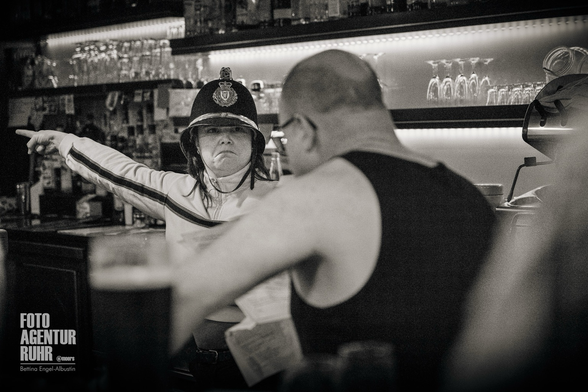
[image source]
Despite its vintage, its logic, and its convenience, not everyone likes amn’t. It’s dismissed as “ugly” by Eric Partridge and as “substandard” by Bryan Garner in his Dictionary of Modern American Usage. Patricia O’Conner and Stewart Kellerman describe amn’t I as “clunky” in Origins of the Specious.
Garner is wrong, and the other pronouncements are subjective or prejudicial. Amn’t is not part of standardized English, but it is thoroughly normal in Irish English. There’s nothing intrinsically unsound or deficient about it unless you revere prestige. It’s often called awkward, but it doesn’t feel awkward if you grow up with it. Even aesthetically, amn’t has unique appeal.
Amn’t I with you? Amn’t I your girl? (James Joyce, Ulysses, 1922)
Ye don’t want me, don’t ye? And amn’t I as good as the best of them? Amn’t I? (Patrick MacGill, The Rat-pit, 1915)
So how is amn’t used? Commonly in questions: straightforward interrogative (Joyce, above), tag (MacGill), and rhetorical (see post title). These are the structures typically noted by lexicographers: Robert Burchfield’s revision of Fowler says it’s “used as part of the tag question amn’t I?”, while Terence Dolan’s Dictionary of Hiberno-English associates it with “negative first-person questions”.
Neither Burchfield nor Dolan mentions other uses, but amn’t is also used, for example, in declarative statements of the form I amn’t. Though even Irish people, in my experience, usually say I’m not in such cases, some of them also say I amn’t.
I amn’t sure I should go on at all or if you’d like a line or two from your bad old penny. (Joseph O’Connor, Ghost Light, 2010)
And you, my poor changling, have to go to Birmingham next week, and I, poor divil, amn’t well enough to go out to far-away places for even solitary walks. (J.M. Synge, Letters to Molly, 1971)
A bit odder is the double negative question amn’t I not, which I’ve come across in both tags (I’m not drunk neither, amn’t I not) and more centrally (amn’t I not turble [terrible] altogether). A straw poll I held on Twitter suggests, unsurprisingly, that it’s a good deal rarer than other uses of amn’t, but several people still confirm using it.
My Twitter query also showed that amn’t occurs in more than just tag questions in Scotland, disproving a claim I’d encountered earlier. It prompted lots of anecdata and discussion on the word’s contemporary use in Ireland and elsewhere, and is available on Wakelet for interested readers.
If I amn’t mistaken, the pinch is here. (Athenian Gazette, May 1691)
Oh, Peader, but amn’t I Dublin born and bred? (Katie Flynn, Strawberry Fields, 1994)
Amn’t may grow in frequency and stature or it might, like ain’t, remain quite stigmatised in formal English. At the moment it’s undoubtedly a minority usage, with just four hits in the vast COHA corpus, five in COCA, and one in the BNC. Even GloWbE, with its 1.9 billion words from informal sources, offers a mere 31 hits.
Last year I retweeted a comment from @Ann_imal, a US speaker who said she had “started saying ‘amn’t I’ instead of ‘aren’t I,’ and no one (except AutoCorrect) has questioned me”. A search on Twitter suggests she’s not alone: amn’t has modest but undeniable currency in Englishes and idiolects around the world.
Social attitudes are decisive. Language Hat has noted that children acquiring language sometimes use amn’t – it is, after all, an intuitive construction – only to lose it along the way; a search on Google Books returns similar reports. LH used the word himself, and says, “I don’t remember when or why I stopped. The pressures of ‘proper English’ are insidious.”
In a neat inversion of the usual pattern, a commenter at Language Log recalls using aren’t I as a child and being corrected to amn’t I. More of this kind of parental guidance, or at least less proscriptive regulation in the other direction, may help amn’t gain more of a foothold outside Ireland and Scotland.
Not that I’ve anything against aren’t I, or ain’t for that matter. But if anyone felt they wanted to adopt amn’t and got past the social barrier, they would likely find it a handy, pleasing contraction. And that counts for a lot these days, amirite amn’t I right?
https://twitter.com/StanCarey/status/822016562953682945
*
Today, by the way, is (US) National Grammar Day, which by semantic sorcery I’m interpreting as International Grammar Day to highlight a characteristic feature of grammar in Ireland. The Sentence first archives have lots more Irish English grammar and vocabulary.
Updates:
Eavan Boland has also written about this episode in prose, in her book Object Lessons (1995):
“Language is fossil poetry,” says Emerson, and it may well be. But it also home truth. Whatever the inventions and distortions of my imaginings, my tongue, the sounds it made in my mouth, betrayed me. I was no English Alice. I was an Irish child in England. […]
The inevitable happened. One day my tongue betrayed me out of dream and counterfeit into cold truth. I was in the cloakroom in school in the middle of the afternoon. A winter darkness was already gathering through one of the stubborn fogs of the time. A teacher was marshaling children here and there, dividing those who were taking buses from those who were being collected. “I amn’t taking the bus,” I said. I was six or seven then, still within earshot of another way of speaking. But the English do not use that particular construction. It is an older usage. If they contract the verb and the negative, they say, “I’m not.”
Without knowing, I had used that thing for which the English reserve a visceral dislike: their language, loaded and aimed by the old enemy. The teacher whirled around. She corrected my grammar; her face set, her tone cold. “You’re not in Ireland now” was what she said.
At her blog The Other Side of Sixty, Corkonian wisewebwoman says: “you wouldn’t believe the shellacking I took for brazenly using ‘amn’t’ when I moved to Canada. Laughter, disbelief and mockery ensued.”
I like a good coincidence. While editing this post I listened to the Mogwai song ‘Wizard Motor‘ on repeat, unaware, before a tweet from Helen McClory, that Mogwai also have a song called ‘Moses? I Amn’t’:
#amnt #contractions #dialects #eavanBoland #grammar #hibernoEnglish #ireland #irishBooks #irishEnglish #irishEnglishGrammar #irishLiterature #lexicography #linguistics #morphology #nationalGrammarDay #negation #poetry #prescriptivism #sociolinguistics #standardizedEnglish #usage #words #writing
 halberkapitel

 Valdeloire
 Sentence first
 skua
skua
 FID Anglo-American Culture
 Waywords Studio
 Hokkaido Market ☑️
 Anna June Pagé