89 new PhDs from the University of Iceland in 2025

December 1st is a ceremony for the new PhDs

5 of those were from Biology programme, spanning #Arcticcharr #genomics, #whale #bioacoustics, #speciesInteractions, #invasionbiology and #transgenerational #plasticity , all with #AquaticAnimals

Picture #UIceland

https://english.hi.is/news/almost-90-candidates-completed-phd-university

OnlineFirst - "Strange birds of a feather: Israeli common myna, between invasiveness and belonging" by Eran Nisan Schwarzfuchs:

#Invasionbiology #multispecies #environment #alienspecies #Israel

https://journals.sagepub.com/doi/full/10.1177/25148486251395505

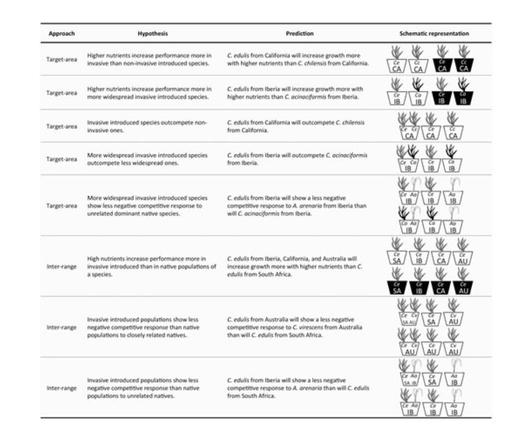
Rubén Portela et al. tested two key #Hypotheses in #InvasionBiology by focusing on two traits likely to confer #Invasiveness of plants, #Nutrients and #Competition, compared four species of #Carpobrotus that differ in invasiveness, using species from four continents: Africa, Australia, Europe and North America.
https://doi.org/10.1093/jpe/rtac034

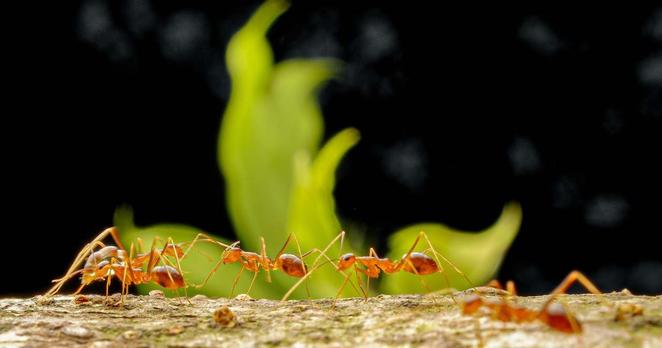
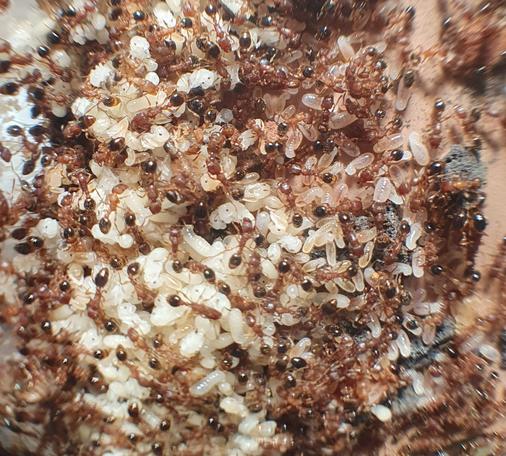
European fire ants found in Iceland.

One colony

Garden in Reykjavík

2 Queen

4000 ants

#myrmicarubra
#redants
#ants
#iceland
#invasionBiology
/ Evrópskir eldmaurar (Myrmica rubra) á Íslandi. 2022. Mancini M, Guðmundsson A, Pálsson A. Náttúrufræðingurinn.[Icelandic naturalist]. 92 (1-2), 32-39. https://natturufraedingurinn.is/evropskir-eldmaurar-myrmica-rubra-a-islandi/

Evrópskir eldmaurar (Myrmica rubra) á Íslandi - Náttúrufræðingurinn

SÍÐLA APRÍLMÁNAÐAR 2021 fannst bú evrópskra eldmaura (Myrmica rubra) innan garðs í Reykjavík (í póstnúmeri 105). Húseigandi sá maurana fyrst tveimur eða

Náttúrufræðingurinn

I was identifying observations on #iNaturalistNZ over lunch and found this.

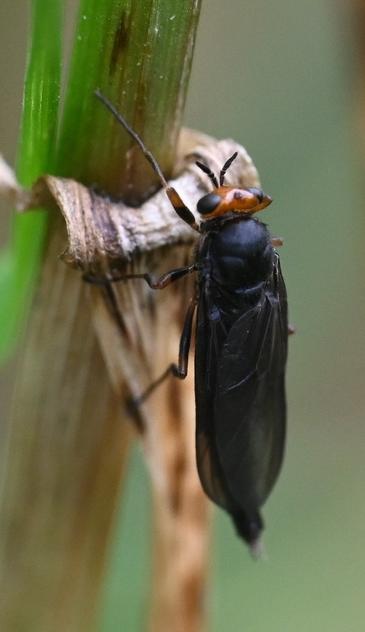
It's the lacewing, Mallada basalis, and it's just arrived in the South Island.

There are now three observations from Nelson, the earliest on 21 April.

It's native to Australia and warmer islands like New Caledonia, Norfolk Island, and Kermadec Islands. It got to the North Island by 2010.

Australian insects keep spreading southwards as NZ warms.

https://inaturalist.nz/observations/208419073

#insects #InvasionBiology #ClimateChange #nz

Mallada basalis

Mallada basalis from Tāhunanui, Nelson 7011, New Zealand on April 21, 2024 at 02:58 PM by Henry Hart. Adorable lacewing

iNaturalist NZ

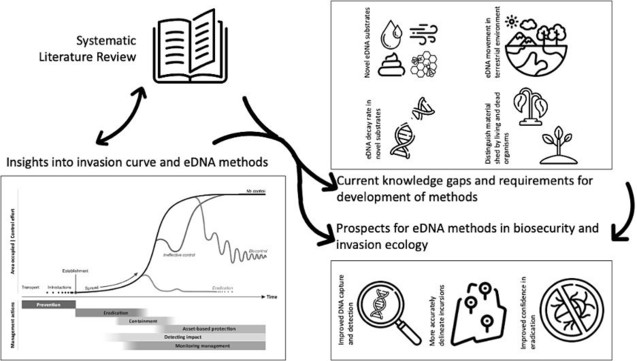
How can #eDNA methods be applied to problems of terrestrial #biosecurity & #InvasionBiology? Our new review in #SciTotEnv looks into how this promising tool is being applied, its future potential & what needs to be done to close priority #KnowledgeGaps.

#OpenAccess: https://doi.org/10.1016/j.scitotenv.2024.171810

Keeping up with the literature in #invasionbiology is a daunting task! 🌊

🗺 We are building an interactive and open atlas of knowledge for invasion biology... and beyond!

📖 Read about our progress in the latest #workshop report just published today: https://riojournal.com/article/115395/

This collaborative and community-curated project is part of a long term vision called the hi knowledge initiative https://hi-knowledge.org

#IAS #KnowledgeGraphs #OpenScience #wikidata #IUCN #ecology #urbanEcology

Building an atlas of knowledge for invasion biology and beyond! 2nd enKORE-INAS Workshop

With the exponential increase in scientific publications, new conceptual and technological tools are needed to help scientists, students, managers and policy-makers to navigate and digest current scientific knowledge. Hi Knowledge is an initiative to synthesise and visualise scientific knowledge, with an initial focus on invasion biology that is currently expanding to include urban ecology, restoration ecology and freshwater ecology. In a workshop on 5-6 June 2023 in Berlin, Germany, we discussed and tested a collection of new open tools related to this initiative in order to publish, curate, explore and synthesise concepts and results in ecology. Three main themes were discussed during in-person breakout group sessions: (1) building and using open tools for knowledge curation, exploration and synthesis; (2) making open knowledge searchable and machine friendly by improving modelling and annotation of scientific knowledge; and (3) extending beyond the field of invasion biology. We report on the discussions of all twelve sessions pertaining to these themes. A main underlying goal of our workshop was to build a community of scientists involved in openly co-designing and using these tools. Overall, the participants were enthusiastic about the usefulness of these tools and discussions gravitated around improving them and finding strategies to scale-up participation by the community. Follow-up user tests and publications are planned for individual tools and topics.

Research Ideas and Outcomes

Spot the mistake:
#ChatGPT definition of Darwin's Naturalization Hypothesis (DNH):

DNH, proposed by Charles Darwin in the 19th century, suggests that non-native species introduced to new environments will struggle to establish themselves and become naturalized if the conditions are significantly different from their native habitats.

1/2
#hypothesis #Invasionbiology #ecology

Our new paper just out in BioScience:

Recent advances in availability and synthesis of the economic costs of biological invasions

https://doi.org/10.1093/biosci/biad060

#invasionbiology #invasivespecies

Implications for biological invasion of non‐native plants for sale in the world's largest online market #invasionbiology #conservation
https://conbio.onlinelibrary.wiley.com/doi/10.1111/cobi.14055?af=R