 Sarah Arnold
A cage full of Scambus pomorum parasitoid wasps!
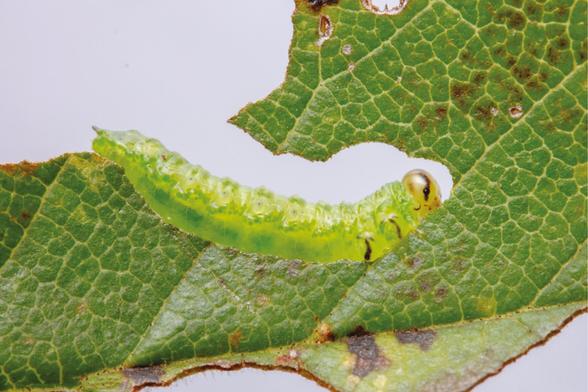
A thread 🧵 about apple blossom weevil natural enemies...
#AppleBlossomWeevil #Orchards #Apples #IntegratedPestManagement #Entomology

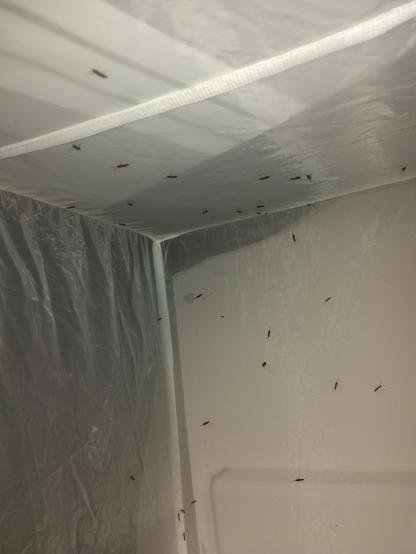
A cage full of Scambus pomorum parasitoid wasps!
A thread 🧵 about apple blossom weevil natural enemies...
#AppleBlossomWeevil #Orchards #Apples #IntegratedPestManagement #Entomology
While in São Paulo state it was great to take an opportunity to visit some fruit farms, exploring different crops and considering how they can play a role in diversified systems.
Obviously for me the strawberries were the main attraction. Fascinating seeing the different growing systems - Brazil has also gone in for fertigated tabletops, but uses substrates other than coir. Different pests - SWD present but not really a big issue, didn't really see mildew, but mites apparently present a challenge.
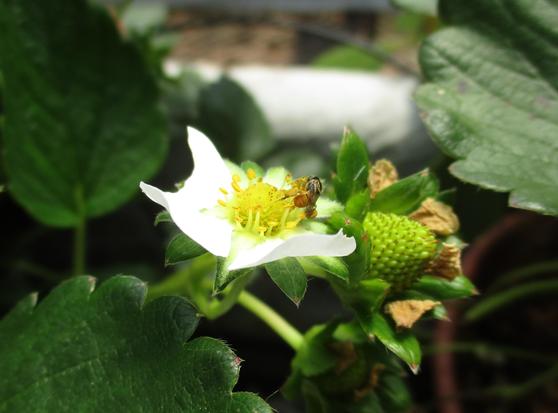
Pollination was very exciting - Brazil has a really vibrant culture of stingless bee management. Several dozen species being managed in different parts of the country. And they pollinate strawberries! As part of a mixed system, they could be very useful in supporting pollination of fruit crops. With the tiny species, maybe even cocoa - some studies suggest they could contribute?
#Strawberries #Horticulture #Pollination #IntegratedPestManagement #FruitCrops #StinglessBees


Day 2 of #AAB_IPPM meeting and today is more entomological (but not entirely!). Lots of good talks on the schedule.
#IntegratedPestManagement #IPPM #SustainableAgriculture #HorticulturalEntomology
On my way to AAB Advances in Integrated Pest and Pathogen Management meeting - looking forward to a couple of days hearing about what's happening in applied IPPM research. https://www.aab.org.uk/event/advances-in-integrated-pest-and-pathogen-management/
I'll be talking about aphids on soft fruit, and how to optimise different aspects of biocontrol to improve the approach overall.
#IPM #IntegratedPestManagement #Biocontrol #Parasitoids #Aphids #AppliedEntomology
US Pacific Time
https://ucanr.zoom.us/webinar/register/WN_SneVP1w6Siik_cOAZ5qCJA#/registration #Agriculture #IntegratedPestManagement

In this webinar, Dr. Jaspreet K. Sidhu, Vegetable Crops Farm Advisor with the University of California Cooperative Extension, Kern County, will discuss carrot production in California’s Central Valley, the biggest producer in the U.S. She will include major pest challenges and pest management with research findings for management especially for root knot nematodes, Alternaria leaf blight and cavity spot. One DPR CE unit (other) and one CCA CE unit (IPM) were requested. Allowing someone other than the person registered below to participate in this webinar in order to qualify for Department of Pesticide Regulation approved continuing education hours, constitutes fraud. Committing fraud in connection with meeting any license requirement, including to obtain renewal of any license or certificate issued by the Department of Pesticide Regulation or a County Agricultural Commissioner may result in civil and criminal penalties or license denial, suspension, or revocation. By selecting yes below, I verify and attest to the fact that I am the person whose name and license or certificate number appears in the webinar sign-in dialogue box on the license or certificate. Important requirements for receiving Continuing Education Units: -Register individually with your own name and email address and log in from your own device. -Participate in the entire session. -Complete and pass a final test with 70% or higher; if not passed, the test can be retaken. If you are not familiar with Zoom, log in a few minutes early to familiarize yourself with the Zoom interface.
This, on the other hand, is a glimmer of doom. The #insectageddon has ramifications - not just for insects, but for all species that depend on insects in some ways from fish to birds to mammals, to both crops and wild plants that depend on insects pollination. And the EPA does this because the US #Agricultural industry chooses not to move to less toxic practices for pest control? #IntegratedPestManagement at the more invasive end, #Organic and #RegenerativeAgriculture at the least invasive end are widely practiced. Why do we tolerate #IndustrialAgriculture while knowing about the damage it does?
Perhaps you could contact your Senators and Representative in Washington and ask them to do something? It's easy to find their contact info at https://www.congress.gov/
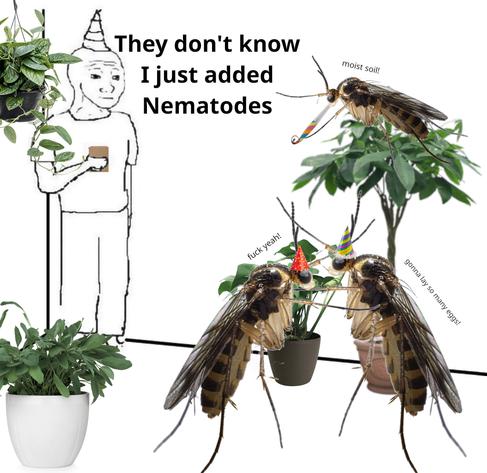
They don't know I just added Nematodes.
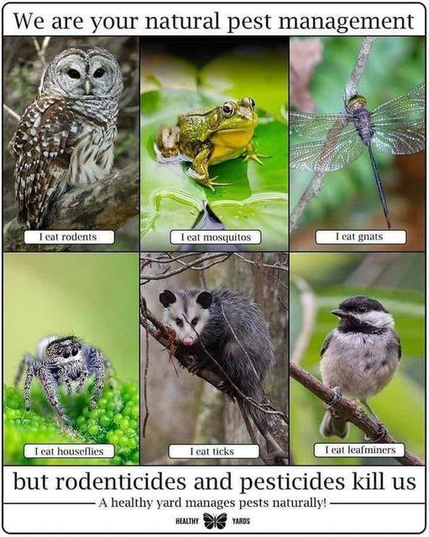
#FungusGnats #Nematodes #Beneficials #IntegratedPestManagement #HousePlants #IndoorGardening #PlantCare
 Megan Lynch (she/her)
 Paul Wermer, CC BY-NC-SA 4.0
 Luccus
 Relle
Relle
 Koreen Brennan
 Entomological Soc. of America