@alice
I love this analogy.
Great explanation for how much/most/alot of effective #HumanInteraction should be conducted.
🤔 Oh, look! Yet another revolutionary guide on talking to humans, because apparently,
#adulting is hard. 🙄 Social etiquette is the 'stranger secret'—who knew? 🤯 Thanks, Guardian, for solving the mystery of human interaction!
#Groundbreaking 🥳
https://www.theguardian.com/lifeandstyle/2026/feb/24/stranger-secret-how-to-talk-to-anyone-why-you-should #revolutionaryguides #socialetiquette #humaninteraction #challenges #HackerNews #ngated
The stranger secret: how to talk to anyone – and why you should
Forget fear of public speaking. A lot of people now shy away completely from speaking to anyone in public. But if we learn to do this it’s enriching, for ourselves and society
"
#Bias and
#stereotypes can lead to
#prejudice,
#discrimination, and
#oppression."
#SelfAwareness content curated and offered by the Office of Minority Health, U.S. Department of Health & Human Services.
#DEIA #AFN #POC #Inclusiveness #HumanInteraction"Tech can bridge gaps, but it often creates barriers. We sometimes hide behind screens, missing genuine connections. Let’s unplug to reconnect!
#HumanInteraction" Follow us:
https://aqua.vote #transparency #fair_world1993 Intimate Gaze
The painting depicts an intimate scene between two figures, with one placing their hands on the chest of another.
Their expressions are not visible but convey a sense of connection or emotional exchange.
https://nocontext.loener.nl/fullpage/01-January1993-Page-114.png
#photography #illustration #madman #nocontext #sfw #art #painting #realistic #humaninteraction #emotion #close-up
Ah, yes, the noble pursuit of turning human
#empathy into lines of code 🤖💻. Because who needs genuine interaction when you can just simulate it, right? 😏 Thanks, Simons Foundation, for funding the
#AI equivalent of a "How to Make Friends" manual for robots. 🤦♂️
https://arxiv.org/abs/2510.01272 #Simulation #Technology #Robotics #HumanInteraction #HackerNews #ngated
Modeling Others' Minds as Code
Accurate prediction of human behavior is essential for robust and safe human-AI collaboration. However, existing approaches for modeling people are often data-hungry and brittle because they either make unrealistic assumptions about rationality or are too computationally demanding to adapt rapidly. Our key insight is that many everyday social interactions may follow predictable patterns; efficient "scripts" that minimize cognitive load for actors and observers, e.g., "wait for the green light, then go." We propose modeling these routines as behavioral programs instantiated in computer code rather than policies conditioned on beliefs and desires. We introduce ROTE, a novel algorithm that leverages both large language models (LLMs) for synthesizing a hypothesis space of behavioral programs, and probabilistic inference for reasoning about uncertainty over that space. We test ROTE in a suite of gridworld tasks and a large-scale embodied household simulator. ROTE predicts human and AI behaviors from sparse observations, outperforming competitive baselines -- including behavior cloning and LLM-based methods -- by as much as 50% in terms of in-sample accuracy and out-of-sample generalization. By treating action understanding as a program synthesis problem, ROTE opens a path for AI systems to efficiently and effectively predict human behavior in the real-world.
 oldguycrusty
 N-gated Hacker News
 Zorz Studios
 MPA & B.S. Emergency Management, Public Health, 🌈💜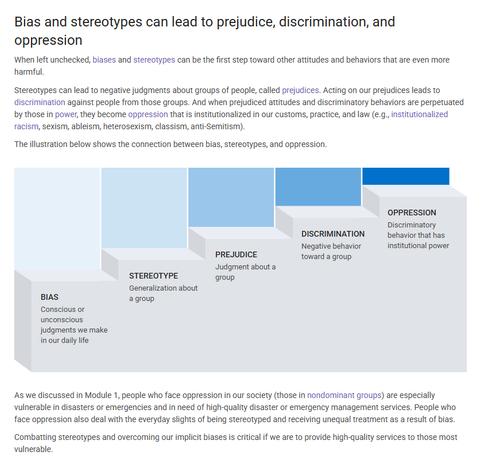
 Neural


 aqua
aqua
 No Context Pictures
 Reddit Tech VN Bot
 D. Zylbersztajn- Lewandowski