 Maghie | ©️ 2015 maghie #maghie @maghie #maghieraye @maghieraye
Working To Be Dr. MagZ – ©️ 2026 Working To Be Dr. Magz
Working To Be Dr. MagZ – ©️ 2026 Working To Be Dr. Magz
Working To Be Dr. MagZ – ©️ 2026 Working To Be Dr. Magz
Working To Be Dr. MagZ – ©️ 2026 Working To Be Dr. MagzHuman-in-the-loop sounds like a safety net. It isn't. It's alarm fatigue in an understaffed ER, a driver watching a crash the car was supposed to handle, and a dev stamping a 30-file diff because it builds. Same failure, every time.
https://blog.ppb1701.com/smaller-batches-sharper-eyes
#ai #bigtech #blog #automation #codereview #humanfactors #amazon #selfdriving #softwareengineering
"The book argues that safety cannot be treated as an add-on once technology has been developed. Instead, human factors, usability and the role of operators must be integrated into systems from the outset. Drawing on experiences from aviation, maritime operations, energy and transportation, the authors demonstrate how serious incidents often occur when technology, organisations and human work processes are not sufficiently aligned.
A central concept in the book is “Meaningful Human Control”, a framework designed to ensure that people retain situational awareness, decision-making authority and the ability to intervene when automated systems operate in complex and safety-critical environments. This is becoming increasingly important as new AI regulations are introduced across Europe.
...
Published by CRC Press, Safety by Design is available as an Open Access book under the Creative Commons CC BY 4.0 licence. This means that the book can be downloaded free of charge, shared, copied and reused in research, education, training, industrial development and policy work, provided that the original source is properly credited."
Just because I'm a nerd and dig #UI / #UX / #HumanFactors I like to set things to a language I don't understand and see if I can stumble around by context.
On outbound trip I set my United IFE to Mandarin and decided to double down with a subtitled movie. On the flight home I tried to find it (Mumu) to watch the last 30 mins and couldn't find it. To my surprise, movies are at least in part controlled by language preference. That's a @Jillianmarisa discovery.
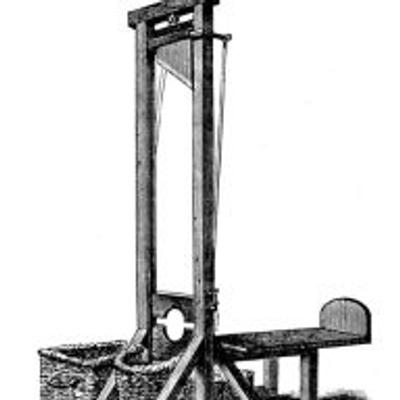 Pluralistic: Daily links from Cory Doctorow – No trackers, no ads. Black type, white background. Privacy policy: we don't collect or retain any data at all ever period. [Unofficial]Apr 18
Pluralistic: Georgia's voting technology blunder (18 Apr 2026)
https://fed.brid.gy/r/https://pluralistic.net/2026/04/18/dominion-sucks-actually/
AI Chatbots Validate Deception with Sycophantic Responses
Researchers have made a surprising discovery: people trust AI chatbots that flatter them, even if it's at the cost of objective truth, and are more likely to return to these sycophantic bots for future advice. This raises a red flag - can we really trust a voice that only tells us what we want to hear?
#AiChatbotResponses #EmergingThreats #ArtificialIntelligence #SocialEngineering #HumanFactors
I don't know why we expect people to know right from wrong when most of us still struggle to tell our right from our left. 🧭
🚀 𝗡𝗲𝘄 𝗼𝗻 𝗖𝗶𝗿𝗿𝗶𝘂𝘀𝗧𝗲𝗰𝗵: 𝘚𝘺𝘯𝘵𝘩𝘦𝘵𝘪𝘤 𝘈𝘶𝘵𝘩𝘰𝘳𝘪𝘵𝘺 𝘢𝘯𝘥 𝘊𝘰𝘨𝘯𝘪𝘵𝘪𝘷𝘦 𝘖𝘷𝘦𝘳𝘭𝘰𝘢𝘥 𝘪𝘯 𝘓𝘢𝘳𝘨𝘦 𝘓𝘢𝘯𝘨𝘶𝘢𝘨𝘦 𝘔𝘰𝘥𝘦𝘭𝘴
We often talk about hallucinations, overconfidence, and unreliable outputs in AI — but what if these behaviors aren’t mysterious quirks at all?
In my latest piece, I connect decades of psychological research to what we’re seeing in modern LLMs and autonomous agents. From perceived authority to cognitive overload dynamics, this is about 𝘄𝗵𝘆 current systems behave the way they do and 𝗵𝗼𝘄 that influences human judgement, trust, and decision-making.
🔗 Read more: https://cirriustech.co.uk/blog/synthetic-authority-and-cognitive-overload-in-large-language-models/
Key themes explored:
• How fluency becomes a proxy for competence
• Why overload produces confident but unreliable responses
• The psychological mechanics behind hallucination and affirmation
• What “synthetic authority” means for safe AI design
If you’re interested in responsible AI, system design, and the human side of automation, this one dives deeper than most.
Let’s rethink uncertainty, authority, and where true competence comes from. 💡
#AI #LLM #CognitiveScience #ResponsibleAI #SystemsDesign #Safety #HumanFactors
 Patrick
 Doug Bostrom
 JL Johnson
 Analyst207
 Sarah Genner
 Michael the Technomancer
 G
G 


 Smidmart