Thermal Energy Storage Gains Momentum as Power Systems Adapt to Renewable Energy Growth

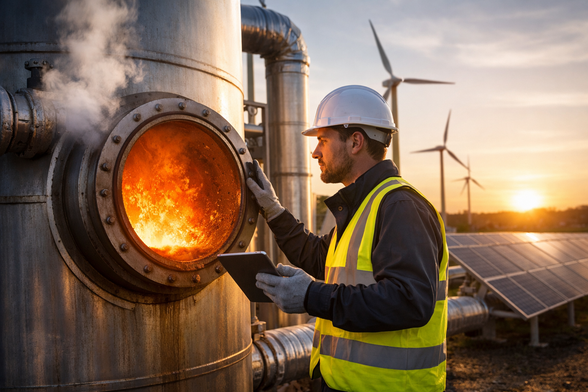
An engineer examines a thermal energy storage unit at a renewable power site, symbolizing the growing role of heat-based storage in balancin...

Blogger
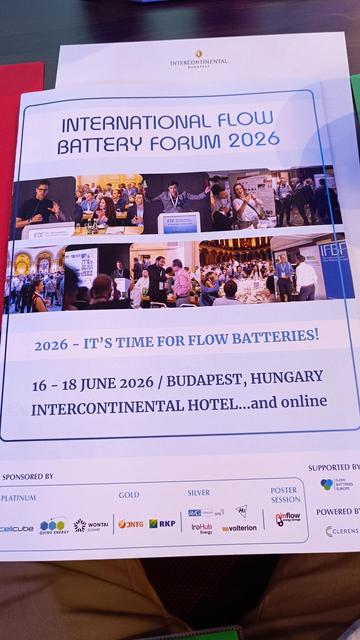
Anyone have any questions for the flow battery industry players? At the world's biggest flow battery event at the moment! Vanadium, iron, organic systems, system integrators, electrode/membrane/pump manufacturers... #EnergyStorage #batteries #GridStorage #FlowBatteries #Energy
Hackaday Links: June 7, 2026

Christopher Nolan’s The Odyssey isn’t hitting theaters for another month or so, but if you’re already planning your trip to the cineplex, you may want to check out this page on th…

Hackaday
Eni scommette sull'energy storage: nasce il polo italiano delle batterie LFP (litio-ferro-fosfato) - Metalli Rari

Notizie in breve dai mercati. Economia, investimenti, finanza, energia, metalli industriali, metalli rari, metalli preziosi e commodities.

Metalli Rari
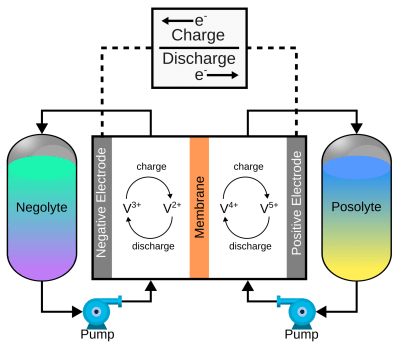
How Giant Tanks Of Fluid Could Help Support The Power Grid

If you’ve been paying any attention to the renewable energy space, you’ll know that generation isn’t really the problem anymore. Solar panels are cheap, and wind turbines are ever…

Hackaday

#SodiumIonBatteries offer an alternative to tricky #lithium

Oct 26th 2023

Excerpt: "Fortunately, lithium is not the only game in town. As we report this week, a clutch of firms are making batteries based on sodium, lithium’s elemental cousin. Since sodium’s chemical properties are very similar to those of lithium, it too makes for good batteries. And sodium, which is found in the salt in #seawater, is thousands of times more abundant on Earth than lithium and cheaper to get at. Most of the companies using sodium to make batteries today are also Chinese. But pursuing the technology in the West might be a surer route to energy security than relying heavily on lithium.

"Besides its abundance, sodium has other advantages. The best lithium batteries use #cobalt and #nickel in their electrodes. Nickel, like lithium, is in short supply. #Mining it on land is #EnvironmentallyDestructive. Proposals to grab it from the #seabed instead have caused rows. A good deal of the world’s cobalt, meanwhile, is extracted from small mines in the #DemocraticRepublicOfCongo, where #ChildLabour is common and working conditions are dire. Sodium batteries, by contrast, can use #electrodes built from #iron and #manganese [and wood #lignin], which are plentiful and uncontroversial. Since the chemical components are cheap, a scaled-up industry should be able to produce batteries that cost less than their lithium counterparts.

"Sodium is not a perfect replacement for lithium. It is heavier, meaning sodium batteries will weigh more than lithium ones of an equivalent capacity. That is likely to rule them out in some cases where lightness is paramount. But for other applications, such as #GridStorage or #HomeBatteries, weight is irrelevant. Several Chinese carmakers are even beginning to put sodium batteries in #ElectricVehicles."

Read more:
https://www.economist.com/leaders/2023/10/26/sodium-batteries-offer-an-alternative-to-tricky-lithium

Archived version:
https://archive.ph/7x6JX

#SolarPunkSunday #EnergyStorage #SodiumIon #NewTechnology #GiantLeap #Reuse #WasteReuse #NoLithiumMining #NoMining

Sodium batteries offer an alternative to tricky lithium

Lithium is relatively scarce and mostly refined in China. Sodium is neither

The Economist

Xcel Energy has signed an electric service agreement to power a Google data center with 1,400 MW of wind, 200 MW of solar, and 300 MW of long‑duration energy storage.

It's that last part that's significant. It's an iron‑air battery system from Form Energy. With about 30 gigawatt‑hours (GWh) of capacity and a duration of roughly 100 hours.

This looks like the future of grid-scale storage. I doubt sodium-ion will be able to compete with the cost and capacity. All it needs is Iron, Air, and Water in a process that essentially releases energy as the iron rusts, then stores energy by turning the rust back into iron and oxygen. At a cost of about $20/kWh - 4x less than lithium batteries.

https://www.youtube.com/watch?v=fb2BaANfCLg

#Solar #batteries #GridStorage #Renewables

The 100-Hour Battery Is Real — Iron-Air Just Took a Huge Step Forward!

YouTube
Liquid CO2 For Grid Scale Energy Storage Isn’t Just Hot Air

There’s folk wisdom in just about every culture that teaches about renewable energy — things like “make hay while the sun shines”. But as an industrial culture, we want to m…

Hackaday