I’m trying to understand what everyone is saying about energy production via photovoltaics and how I might do it too (or not).
Attached are two simulations, done six months apart by different companies.
[TL;DR] MyLight150 was saying in late 2024 that their customers could expect their photovoltaics to pay for themselves within 7 years. The quote that I got last November, barely a year later, upped that number to 12 years.
First simulation
This first quote was done remotely. Its purpose was for me to get a general idea of the energy production I could possibly expect. The tools used to make the sim might be aware of the French grid or they might not. The numbers seem to hold up well.
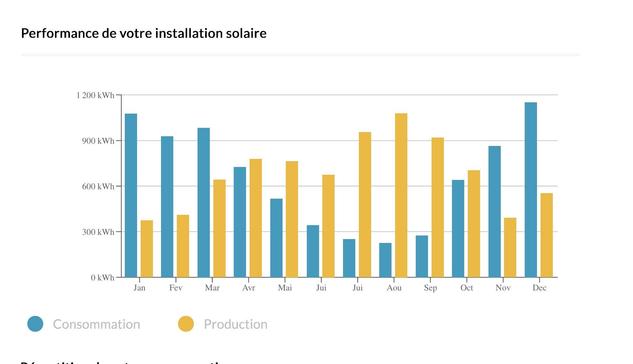
This proposal was meant for my roof, which faces east/west. They suggested 7.5 kWc and a yearly production of about 10 MWh, which is just about my consumption as well.
I understand why the graph looks so clean, since it’s simply a formula applied to averaged monthly radiation levels in my area, with various debuffs taken into account (tilt, orientation etc).
Second simulation
The second quote was done by a local business and is definitely aware of the French grid and its limits.
This proposal includes my usage patterns and is meant to avoid the roof, instead using the garden area and a new support structure allowing for south facing panels. This quote targets 7.2 kWc and a yearly production of 8.2 MWh.
I understand why the graph looks more chaotic, since it (presumably) takes into account the % of time when the grid is unable to accept energy at the time it is being produced, and that energy is lost. It’s probably more realistic than the first sim.
the silly system in France
Our National historic energy provider, called EDF, produces electricity mainly from nuclear but also some dams. Our grid is as decarbonated as can be.
ElectricityMaps Says our mix is 97% low carbon and 30% renewable.
The thing is, that kind of mix didn’t happen easily. EDF invested heavily while it was a monopoly under the control of the government. Then one day, it got privatized. Then another day, the Europe tried to incentivize competition. The way they went about it was to require EDF to sell a portion of its production to third parties, at no additional cost.
So now, a chunk of the energy produced by EDF is sold to startups who then apply small margins before selling it at (lower than market) cost to consumers. They don’t have to invest in infrastructure and EDF can’t capitalize on its own production.
the French solution to the winter/summer discrepancy
We don’t have “net metering” here. We do have the option to sell everything (or only sell the surplus) to the national provider, called EDF OA, at the rate of about €0.04 / kWh.
There are also several independent companies trying to market themselves as “virtual batteries”, essentially what the US would think of as net metering, but with more fees. I’ve come across MyLight150 and Urban Solar for this.
Apparently, there’s a fee that applies to any energy transfer on the grid, regardless of the direction. All told, MyLight150 seems to charge almost €0.10 / kWh (taxes included), while Urban Solar says €0,05 / kWh (without taxes).
my newbie thoughts on this system
So I’d essentially be paying for them to sell my energy to others.
In their own words, they rely on their wide range of customers to be able to ferry the energy around. I’m not certain how they produce the missing energy in the winter, they don’t address that. I do know that in the summer, when the excess energy can’t go anywhere or the grid is close to overloading, they just don’t take it.
They call themselves batteries but they don’t actually invest in any storage infrastructure. They aren’t part of the solution at all.
The future is not bright…
#EnergyTransition #ElectricityMarket #RenewableEnergy
 The Times of Central Asia
 The Times of Central Asia
 Guillaume Rossolini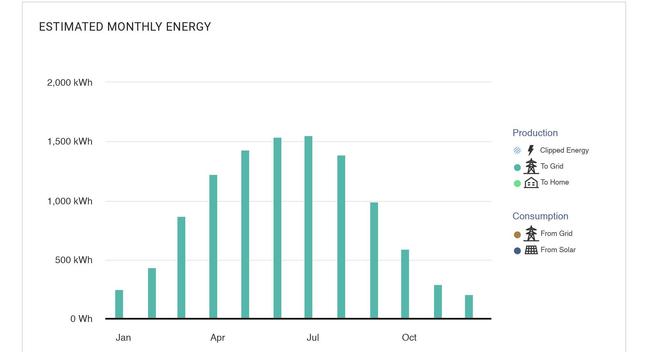
 VTC News Bot