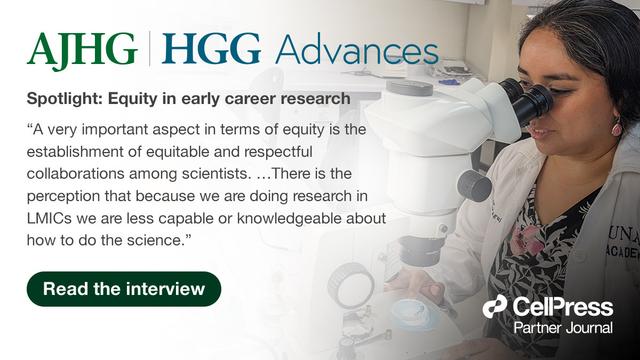
Beautiful art work in the latest front cover of @Nature to illustrate the diversity of Mexican Genomics as evidenced by the recent publication of MX Biobank and MCPS. Great genomics resources for a Latin American population, we need more large-scale genomics projects for underrepresented populations, but also the time & resources to analyze, derive and implement insights, and train students to work with these data.
#GenomicEquity #LatinAmerica #LATAM #LMICs #Genomics
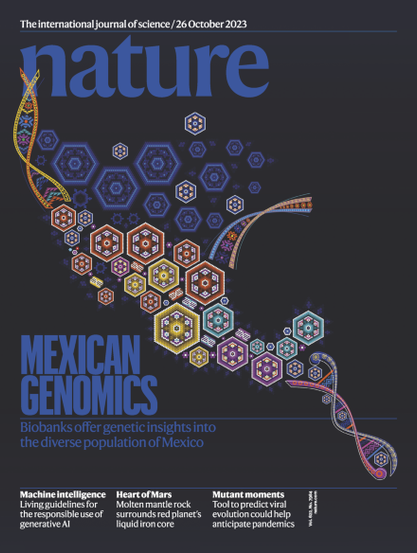
Thanks to the American Society of Human Genetics #ASHG and the American Journal of Human Genetics #AJHG for the interview and opportunity to talk about my career, the challenges throughout, but also my hopes & recommendations for the new generations of scientists, as well as the need to increase diversity & equity across the scientific enterprise. #Genomics #GenomicEquity #RareDiseases #EnfermedadesRaras #REMEXER #ERCAL #ERCALrd #SoyMiembroERCAL #ERCALMember

https://www.cell.com/hgg-advances/ashg-spotlight-ecr-equity

Very excited to attend & give a keynote talk on #RareDisease Genomics in Latin America & the need for Global #GenomicEquity at the International Congress of Human Genetics #ICHG2023 in Cape Town! Looking forward to an interesting meeting with an emphasis on diversity! 🌍🧬

Incidentally, in our latest article in #FrontiersInGenetics we discuss the "Opportunities and challenges for newborn screening and early diagnosis of rare diseases in Latin America" including the opportunity to implement #GenomicSequencing as an add-on to current NBS programs to provide accurate diagnoses for patients living with #RareDiseases in #LATAM #GenomicEquity

https://www.frontiersin.org/articles/10.3389/fgene.2022.1053559/full

Opportunities and challenges for newborn screening and early diagnosis of rare diseases in Latin America

Rare diseases (RDs) cause considerable death and disability in Latin America. Still, there is no consensus on their definition across the region. Patients with RDs face a diagnostic odyssey to find a correct diagnosis, which may last many years and creates a burden for caregivers, healthcare systems, and society. These diagnostic delays have repercussions on the health and economic burden created by RDs and continue to represent an unmet medical need. This review analyzes barriers to the widespread adoption of newborn screening (NBS) programs and early diagnostic methods for RDs in Latin America and provides recommendations to achieve this critical objective. Increasing the adoption of NBS programs and promoting early diagnosis of RDs are the first steps to improving health outcomes for patients living with RDs. A coordinated, multistakeholder effort from leaders of patient organizations, government, industry, medical societies, academia, and healthcare services is required to increase the adoption of NBS programs. Patients’ best interests should remain the guiding principle for decisions regarding NBS implementation and early diagnosis for RDs.

Frontiers

The future of #NewbornScreening (NBS) is #GenomicSequencing for the early and accurate diagnosis of hundreds of #RareDiseases that if treated early can prevent early mortality & disability.

While the UK will be launching the Newborn Genomes Programme next year, many other countries around the world screen for just a handful of conditions and some others don't even have NBS programs in place. #GenomicEquity

https://www.bbc.com/news/health-63906892

100,000 babies to have genetic code mapped

The whole genome sequencing project in England will screen for around 200 rare genetic conditions in newborns.

BBC News

New here, trying to figure out how this works! Geneticist/Genomicist Assistant Professor working on #Genomics of #RareDiseases and implementation of #precisionmedicine in #LATAM and #LMICs to achieve #GenomicEquity

If you're in science, genomics, or similar and see me wandering around here, say hi so that I can follow you and kick off the slow process of rebuilding a network. Looking forward to meeting old and new tweeps!