Thanks to
#ASHG for the chat with
@thatdnaguy about the importance of diversity, representation & inclusion of women & underrepresented populations in
#Genomics research/workforce and a bit about some lessons learned throughout my career as part of the Genetically Speaking Podcast!
https://open.spotify.com/episode/5Ib2ukNM9YY3CGbVhWknsm
Genomic Equity Beyond Borders
Listen to this episode from Genetically Speaking on Spotify. In this episode, host Eli Roberson, PhD interviews Claudia Gonzaga-Jauregui, PhD, an assistant professor at the International Laboratory for Human Genome Research of UNAM, Mexico. Claudia shares insights into her career journey, the pivotal moments that shaped her interest in genomics, and her dedication to promoting genomic equity. The conversation delves into Claudia's experiences in academia, industry, and the transition from industry back to research and mentoring. She emphasizes the importance of diversity and inclusion in genomics research and discusses her efforts to bring genomic newborn screening to the region and the barriers and opportunities in implementing these programs.
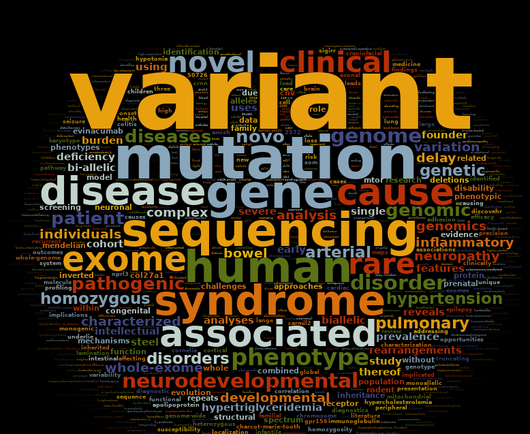
Cool to see my research word cloud!!!
I guess I've found some variants and mutations in genes that cause some diseases and syndromes through some sequencing!
#RareDiseases #GenomicsHappy to share the preprint of our manuscript reporting analyses of genome-wide repeated sequences that can potentially mediate ectopic recombination events in 3 human genome assemblies (hg37, hg38 & T2T-CHM13) @biorxiv_genomic @biorxivpreprint
https://www.biorxiv.org/content/10.1101/2024.01.29.577884v1
First manuscript of 2024 submitted!!! This would be the first article (of many to come!) of work done completely in my lab in Mexico! Fingers crossed for a prompt and benign review process! 🤞🏼
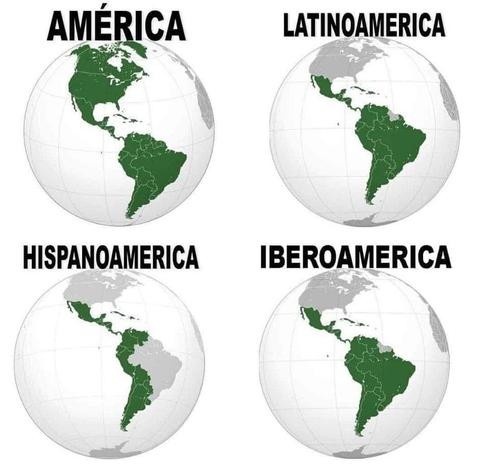
-Iberoamérica is formed by countries that used to be colonies of countries of the Iberian peninsula, Spain and Portugal.
Overall, Latin America is preferred. So now you know🌎
If still unsure how to refer to the vast lands south of the United States, here is some perspective.
- America is the whole continent.
- Latin America is the whole region of the American continent where languages derived from Latin are spoken, Spanish, Portuguese and French.
- Hispanoamérica is conformed by countries where Spanish is spoken due to being past colonies of Spain.
Getting some final paper reviewing/editing (acceptances too!!) before the festivities kick in!
Check out our Special Research Topic "Rare Diseases Research and Diagnosis in LMICs" @FrontGenetics for some excellent papers coming out!
Happy holidays authors!
https://www.frontiersin.org/research-topics/52607/rare-diseases-research-and-diagnosis-in-low--and-middle-income-countries

Rare Diseases Research and Diagnosis in Low- and Middle-Income Countries
Rare diseases (RDs) encompass more than 7000 described disorders characterized by a low prevalence in the general population. Collectively, these disorders affect between 6 to 8% of the world population, that is approximately 300-350 million people worldwide. The majority of RDs involve an underlying genetic component, and more than 6,000 conditions have been linked to a known molecular cause. In the last 13 years, the adoption of human genomic sequencing has enabled the more efficient and accurate diagnosis and research of rare genetic disorders. Genomic sequencing has become a first-tier diagnostic test for many patients with congenital syndromes and suspected genetic disorders in high-income countries, as well as an effective method for the study of undiagnosed and novel genetic disorders in the research arena.The implementation of genomic sequencing has dramatically changed the diagnosis and research of rare diseases in high-income countries. In contrast, the reality in low- and middle-income countries (LMICs) is strikingly different, where disparities on accessibility to these technologies exist. The high cost of genomic sequencing and other molecular technologies remains a limiting factor in the common implementation of these methods for diagnosis and research of rare diseases in resource limited settings. The study of rare genetic diseases in LMICs may be underestimated when compared to large-scale genomic studies performed in developed countries despite being perfo...
Finally starting my leisure vacation reading today!!! Yes, I'm still working on those 3 manuscripts to submit (and editing other manuscripts too) but will take breaks to read something else. Usually, I read SciFi for fun but I've been wanting to read this one for a while 🤗
I was interviewed by El Universal, a major newspaper in Mexico, about our work investigating the causes of genetic
#RareDiseases to shorten the diagnostic odyssey, discover new disease associated genes and implement
#PrecisionMedicine in Mexico
#LIIGH_UNAM #ReMexERI was interviewed by El Universal, a major newspaper in Mexico, about our work investigating the causes of genetic
#RareDiseases to shorten the diagnostic odyssey, discover new disease associated genes and implement
#PrecisionMedicine in Mexico
#LIIGH_UNAM #ReMexER