
Thanks to the American Society of Human Genetics #ASHG and the American Journal of Human Genetics #AJHG for the interview and opportunity to talk about my career, the challenges throughout, but also my hopes & recommendations for the new generations of scientists, as well as the need to increase diversity & equity across the scientific enterprise. #Genomics #GenomicEquity #RareDiseases #EnfermedadesRaras #REMEXER #ERCAL #ERCALrd #SoyMiembroERCAL #ERCALMember
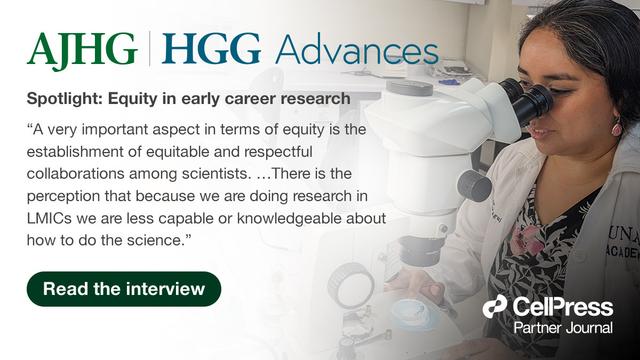
https://www.cell.com/hgg-advances/ashg-spotlight-ecr-equity

Progress has been made to implement newborn screening (NBS) but few conditions are screened for in most #LATAM countries. Improved processes, patient follow up & consideration for implementation of expanded NBS & other early diagnostic approaches that leverage #Genomics for the accurate diagnosis of #RareDiseases are important to reduce the #DiagnosticOdyssey & improve patient care & outcomes. #RareDisease #ERCAL

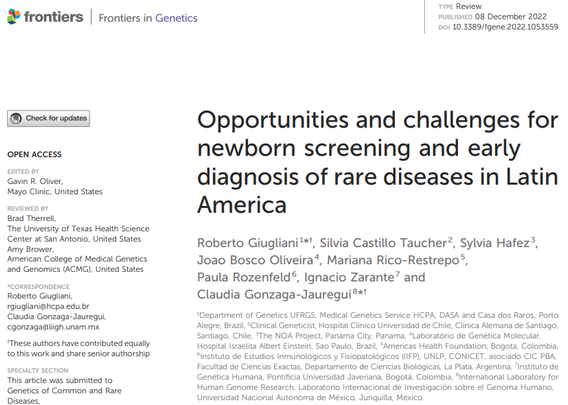
Proud to share our latest article on "Opportunities & Challenges for Newborn Screening and Early Diagnosis of Rare Diseases in Latin America" published today in #FrontiersInGenetics

This article is the product of careful review, deep discussion & insightful consensus on the current state and opportunities of newborn screening & early diagnosis approaches in Latin America for the better & accurate diagnosis of #RareDisease patients in #LATAM #ERCAL

https://www.frontiersin.org/articles/10.3389/fgene.2022.1053559/full

Opportunities and challenges for newborn screening and early diagnosis of rare diseases in Latin America

Rare diseases (RDs) cause considerable death and disability in Latin America. Still, there is no consensus on their definition across the region. Patients with RDs face a diagnostic odyssey to find a correct diagnosis, which may last many years and creates a burden for caregivers, healthcare systems, and society. These diagnostic delays have repercussions on the health and economic burden created by RDs and continue to represent an unmet medical need. This review analyzes barriers to the widespread adoption of newborn screening (NBS) programs and early diagnostic methods for RDs in Latin America and provides recommendations to achieve this critical objective. Increasing the adoption of NBS programs and promoting early diagnosis of RDs are the first steps to improving health outcomes for patients living with RDs. A coordinated, multistakeholder effort from leaders of patient organizations, government, industry, medical societies, academia, and healthcare services is required to increase the adoption of NBS programs. Patients’ best interests should remain the guiding principle for decisions regarding NBS implementation and early diagnosis for RDs.

Frontiers