#BodyOfChrist 💒 HERE is your family & inner circle in Christ👇

đŸ‘„đŸ’•đŸ‘šâ€đŸ‘©â€đŸ‘§â€đŸ‘ŠđŸ’žâ˜ŠđŸ’žđŸ€—đŸ’žâ˜ŠđŸ’žđŸ’‘đŸ’•đŸ‘€

What does Matthew 12:50 mean? | BibleRef.com
https://www.bibleref.com/Matthew/12/Matthew-12-50.html

#ChristianFaith đŸ€ș🛡 #ChristianLiving
#GodsFamily #InnerCircle #GodsWill #Obedience #ObeyGod #inJesusname #bible

What does Matthew 12:50 mean? | BibleRef.com

For whoever does the will of My Father who is in heaven, he is My brother, and sister, and mother.' - What is the meaning of Matthew 12:50?

BibleRef.com
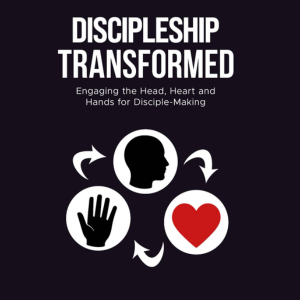
Discipleship Transformed: Engaging Head, Heart, and Hands
In the modern era of “instant” everything, the slow, methodical process of spiritual maturation often feels like a counter-cultural act. Yet, this is exactly what Dr. Giselle Llerena invites us into with her seminal work, Discipleship Transformed: Engaging the Head, Heart and Hands for Disciple-Making. More details
 https://spiritualkhazaana.com/discipleship-transformed-head-heart-hands/
#discipleship #discipleshiptransformed #powerofgods #godswill #loveofgod #livinginfreedom
How to Read the Bible Like a Seminary Professor: A Transformative Guide to Scripture Engagement
The Bible is the most influential book in human history, yet for many, it remains the most intimidating. We often approach it with a mix of reverence and confusion, wondering if we need a PhD in ancient languages just to understand a single parable. More details
 https://spiritualkhazaana.com/how-to-read-the-bible-like-a-seminary/
#howtoreadthebible #christiantheology #godswill #godsword #liveit

When God’s Instructions Seem Overly Specific

DID YOU KNOW

God’s will often feels confusing not because it is unclear, but because it is more detailed, relational, and purposeful than we expect. Scripture does not shy away from this tension. From the precise architectural commands of the tabernacle in Exodus, to the unexpected healing at the Pool of Bethesda in John, to the poetic mystery of love and longing in the Song of Solomon, we are reminded that God’s ways resist simplification. They invite trust before understanding. When we approach God’s will impatiently or from a distance, confusion grows. When we approach it prayerfully and relationally, clarity begins to emerge—not always about why, but about who God is and how He works among His people.

Did you know that God’s detailed instructions are often acts of protection, not control?

Exodus 26–27 can feel overwhelming to modern readers. Measurements, materials, loops, clasps, colors, and dimensions are spelled out with exacting care. At first glance, it may seem excessive or rigid, but within Israel’s wilderness context, these instructions were deeply pastoral. The tabernacle was not merely a structure; it was a visible sign that the holy God chose to dwell among His redeemed people. The Hebrew concept of holiness, qadosh, carries the idea of being set apart with intention. God’s specificity guarded Israel from reshaping worship according to convenience, preference, or surrounding cultures. The golden calf incident in Exodus 32 stands as a cautionary contrast—when God’s instructions are ignored or adjusted, confusion and idolatry quickly follow.

This is not about God being inflexible, but about God being faithful. He knows what draws hearts away long before we recognize it ourselves. Like a skilled physician prescribing a precise treatment, God’s commands reflect His intimate knowledge of human weakness and spiritual drift. We often ask God “why” even when we already sense the answer. The discomfort we feel toward His specificity usually reveals our desire for autonomy rather than understanding. God’s will is confusing only when we try to interpret it apart from relationship. Within relationship, His commands become anchors rather than obstacles.

Did you know that knowing God’s will requires closeness, not curiosity?

Trying to understand God’s will without cultivating closeness to God often leads to frustration. Scripture consistently presents discernment as relational, not mechanical. In John 5:1–15, Jesus heals a man who had been paralyzed for thirty-eight years. The healing itself is astonishing, but what follows is telling. Jesus later finds the man and speaks a sobering word: “See, you are well! Sin no more, that nothing worse may happen to you.” The healing was not an end in itself; it was an invitation into a transformed life. God’s will in this moment was not merely physical restoration but spiritual alignment.

Many people want God’s direction without God’s presence. They want answers without obedience, clarity without surrender. Yet Scripture reveals that God often gives instruction before explanation. Discernment grows through faithfulness over time. The psalmist affirms this pattern when he writes, “Your word is a lamp to my feet and a light to my path” (Psalm 119:105). A lamp does not illuminate the entire journey at once; it gives just enough light for the next step. God’s will unfolds most clearly for those who walk closely with Him, trusting that obedience today prepares them for understanding tomorrow.

Did you know that God’s will is not always efficient, but it is always purposeful?

From a human perspective, much of God’s activity appears inefficient. Why require years of tabernacle construction in the wilderness? Why heal one man among many at Bethesda? Why describe love and longing in poetic images rather than doctrinal statements in the Song of Solomon? Yet Scripture reveals that God values formation as much as outcome. The tabernacle shaped Israel’s identity as a worshiping people. The healing in John 5 exposed misplaced trust in rituals rather than in Christ Himself. The Song of Solomon reminds us that covenant love involves patience, pursuit, and timing.

God’s will is not designed to optimize productivity; it is designed to cultivate faithfulness. We often evaluate decisions by speed, clarity, or visible success, while God measures them by obedience, trust, and transformation. The Hebrew word often associated with walking faithfully, halak, implies a steady, ongoing movement rather than sudden arrival. God’s will frequently unfolds through process, not shortcuts. When we grow impatient, confusion follows. When we remain attentive, God’s purposes become clearer even if the path remains challenging.

Did you know that confusion about God’s will often reveals where trust is still forming?

Confusion is not always a sign of disobedience; sometimes it is a sign of growth. When we encounter moments where God’s instructions feel unclear or uncomfortable, we are often standing at the edge of deeper trust. Israel struggled repeatedly in the wilderness not because God was silent, but because trust had not yet matured. They had been delivered from Egypt, but Egypt had not yet been fully delivered from them. God’s detailed commands were part of that slow reshaping of the heart.

In our own lives, confusion often arises when God’s will confronts our assumptions, preferences, or fears. We may know what God has already instructed, yet still ask “why” as a way of postponing obedience. Scripture gently reminds us that God knows what we need before we ask. He is not withholding guidance; He is inviting trust. As Jesus taught elsewhere, “Whoever has my commands and keeps them, he it is who loves me” (John 14:21). Love expresses itself not in perfect understanding, but in faithful response.

As we reflect on these passages together, we are invited to reconsider how we approach God’s will. Rather than treating it as a puzzle to solve, Scripture encourages us to receive it as a relationship to cultivate. God’s instructions, whether detailed or mysterious, are always given in love and for our good. When confusion arises, it may be less about God’s silence and more about our readiness to listen.

The invitation for each of us is simple yet searching: to return to the place of prayer, humility, and attentiveness. God’s will is rarely revealed all at once, but it is always given faithfully to those who seek Him with their whole heart. Take time today to ask not only what God is asking of you, but how He is inviting you to trust Him more deeply in the process.

FEEL FREE TO COMMENT, SUBSCRIBE, AND REPOST, SO OTHERS MAY KNOW


#BiblicalDiscernment #faithAndGuidance #GodSWill #obedienceAndTrust #spiritualGrowth #understandingScripture

If you're seeking answers to the Big questions of life & especially ~ if U profess "I'm a #Christian ", be sure you're learning the #TRUTH about the #gospel
📖☩🧐

There are LOTS of watered down/twisted versions of the #bible that people (including #Christians ) are spreading Now; the #prosperitygospel is 1 of those red flags that's promoting Basically, that EVERYTHING will go Your way once U are saved in the Lord Jesus. NOTHING could be further from the truth!

#GodsWill ALWAYS takes precedence🙌

Jesus, Our Anchor Between

https://youtu.be/j4iuzXEJEVU

“‘Dear Lord God, I wish to preach in your honor. I wish to speak about you, glorify you, praise your name. Although I can’t do this well of myself, I pray that you may make it good.’”[1]

Introduction

A new year is upon us. 2025 is now in the books; 2026 remains unknown as it stretches out before us. We are caught between letting go and taking in, wrapping up and rolling out, caught between what was and what will be. The beginning of a new year always invites resolutions and promises, some of which will be broken and others fulfilled. Somethings we can leave behind in 2025, others we will carry with us into 2026. For some of us there’s excitement as we think about all the unknown terrain to be discovered over the next 361 days; others of us may be feeling the heaviness the new year brings, fearing and worrying as we contemplate the potential for (more) loss and (more) pain to come our way.

The reality is that most of us probably have some form of all these feelings as we celebrate the new year. We are both excited and nervous, confident and skeptical, in control and not in control. So, it can be hard to feel anchored at this time between two years—one being completed and one barely started. And because we are caught between all these emotions and feelings, we can’t find our anchor in ourselves because that’s where all the instability is currently residing. So, where do we look?

Outside of ourselves. And this is the power of the Christmas season. Something new (even if the story is quite old) is born among us and to us and in us. Jesus, the Christ, is given to us anew, again. And while on Christmas Eve we were part of the rabble invited to the manger among shepherds and animals to look upon the newborn child who is the savior of the world, today we are invited to witness Jesus as tween participating in religious (and family!) life in a new way. The anchor we need at the beginning of this new year is found in Jesus the young and curious teacher and learner.

Luke 2:41-52

Luke tells us that Mary and Joseph were traveling to Jerusalem every year for the festival of the Passover. And when [Jesus] was twelve, they went [to Jerusalem] according to the custom of the festival and when the days of the festival came to an end, they returned and the boy Jesus remained in Jerusalem, but his parents did not know (vv.41-43). Every year for eleven years they traveled, as a family, to Jerusalem for the celebration of the festival of the Passover; every year for eleven years Jesus returned with them. And then, at year twelve, Jesus remains while the family leaves. Luke doesn’t give us a reason (upfront) about why Jesus decided to stay back or if it was an accident as if he was caught up in the events and the dialogues indwelling and swirling about the synagogue and in Jerusalem and couldn’t pull himself away. What is clear is that something new is happening; Luke wants his audience to see a shift in the narrative, to take note of Jesus’s self-differentiation from his family, his parents and siblings, even any extended family that may have been in the traveling company.

Luke continues the story, But considering him to be in the company, they went a day’s journey and then they were seeking carefully for him among the relatives and acquaintances. When they did not find [him], they turned back toward Jerusalem and were seeking carefully for him. After three days, they found him in the temple sitting down in the middle of the teachers and listening to and enquiring of them (vv44-46). Following Luke’s story, Jesus is missing for at least five days if not six. While it took his parents a harrowing three days to find him in the temple, he (most likely) spent more than just that moment (preceding his being found) in the temple. He spent about a week; a week is plenty of time to form observant opinions and rational conclusions.[i] Now, there is a correlation here between Jesus being found by his parents on the third day in the temple and Jesus being found on the third day after his death in resurrected glory; [ii] I’m not sure that’s Luke’s main point. Luke’s point is to make known the very beginning of Jesus’s ministry at a young age. While we know his active ministry starts at the Epiphany, what Luke is showing his audience is that the very beginning—the inception/conception—is here; for it’s here where Jesus is listening and asking, answering and debating with the very same religious leaders he will come into conflict with later when he’s an adult. It’s here, for Luke, where Jesus begins to make himself known and where Jesus begins to become aware of the toxicity of the religious situation for the people of God.[iii] Here, for Luke, God is moving Jesus’s spirit and planting the seeds of God’s divine gospel proclamation that will come.

So, after a week his parents find him and he’s teaching and questioning the elders of the synagogue. Then Luke tells us, Now, all the ones who were listening to him were amazed about his understanding and answers. And after seeing him, they were struck with astonishment and his mother said to him, “Child, why did you do this to us in this way? behold, your father and I were seeking you with suffering pain.” And he said to them, “Why were you seeking me? Did you not consider that it was necessary for me to be in this place of my father?” (v47). Not only has Jesus separated himself from his family, but he is also separating himself from the authorities of the synagogue. Their amazement at his insight and answers indicates that his comments and questions were not textbook but came from a different source, a divine inspiration, a divine, prophetic stirring. And this is what Luke wants his audience to see, to focus on, wherein to find anchor. Jesus the Christ, Jesus the child of Mary; Jesus the Son of God, Jesus the Son of humanity. It is through this one that God will challenge and overhaul the kingdom of humanity through the reign of God; it is through this one that the oppressed (spiritually and politically oppressed) will find liberation not only spiritual liberation with God but political liberation with the neighbor from the systemic oppression of the kingdom of humanity. It is through this divine child of Mary that the challenge and collision of the reign of God with the kingdom of humanity is already starting.[iv],[v] It is in and through this one that the very center of the temple[vi] will be relocated away from cold stones and in fleshy human hearts, away from cold law obedience and to warm faith wherein the law is satisfied and done.[vii]

Conclusion

As we enter this new year—with all its unknown and uncertainty, with all its mileage laying out before us and unchartered territory—we enter with a story of God for humanity guiding our way. We are given someone to walk with: Jesus the Christ, God’s son. So, we enter this new year knowing something significant and timeless: for God so love the world that God gave God’s only son to bring love, life, and liberation to the unloved, the dead, and the captive. Luke gives us a place to look, a focal point, something to allow our anxious minds and nervous hearts to focus on and find anchor. Luke gives us someone outside of ourselves to look to: Jesus of Nazareth, this man who is God. Christmas will always remind us that God comes to dwell with human beings on earth. This is God’s desire: to dwell with humanity whom God loves with all God’s heart. So, with resolutions or not, with promises or not, with intentions or not for this new year, we enter this new year with an ancient story made new to us at this moment. And in this ancient story we find the fulfillment of all we were waiting for through Advent: hope for the hopeless, peace for the peaceless, joy for the joyless, and love for the loveless.

[1] LW 54:157-158; Table Talk 1590.

[i] Ernesto Cardenal, The Gospel in Solentiname, translated by Donald D. Walsh (Eugene: Wipf & Stock, 2010), 46. “Olivia: ‘he went to the temple to teach the teachers of the law, because these teachers knew the law by heart but they didn’t put it into practice.’”

[ii] Cardenal, Solentiname, 46. “Olivia: ‘He also did it to help prepare them. He was going to be away from them later. And once Mary and his other relatives came looking for him, and he told them that his family was the community. And then Mary lost him in death, but on the third day, like here in the temple, he was found.’”

[iii] Cardenal, Solentiname, 46-47. “
Jesus was taken to the temple by his parents, in accordance with the religious traditions that they faithfully observed, ‘as was the custom,’ as the Gospel says. There he saw the Jewish religion, legalistic pharisaical, external. He also saw the money-changers that he was going to drive out later. And then, when his parents were leaving, he went back to the temple to see if he could do something to change the situation.”

[iv] Cardenal, Solentiname, 46. “Felipe
: ‘In this Gospel Jesus appears as a rebellious kid. He’s still a child and he’s already in the temple challenging their religion, criticizing and arguing with those guys, giving them arguments they can’t answer.’”

[v] Cardenal, Solentiname, 47. “Felipe: ‘Conclusion, then: Jesus was a revolutionary from childhood.’”

[vi] Gonzalez, Luke, 44. “The temple is the sign of God’s presence in the midst of the people.”

[vii] Justo L. Gonzalez, Luke, Belief: A Theological Commentary on the Bible, eds. Amy Plantinga Pauw and William C. Placher (Louisville: WJK, 2010), 43. Potential echo of 1 Samuel 2:26 in Luke 2:52. And, “Furthermore, Samuel’s connection both with the temple and with Jesus hint at the typology that sees Jesus as the new and final temple of God. For this reason, a common theme in early Christian theology was that the destruction of the temple showed that it was no longer necessary, for the temple prefigured the one who had already come.”

#Between #Caught #DivineMission #ErnestoCardenal #GodSDesire #GodSWill #Jesus #JesusAtTheTemple #JesusTheChrist #JesusSMission #JustoGonzalez #Liberation #Luke2 #NewYear #Resolutions #TheGospelInSolentiname

January 4th Sermon

YouTube

St. John of the Cross Novena, Day 6: Prayer

Reading

Whoever flees prayer flees all that is good.

Sayings of Light and Love, 169

Scripture

When evil men advance against me
to devour my flesh,
they, my opponents, my enemies,
are the ones who stumble and fall.

When evil men advance against me
to devour my flesh,
they, my opponents, my enemies,
are the ones who stumble and fall.

Though an army pitched camp against me,
my heart would not fear;
though war were waged against me,
my trust would still be firm.

One thing I ask of Yahweh,
one thing I seek:
to live in the house of Yahweh
all the days of my life,
to enjoy the sweetness of Yahweh
and to consult him in his Temple.

For he shelters me under his awning
in times of trouble;
he hides me deep in his tent,
sets me high on a rock.

And now my head is held high
over the enemies who surround me,
in his tent I will offer
exultant sacrifice.

I will sing, I will play for Yahweh!

Yahweh, hear my voice as I cry!
Pity me! Answer me!
My heart has said of you,
“Seek his face.”
Yahweh, I do seek your face;
do not hide your face from me.

Do not repulse your servant in anger;
you are my help.
Never leave me, never desert me,
God, my savior!
If my father and mother desert me,
Yahweh will care for me still.

Yahweh, teach me your way,
lead me in the path of integrity
because of my enemies;
do not abandon me to the will of my foes—
false witnesses have risen against me,
and breathe out violence.

This I believe: I shall see the goodness of Yahweh,
in the land of the living.
Put your hope in Yahweh, be strong, let your heart be bold,
put your hope in Yahweh.

Psalm 27

Meditation

Let’s have a virtual show of hands: who among us has had an experience where God seemed to be hiding or even absent when we pray? Who among us has ever prayed, “God, where are you?” Has anyone ever said, “prayer isn’t working for me, God doesn’t care about me, I give up”? Has anyone ever experienced dryness in prayer, where you can’t feel anything anymore? Or, has someone ever discovered one day that they drifted away from the fervor of the practice of prayer they once had?

If you answered, “yes” to any one or more of these questions, you are in good company. All of us experience difficulties in prayer. In yesterday’s fifth novena meditation, we read one of St. Teresa’s accounts where she experienced difficulties in prayer; she was going through a moment of tribulation and the practice of prayer that usually brought her encouragement and comfort simply didn’t work.

Growing in friendship with God is a lifelong journey along the way of perfection. There will be many moments when we will stumble and fall. Ask any old friend of God and they will testify to this age-old fact of the spiritual life. The most important lesson that those who travel the way of perfection (or the Little Way of St. ThĂ©rĂšse) must learn is that it’s not a matter of how frequently or infrequently we fall, it’s how quickly we get up again and keep moving along the way. Saint Teresa herself says in the Interior Castle’s Second Mansion (IC II), “if you should at times fall don’t become discouraged and stop striving to advance. For even from this fall God will draw out good.” (IC II:9)

“Don’t become discouraged” is advice we read and hear often in Carmelite spirituality. Here’s what St. Elizabeth of the Trinity said to her younger sister a few months before Elizabeth died:

Darling little sister, you must cross out the word “discouragement” from your dictionary of love; the more you feel your weakness, your difficulty in recollecting yourself, and the more hidden the Master seems, the more you must rejoice, for then you are giving to Him, and, when one loves, isn’t it better to give than to receive? God said to Saint Paul: “My grace is sufficient for you, for power is made perfect in weakness” (2 Cor 12:9), and the great saint understood this so well that he cried out: “For the sake of Christ, then, I am content with weaknesses, For when I am weak, then I am strong” (2 Cor 12:10). What does it matter what we feel; He, He is the Unchanging One, He who never changes: He loves you today as He loved you yesterday and will love you tomorrow. (Letter 298)

St. Teresa was more blunt when writing about those facing discouragement in prayer, especially beginners in prayer:

Ah, my Lord! Your help is necessary here; without it one can do nothing (cf. Jn 15:5). In Your mercy do not consent to allow this soul to suffer deception and give up what was begun. (IC II:6)

It will seem to you that you are truly determined to undergo exterior trials, provided that God favors you interiorly. His Majesty knows best what is suitable for us. There’s no need for us to be advising Him about what He should give us, for He can rightly tell us that we don’t know what we’re asking for (cf. Mt 20:22). The whole aim of any person who is beginning prayer—and don’t forget this, because it’s very, very important—should be that he work and prepare himself with determination and every possible effort to bring his will into conformity with God’s will. (IC II:8)

We can have all the determination in the world to be devout, faithful, and persistent in our prayer, but our own devotion, fidelity, and persistence alone are not sufficient. We need the Lord’s guidance. Here, St. Teresa refers to acquiring spiritual directors, but her point is more valid than ever: 

Provided that we don’t give up, the Lord will guide everything for our benefit, even though we may not find someone to teach us. There is no other remedy for this evil of giving up prayer than to begin again; otherwise the soul will gradually lose more each day—and please God that it will understand this fact. (IC II:10)

“Provided that we don’t give up,” Teresa writes. “Whoever flees prayer,” St. John of the Cross echoes, “flees all that is good.”

What is this “all that is good” to which John refers?

This time, we will let him answer the question, by sharing an excerpt from his 8 July 1589 letter to Madre Leonor de San Gabriel in CĂłrdoba. A companion of St. Teresa in founding the monasteries of Beas and Sevilla, Mother Leonor was feeling alone in CĂłrdoba without the companionship of Teresa and the sisters she knew and loved the best. St. John of the Cross wrote a letter to encourage her in her new mission as prioress:

Jesus be in your soul, my daughter in Christ.

Thank you for your letter. And I thank God for having desired to use you in this foundation, since His Majesty has done this in order to bring you greater profit. The more he wants to give, the more he makes us desire—even to the point of leaving us empty in order to fill us with goods. You will be repaid for the goods (the love of your sisters) that you leave behind in Sevilla. Since the immense blessings of God can only enter and fit into an empty and solitary heart, the Lord wants you to be alone. For he truly loves you with the desire of being himself all your company. And Your Reverence will have to strive carefully to be content only with his companionship, so you might discover in it every happiness. Even though the soul may be in heaven, it will not be happy if it does not conform its will to this. And we will be unhappy with God, even though he is always present with us, if our heart is not alone, but attached to something else. (Letter 15)

“He loves you today as He loved you yesterday and will love you tomorrow,” St. Elizabeth wrote, echoing the sentiments of St. John of the Cross. But if God is “always present with us”, how can we become present to God, so that our hearts are alone and not “attached to something else”? 

Brother Lawrence of the Resurrection tells us what he did:

Thus, after offering myself entirely to God in atonement for my sins, I renounced for the sake of his love everything other than God, and I began to live as if only he and I existed in the world. Sometimes I considered myself before him as a miserable criminal at his judge’s feet, and at other times I regarded him in my heart as my Father, as my God. I adored him there as often as I could, keeping my mind in his holy presence and recalling him as many times as I was distracted. I had some trouble doing this exercise, but continued in spite of all the difficulties I encountered, without getting disturbed or anxious when I was involuntarily distracted. I was as faithful to this practice during my activities as I was during my periods of mental prayer, for at every moment, all the time, in the most intense periods of my work I banished and rid from my mind everything that was capable of taking the thought of God away from me (Letter 12).

Prayer 

O St. John of the Cross
You were endowed by our Lord with the spirit of self-denial
and a love of the cross.
Obtain for us the grace to follow your example
that we may come to the eternal vision of the glory of God.

O Saint of Christ’s redeeming cross
the road of life is dark and long.
Teach us always to be resigned to God’s holy will
in all the circumstances of our lives
and grant us the special favor
which we now ask of you.

Mention your request

Above all, obtain for us the grace of final perseverance,
a holy and happy death and everlasting life with you
and all the saints in heaven.
Amen.

Let’s continue in prayer

Day 1 â€” Self-trust
Day 2 â€” Self-giving
Day 3 â€” Cleansing
Day 4 â€” Walking in love
Day 5 â€” Trust
Day 6 â€” Prayer
Day 7 â€” Humility
Day 8 â€” Eternal Silence
Day 9 â€” Silent love

The Arrest of St John of the Cross
18th c. French
Oil on canvas, 1772 or 1777
Carmel of Pontoise
© MinistĂšre de la Culture (France), MĂ©diathĂšque de l’architecture et du patrimoine, Diffusion RMN-GP. Used by permission.

The novena prayer was composed from approved sources by Professor Michael Ogunu, a member of the Discalced Carmelite Secular Order in Nigeria.

John of the Cross, St 1991, The Collected Works of St. John of the Cross, rev. edn, Kavanaugh, K & Rodriguez, O (trans.), ICS Publications, Washington DC.

Teresa of Avila, St 1985, The Collected Works of St. Teresa of Avila, Kavanaugh, K & Rodriguez, O (trans.), ICS Publications, Washington DC.

Elizabeth of the Trinity, S 2003, The Complete Works of Elizabeth of the Trinity volume 2: Letters from Carmel, Nash, A (trans.), ICS Publications, Washington DC.

Lawrence of the Resurrection, B; De Meester, C 1994, Writings and Conversations on the Practice of the Presence of God,  translated from the French by Salvatore Sciurba, OCD, ICS Publications, Washington DC.

All scripture references in this novena are from the New Revised Standard Version Bible: Catholic Edition, copyright © 1989, 1993 the Division of Christian Education of the National Council of the Churches of Christ in the United States of America as accessed from the Bible Gateway website.

Don’t become discouraged and give up prayer, says St. John of the Cross. We offer varying novenas to Our Lady of Mount Carmel, as well as novenas to St. Teresa of Avila, St. John of the Cross, St. ThĂ©rĂšse of Lisieux, Sts. Louis and ZĂ©lie Martin, St. Elizabeth of the Trinity, and St. Joseph.

Let us unite in prayer

#beginners #brotherLawrence #brotherLawrenceOfTheResurrection #determination #difficulty #discouragement #doctorOfTheChurch #dryness #elizabethCatez #fall #givingUp #godsWill #icsPublications #interiorCastle #johnOfTheCross #journey #letter #letters #loneliness #mentalPrayer #novena #practiceOfThePresenceOfGod #psalms #sabeth #sanJuanDeLaCruz #stElizabethOfTheTrinity #stJohnOfTheCross #stTeresa #stTeresaOfAvila #stTeresaOfJesus #stumble #teresa #way #willOfGod

Mapping the promised land for God’s chosen people
Imagined lands, biblical narratives and monotheistic practices and beliefs.

* First 'Bible map' published 500 years ago still influences how we think about borders, study suggests
https://phys.org/news/2025-11-bible-published-years-borders.html

* Assmann, Jan. The Invention of Religion: Faith and Covenant in the Book of Exodus. Princeton: Princeton University Press, 2018
https://press.princeton.edu/books/hardcover/9780691157085/the-invention-of-religion

#territory #maps #borders #expansion #PromisedLand #monotheism #BoundaryMaking #ReligiousAuthorisation #sovereignty #BiblicalLiteralism #GodsWill #christian #fundamentalism #theology #LandClaims #ImaginedCommunity #PlaceNames #SettlerSociety #narratives #GodZone

First 'Bible map' published 500 years ago still influences how we think about borders, study suggests

The first Bible to feature a map of the Holy Land was published 500 years ago in 1525. The map was initially printed the wrong way round—showing the Mediterranean to the East—but its inclusion set a precedent which continues to shape our understanding of state borders today, a new Cambridge study argues.

Phys.org
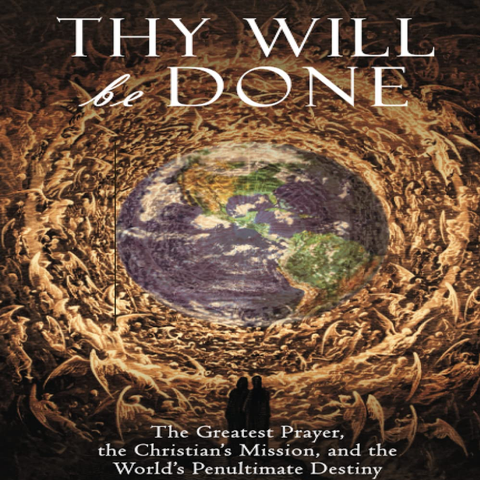
Thy Will Be Done – A Deep Dive into the Heart of the Christian Faith
Thy Will Be Done: The Greatest Prayer, the Christian’s Mission, and the World’s Penultimate Destiny by Daniel O’Connor is a powerful exploration of the Christian call to live in perfect harmony with God’s will. It is not merely a book about prayer but a guide to transformation — of the self, the Church, and... More details
 https://spiritualkhazaana.com/thy-will-be-done-heart-of-christian-faith/
#thywillbedone #surrender #godswill #godsprovidence #thelordsprayer

Sometimes, GOD's answer to our prayer is, "No." Are you willing to accept that & still remain faithful?

#bible #SURRENDER #GodsWill