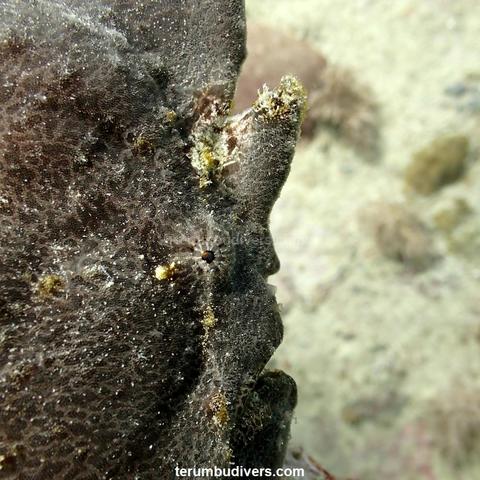
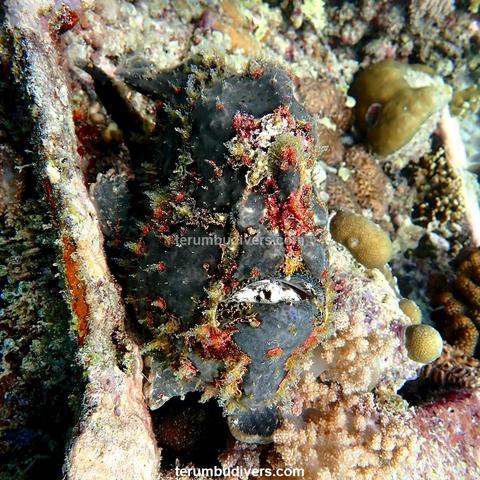
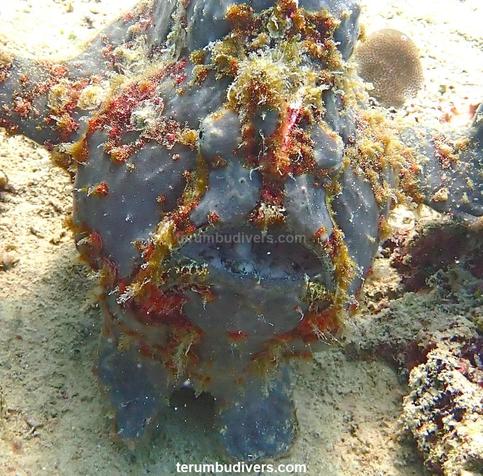
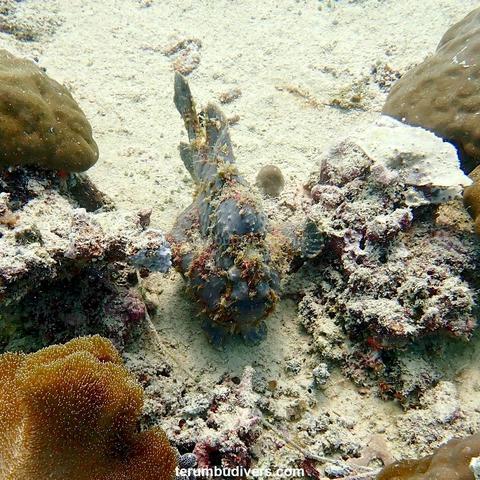
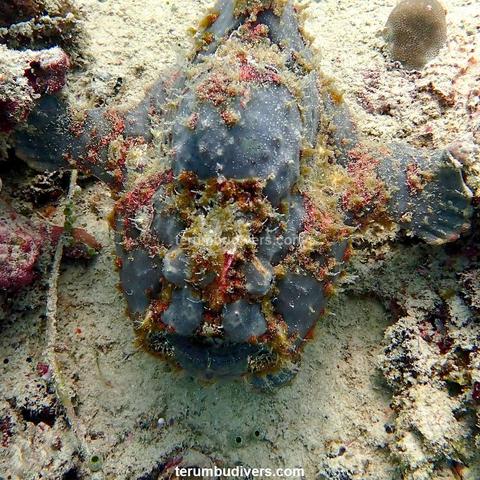
Frogfish are one of the reef’s most specialized predators. By matching the texture and color of nearby sponges, it hides in plain sight and uses modified fins to reposition itself.

Frogfish are one of the reef’s most specialized predators. By matching the texture and color of nearby sponges, it hides in plain sight and uses modified fins to reposition itself.

Juvenile Orange Frogfish (Painted Frogfish) Walking the Reef
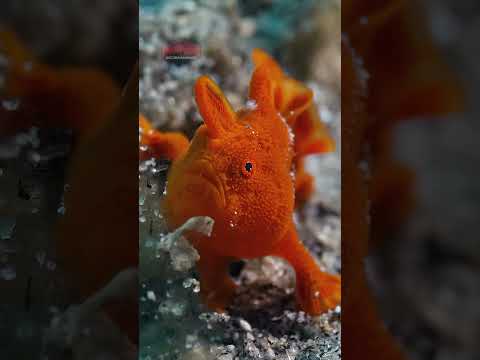
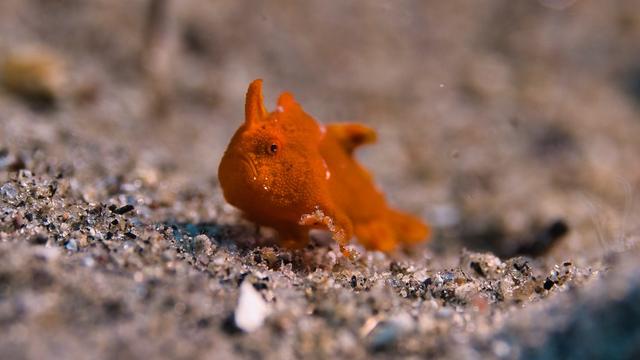
MARINE LIFEThe orange frogfish — specifically a juvenile Antennarius pictus (Painted Frogfish) — is one of the Indo-Pacific’s most specialized ambush predators. In its juvenile stage, this tiny orange fish is a master of mimicry, blending seamlessly with surrounding sponges to hide in plain sight.
Walking In Real Time: Instead of swimming, the frogfish uses modified pectoral and pelvic fins to “walk” across the reef. This slow, deliberate gait allows it to move without creating the vibration or visual “dart” that typically alerts prey or predators to a fish’s presence.
Species Identification
SCIENTIFIC NAME Antennarius pictus COMMON NAME Painted Frogfish CLASSIFICATION Family Antennariidae — Frogfishes (Order Lophiiformes) APPEARANCE Small, sponge-like body covered in tiny ocelli (eye spots). Juveniles display vibrant orange, yellow, or white coloration. SIZE Up to 30cm (12″) DIET Carnivore — small fish and crustaceans RANGE Indo-Pacific; coral reefs and rocky substrates, typically 0–75m depth.What makes an orange frogfish so fascinating to encounter underwater is that it doesn’t behave like a typical fish. There is no tail kick, no darting movement. Instead, it moves in slow, deliberate steps—planting one fin, then the other—in a gait that looks far more like something crawling than swimming. Juveniles in particular are easy to overlook entirely; at this size, a bright orange individual sitting motionless can read as debris or a sponge fragment until it finally moves.
For macro photographers, the Philippines—especially destinations like Dauin, Anilao, and Puerto Galera—offers some of the most reliable sightings of orange frogfish. These muck-diving sites are defined by dark volcanic sand and sponge-covered rubble, where a juvenile Antennarius pictus, commonly known as the painted frogfish, can vanish almost completely. In many cases, the first thing to look for is not the fish itself, but the orange sponge beside it.
That camouflage is only part of the challenge. Frogfish are sit-and-wait predators built for stillness, and an individual may remain in the same square meter of reef for days or even weeks. Once found, careful movement matters: slow finning, stable buoyancy, and a clean approach can make the difference between a rare encounter and a cloud of silt that ruins the shot.
What You’re Seeing
Most frogfish encounters show a stationary animal wedged against a sponge. Catching a juvenile actively walking toward the camera provides a direct face-on view that is considerably harder to come by in the wild.
Filming in the Reef
Shot on the Panasonic GH5 with an OM System 90mm macro lens in a Nauticam housing. A juvenile this size rewards patience; I held position and let it come to me, keeping the substrate undisturbed for a clean shot.
More from the Philippines: 10 unusual underwater critters off the coast of Dauin.
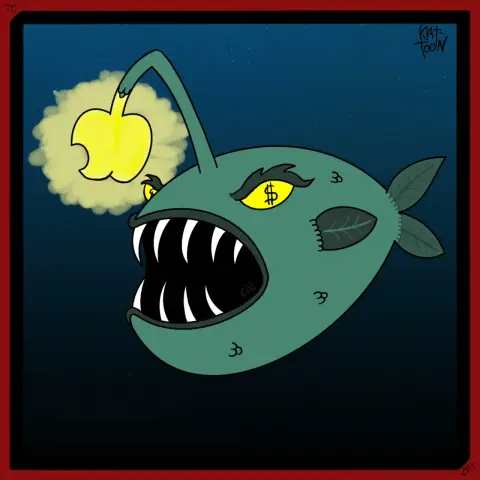
#AtmosphereResortAndSpa #Dauin #Dumaguete #Frogfish #marineLife #philippinesScubaDivingThe apple #frogfish
--- --- ---
Der apple #Anglerfish
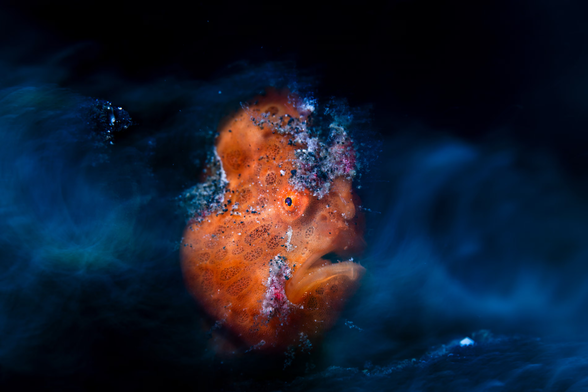
Ethereal Frogfish – second place in the Underwater section went to this shot of an orange painted frogfish (Antennarius pictus) on the black volcanic sands of Lembeh Strait, #Indonesia.
Photograph: Daniel Sly
Fish love to be anthropomorphized.