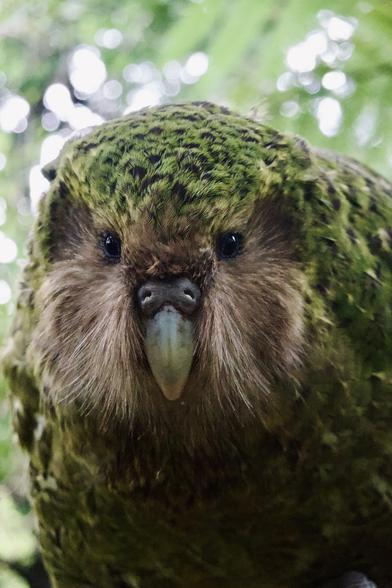
Happy World Parrot Day, Sirocco Kākāpō! 💚🤎💚🦜
Photographer - Maddy Whittaker
#Kākāpō #NewZealand #Birds #Parrots #EndangeredBirds #FlightlessBirds
Happy World Parrot Day, Sirocco Kākāpō! 💚🤎💚🦜
Photographer - Maddy Whittaker
#Kākāpō #NewZealand #Birds #Parrots #EndangeredBirds #FlightlessBirds
New Zealand’s endangered flightless birds are retreating to 'moa graveyards' – and it could save them from extinction | Discover Wildlife
https://www.discoverwildlife.com/animal-facts/birds/new-zealand-flightless-birds-retreating-to-moa-graveyards
#Extinction
#NewZealand
#FlightlessBirds
#Birds
#Moa
#MoaGraveyards
Ghosts of species past: shedding new light on the demise of NZ’s #moa can help other flightless birds https://theconversation.com/ghosts-of-species-past-shedding-new-light-on-the-demise-of-nzs-moa-can-help-other-flightless-birds-228362
Ecological dynamics of moa extinctions reveal convergent refugia that today harbour flightless #birds https://www.nature.com/articles/s41559-024-02449-x
Scientists reconstructed patterns of extinction for 6 moa species... all collapsed and converged on the cold, isolated mountains... These happen to be the same sites where the last of #NewZealand’s #FlightlessBirds can be found today.
Reconstructing the demise of New Zealand’s extinct moa can help conserve the country’s remaining flightless birds, which are retreating to the same final places - cold, isolated mountaintops.
The hidden rule for flight feathers and how it could reveal which #dinosaurs could fly
https://phys.org/news/2024-02-hidden-flight-feathers-reveal-dinosaurs.html
Functional constraints on the number and shape of flight feathers https://www.pnas.org/doi/10.1073/pnas.2306639121
"in addition to asymmetrical feathers, all the flighted #birds had between nine and 11 primary #feathers. In #FlightlessBirds, the number varies widely— #penguins have more than 40, while #emus have none. It's a deceptively simple rule that's seemingly gone unnoticed by #scientists."
Birds can fly—at least, most of them can. Flightless birds like penguins and ostriches have evolved lifestyles that don't require flight. However, there's a lot that scientists don't know about how the wings and feathers of flightless birds differ from their airborne cousins.