 Hackaday [Unofficial]
Improving FDM Filament Drying With a Spot of Vacuum

Improving FDM Filament Drying With a Spot of Vacuum
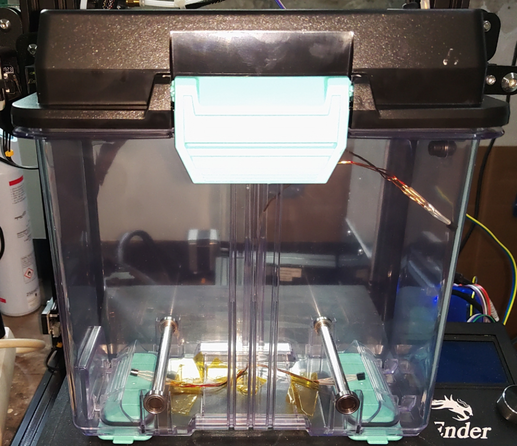
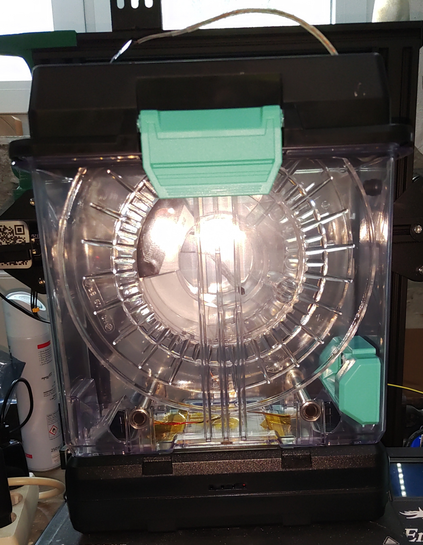
Btw. #Creality SpacePi X4 temperature and humidity readings seem to be reasonable. I can confirm the small temperature gradient front to back, but as the filament surface cools quickly this would require precision thermal sensors to not get false readings from the open lid (hot air is blowing out at the back.


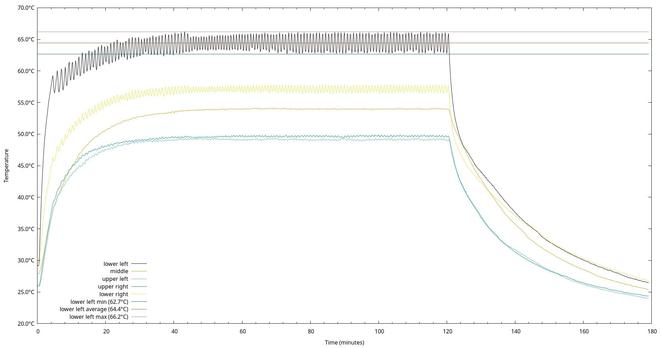
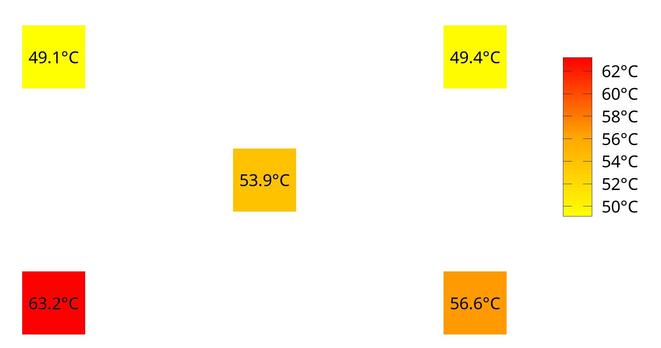
Got a PolyDryer now. Being who am am, of course I placed a bunch of temperature sensors in it and did a test run first (plus I wanted to know what temperatures the "power levels" mapped to). The results surprise me; I would have expected the hot air to circulate around the spool; instead it seems to take an intentional(?) shortcut at the bottom. Anyone know why it's designed this way?
1/3
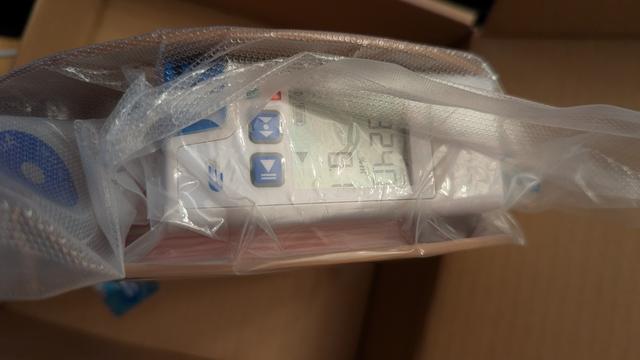
Yeah as long as that bag stays airtight and relative humidity at 0.1%, I don't think storage is the problem.
Of course, if it leaks in air from the cupboard which has relative humidity of 27% to 37%, that will be a problem.
#3dprinting #3dprint #filamentdrying #homeassistant #data
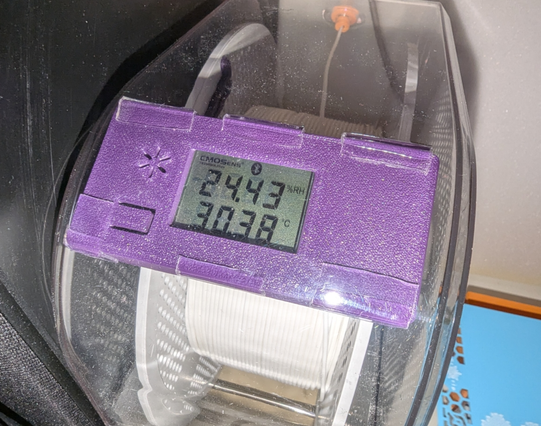
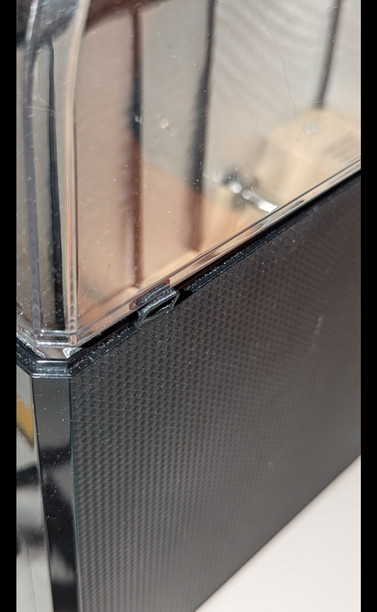
Should you leave your #filamentdryer box closed or use a spacer to leave a small gap in the lid? To answer the question I measured using a SHT40 sensor, that can accurately measure rel.humidity <15%.
Turns out, it depends.
If the #petg is still wet, aka in the first 8 hours of drying, using a spacer to circulate more (dryer in terms of absolute humidity) ambient air, does seem to accelerate the drying process.

 rawe
rawe blue_led
 xro
xro