The mining of the “Saucy” and the “Firefly”: the thread about the WW2 loss of forty-two lives in the Forth

I was looking for something in Seafield Cemetery last week and couldn’t help but stop by the war graves. Some are for merchant seamen and many of them were from HMS Saucy, lost with all hands on this day (September 4th) in 1940. As yesterday was Merchant Navy Day, this is a doubly appropriate time to relate their story.

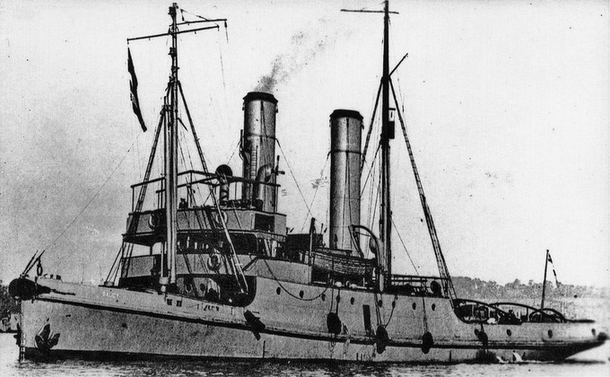
The Saucy was built for the Royal Navy in Hull in 1918 as a 600-ton, 155ft-long Frisky-class rescue tug. She was sold out of service in 1924 but kept her name and was requisitioned in 1939, returning to the UK from Shanghai. She was crewed by merchant seamen, serving under officers of the Royal Navy Reserve (RNR men were professional merchant naval officers who had joined the reserves to be called up in times of war).

HMS Saucy, pre-1924 postcard image

Saucy was based on the Forth at Rosyth, her duties to assist in any damaged vessels entering the estuary and was at sea on September 3rd (Merchant Navy Day and exactly 1 year into the war) when she brought in a damaged Dutch merchant ship that had been bombed by German aircraft. With this charge safely brought in, she headed back out on patrol in the early morning of the 4th. Contact was soon lost with her when she was in a position about 1.5 miles west of the island of Inchkeith; the unfortunate tug had hit a mine and gone down almost instantly, taking all 281 on board with her. It is not clear whose mine she had struck, it may have been dropped by a German aircraft, but just as likely it may have been a “friendly” mine that had broken free from its moorings and had floated further into the Firth.

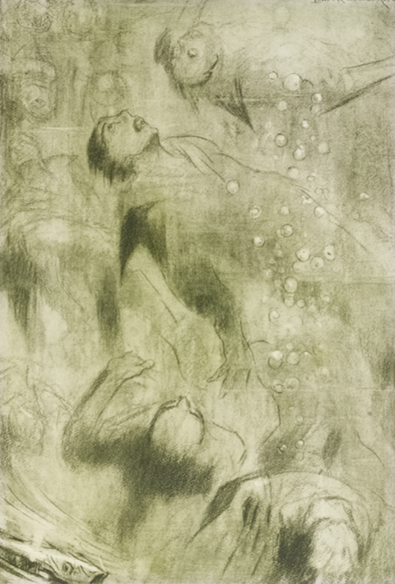
“The Sea Mine”, Louis Raemaekers, 1916 © Edinburgh City Libraries

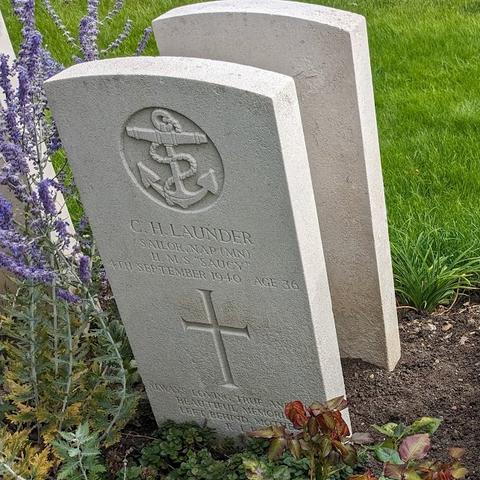
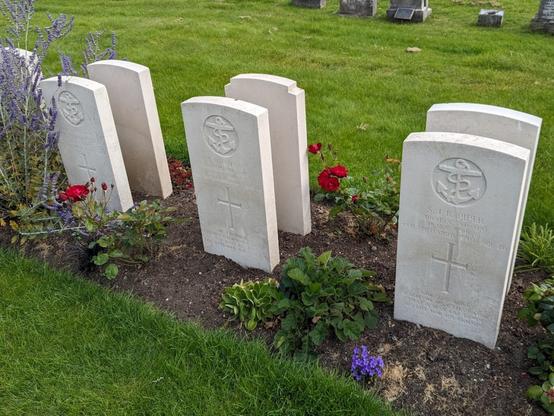
Of the crew the 3 officers were all RNR men and the 25 ratings were all merchant seamen. Eighteen came from the Devonshire fishing town of Brixham, 7 from the same extended family. Eight bodies were recovered, 5 of them of Brixham men and all were buried at Seafield – although one was never formally identified.

Sub. Lt. Francis Douglas Phillips (age 36), Fireman Cyril Harvey (age 20), and Fireman Samuel Piper (age 26)Sailor Charles Launder (age 36)Sailor Harry Nicholls (aged 30) and Sailor Thomas Lovell (aged 53)Sub Lt. David Llewellyn Thomas, age 29 and an unknown sailor from HMS Saucy

On this day in 2004, a memorial plaque was dedicated in Brixham Harbour to the men who were lost – it has 26 individual names, however different sources list 27 names and some say there were 28 on the ship’s roll. See footnote.

HMS Saucy memorial at Brixham, from War Memorials Online

A new HMS Saucy was named in her honour in 1942, an Assurance-class rescue tug. The wreck of her predecessor was marked with a buoy in 1940, but it was largely lost by 1945. Sonar surveys by the Navy in 1967 and 1871 failed to locate it, but it was found again by the minehunter HMS Sandown in 1992, and her divers explored the wreck in 1993 and found it to be remarkably intact in 15m of water, position 56° 2′ 10″N, 3° 10′ 33″W.

HMS Saucy (the 1942 replacement), on the Humber in February 1943 © IWM FL 8980

The men whose bodies were never found are further commemorated on the Liverpool Naval Memorial, which commemorates almost 1,400 merchant sailors who died serving with the Royal Navy during WW2 and have no known resting place.

  • Some sources say 26 or 27 were on the ship’s roll. Most also 7 seven men were buried at Seafield, however there is the grave of an 8th and unidentified victim also alongside. ↩︎
  • Alongside the men from the Saucy at Seafield lie three others who lost their lives to sea mines that year; Lt. D. B. Johnstone RNVR, Chief Petty Officer C. E. Baldwin RN D.S.M. and Sub Lt. C. Dobson RNVR. All three died on HMS Firefly in February 1940. Baldwin had earned the Distinguished Service Medal early in the war for being the first to defuse a German magnetic mine, allowing it to be captured, inspected and countermeasures devised.

    Sub Lt. Carl Dobson RNVR, age 29Lt. David Johnstone RNVR, age 37 and CPO Charles Baldwin RN, age 40

    Firefly was a requisitioned civilian trawler, hired from her owners as a minesweeper. Trawlers were perfect for this sort of work, which required a seaworthy vessel that could handle the towing of “sweeps” that cut mines free from their moorings before the crew destroyed them (usually by shooting it with a rifle until it exploded).

    Oil painting of HMS Firefly by H. Trythall, Victoria BC, 1991

    On February 3rd 1940, Firefly was in the Forth, her crew attempting to defuse a British mine that had gotten loose and was posing a hazard to shipping. These sort of mines look exactly like they do in cartoons; a buoyant, black sphere with spiky “horns” in which the detonators are mounted.

    “Deadly Instruments of Modern Naval Fighting”, London Illustrated News, August 1914

    Firefly was stopped in the water, her crew watching from the railings while a detachment in the row boat carefully manoeuvred alongside the mine to defuse it; dangerous but routine work. Without warning they were hit by the wake of a passing destroyer, which pushed the mine onto the boat. The horn contacted one of the boat’s oars, and 200-250lb of explosives was detonated. Everyone on the boat was killed instantly, as were all except one watching on deck (who would die the next day from his wounds). Only the 3 men in the wheelhouse and 1 in the galley survived from a crew of 18. Sadly one of the four survivors, Lt. Andrew Macgavin Maclean RNVR, would die in the Royal Infirmary two weeks later as a result of infection, he was laid to rest in Strathblane Parish Churchyard (I am indebted to Pat Davy of Strathblane Heritage Society for this information).

    Remarkably, the vessel herself was largely intact – apart from damage to her superstructure – and she was towed into Leith by the minesweeping trawler HMS Wardour and repaired. She returned to service, recommissioning in June 1940, and serving out the rest of the war. Returned to her owners and renamed St. Just, she fished out of Harwich until 1961. Wardour herself was sunk by a mine she was clearing in October 1940 but her crew survived. In a curious coincidence, a previous HMS Firefly was one of the first ships to strike a naval mine (which at the time were referred to as “Infernal Machines”) when she and HMS Merlin ran into a Russian minefield off Sveaborg in the Baltic Campaign of 1855, although both survived. In another odd twist of fate, the Firth of Forth was the location of both the first loss of a ship to a torpedo in WW1 (the cruiser HMS Pathfinder), and the last such in WW2 (the Canadian steamer Avondale Park and the Norwegian collier “Sneland I).

    “Merlin and Firefly Struck by Infernal Machines” Name, Rank & Resting PlaceName, Rank & Resting PlaceSub Lt. Walter AndersonSub Lt. Frederick JonesSub Lt. Francis Douglas Phillips (Seafield)Sub Lt. David Thomas (Seafield)Third Engineer Edward Pulham*Fireman John Clift*Sailor Thomas Coysh*Sailor Seymour Crang*Sailor William Cudd*Sailor Sidney Foster*Fireman Stanley Gardner*Fireman Cyril Harvey* (Seafield)Donkeyman Leonard Harvey*Fireman Roy Harvey*Sailor Charles Launder* (Seafield)Sailor Vincent Medway*Sailor Thomas Lovell* (Seafield)Sailor Samuel Piper* (Seafield)Sailor Harry Nicholls* (Seafield)Fireman Charles Roberts*Fireman Ralph Stamp*Fireman John Seaward*Sailor George HosieFireman Donald McGregor ReidSteward Donald ReidSailor Robert TomlinsonCook John StenhouseOfficers and men of HMS Saucy, lost in September 1940, asterisked names were men from BrixhamName, Rank & Resting PlaceName, Rank & Resting PlaceLt. David B. Johnstone (Seafield)Lt. Andrew Macgavin Maclean (Strathblane)Sub Lt. Norman Peat (Glasgow)Sub Lt. Geoffrey Vaughan (Bournemouth)Sub Lt. Carl Dobson (Seafield)CPO Charles Baldwin (Seafield)Engineman Benjamin Barker (Hartlepool)Seaman Henry Beavers (Preston)Second Hand John Cowie (Buckie)Seaman John Clay (Preston)Seaman Cook Walter Johnson (Great Yarmouth)Seaman Peter Reid (Buckie)Seaman Alexander Stewart (Buckie)Seaman James Stewart (Lossiemouth)Second Hand Edward Barker (Cleethorpes)Officers and men of HMS Firefly, lost in February 1940

    Note to readers: unfortunately in April 2026, a third-party plug-in more than exceeded its authority and broke many of the image links on this site. No images were lost but I will have to restore them page-by-page, which may take some time. In the meantime please bear with me while I go about rectifying this issue.

    If you have found this site useful, informative or amusing then you can help contribute towards its running costs by supporting me on ko-fi. This includes my commitment to keeping it 100% advert and AI free for all time coming, and in helping to find further unusual stories to bring you by acquiring books and paying for research.
    Or please do just share this post on social media or amongst friends and like-minded people, sites like this thrive on being shared.

    Explore Threadinburgh by map:

    Travelers' Map is loading...
    If you see this after your page is loaded completely, leafletJS files are missing.

    These threads © 2017-2026, Andy Arthur.

    NO AI TRAINING: Any use of the contents of this website to “train” generative artificial intelligence (AI) technologies to generate text is expressly prohibited. The author reserves all rights to license uses of this work for generative AI training and development of machine learning language models.

    #Lochend #Logan #Restalrig #StMargaret
    #February3: in 1971, the playwriter Sara Kane was born.
    This paper from Giuseppe Capalbo, published in #AltreModernità, proposes a reading of her 4.48 Psychosis (1999) from a theoretical perspective, critically combining medical humanities, disability, and performance studies.

    https://riviste.unimi.it/index.php/AMonline/article/view/2728?mtm_campaign=mastodon

    @cultura

    14 Holy Helpers

    In German: Vierzehn Nothelfer. In Latin: Quattuordecim auxiliatores.

    These are a group of saints venerated together by Catholics because their intercession is believed to be particularly effective. Especially against various diseases.

    This group of Nothelfer (“helpers in need”) started in the 14th century as the first in the Rhineland. Largely as a result of the epidemic (probably of bubonic plague) that became known as the Black Death.

    Devotion to the 14 Holy Helpers began in Rhineland (now a part of Germany) in the time of the Black Death. Among the 14 were 3 virgin martyrs. There’s a German mnemonic device to remember the 3 virgins. Their names are: Margaret, Barbara, & Catherine. 13 of the 14 were accounted martyrs (Giles is the exception).

    While each has a separate feast day, the 14 Holy Helpers, in some places, are celebrated as a group on August 8th. But the celebration never became part of the General Roman Calendar. When that calendar was revised in 1969, the individual celebrations of St. Barbara, St. Catherine of Alexandria, St. Christopher, & St. Margaret of Antioch were dropped.

    The individual celebrations of all 14 are included in the General Roman Calendar in 1954, the General Roman Calendar of Pope Pius XII & the General Roman Calendar of 1960.

    The 14 saints are:

    • Agathius/Acacius – Feast day: May 7. Patron against headaches.
    • Barbara – Feast day: December 4. Patron against fever & sudden death, against lightning & fire, against sudden & violent death at work, & patron of builders, artillerymen, & miners.
    • Blaise/Blase/Blasius – Feast day: February 3. Patron against illnesses of the throat & for protection of domestic animals.
    • Catherine of Alexandria – Feast day: November 25. Patron against sudden death & diseases of the tongue, philosophers, theologians, maidens, female students, preachers, the dying, wheelwrights, mechanics, potters, & other artisans who work with wheels, invoked by students, orators, preachers, & lawyers for wise counsel & for eloquence.
    • Christopher/Christophorus – Feast day: July 25. Patron against bubonic plague & dangers while traveling.
    • Cyriacus – Feast day: August 8. Patron against temptation on the death-bed, diseases of the eye, & demonic possession.
    • Denis/Dionysius – Feast day: October 9. Patron against headache & against demonic possession.
    • Erasmus/Elmo – Feast day: June 2. Patron against intestinal ailments, for domestic animals, & sailors.
    • Eustace/Eustachius/Eustathuis – Feast day: September 20. Patron against family discord, against fire (temporal & eternal), & the patron of hunters, trappers, & anyone facing trouble.
    • George/Georgius – Feast day: April 23. Patron for the health of domestic animals, against herpetic diseases, & the patron of soldiers.
    • Giles/Aegidius – Feast day: September 1. Patron against plague, mental illness, & nightmares, for a good confession, & patron of the disabled, beggars, blacksmiths, & breast-feeding moms.
    • Margaret of Antioch – Feast day: July 17. Patron of women in childbirth, invoked against backache, & invoked for escape from devils.
    • Pantaleon/Panteleimon – Feast day: July 27. Patron of physicians & midwives, invoked for the protection of domestic animals, & invoked against cancer & tuberculosis.
    • Vitus/Guy – Feast day: June 15. Patron against epilepsy, lightening, the bites of animals (especially those who were venomous or rabid), storms, & for protection of domestic animals.

    Half of the saints are seen as actual historic figures (Blaise, Cyriacus, Erasmus, George, Giles, Pantaleon, & Vitus). While the others may be only legends. While the feasts of several of the 14 Holy Helpers were taken off the General Roman Calendar. None were decanonized, or denied to exist & their feasts are still on certain calendars.

    One or another in the original set are sometimes substituted with: Anthony the Anchorite, Leonard of Noblac, Nicolas, Sebastian, Oswald the King, Pope Sixtus II, Apollonia, Dorothea of Caesarea, Wolfgang of Regensburg, or Roch. In France, an “extra” helper is added: the Virgin Mary.

    The 14 Holy Helpers are honored in Bavaria as the vierzehn Heiligen. This literally translates to “14 Holy Helpers.”

    The Basilica of the Vierzehnheiligen is dedicated to these auxiliary saints. It was built between 1743 & 1772 (29 years).

    Devotion to these saints begin in this region on September 24, 1445 when Hermann Leicht, a young shepherd of a nearby Franciscan monastery, saw a crying kid in a field belonging to the nearby Cistercian monastery of Langheim.

    As he bent down to pick up the kid, it suddenly vanished. A short time later, the kid reappeared at the same spot. This time, 2 candles were burning next to it.

    In June 1446, Leicht saw the kid a 3rd time. This time, the kid wore a red cross on its chest & was accompanied by 13 other kids. The kid said: “We are the 14 helpers & wish to erect a chapel here, where we can rest. If you will be our servant, we will be yours!”

    Shortly after, Leicht saw 2 burning candles descending to this spot. It’s alleged that miraculous healings soon began, through the intervention of the 14 saints.

    The Cistercian brothers to whom the land belonged erected a chapel, which immediately attracted pilgrims. An altar was consecrated as early as 1448. Pilgrimages to the Vierzehnheiligen continue to the present day between May & October.

    One-Time Monthly Yearly

    Make a one-time donation

    Make a monthly donation

    Make a yearly donation

    Choose an amount

    $1.00 $5.00 $10.00 $1.00 $5.00 $10.00 $5.00 $10.00 $15.00

    Or enter a custom amount

    $

    Your contribution is appreciated.

    Your contribution is appreciated.

    Your contribution is appreciated.

    DonateDonate monthlyDonate yearly

    #14HolyHelpers #14thCentury #1743 #1772 #1954 #1960 #1969 #24September1445 #Acacius #Aegidius #Agathius #AnthonyTheAnchorite #Apollonia #April23 #August8 #Barbara #BasilicaOfTheVierzehnheiligen #Bavaria #BlackDeath #Blaise #Blase #Blasius #BubonicPlague #CatherineOfAlexandria #Chapel #Christopher #Christophorus #Cistercian #Cyriacus #December4 #Denis #Dionysius #DorotheaOfCaesarea #Elmo #Eustace #Eustachius #Eustathius #February3 #France #Franciscan #GeneralRomanCalendar #George #Georgius #German #Germany #Giles #Guy #HermannLeicht #July25 #July27 #June1446 #June15 #June2 #Langheim #Latin #LeonardOfNoblac #MargaretOfAntioch #May #May7 #Nicolas #Nothelfer #November25 #October #October9 #OswaldTheKing #Pantaleon #Panteleimon #Pilgrims #PopePiusXII #PopeSixtusII #Rhineland #Roch #Saints #Sebastian #September1 #September20 #VierzehnHeiligen #VierzehnNothelfer #VirginMary #Virgins #Vitus #WolfgangOfRegensburg

    Memberships

    Visit the post for more.

    February 3

    This day in history:

    • 1112 – Ramon Berenguer III, Count of Barcelona, and Douce I, Countess of Provence, marry, uniting the fortunes of those two states.
    • 1917 – World War I: The American entry into World War I begins when diplomatic relations with Germany are severed due to its unrestricted submarine warfare.
    • 2005 – One hundred five people are killed when Kam Air Flight 904 crashes in the Pamir Mountains in Afghanistan.
    • 1813 – José de San Martín defeats a Spanish royalist army at the Battle of San Lorenzo, part of the Argentine War of Independence.

    Births:

    • 1969 – Beau Biden, American soldier, lawyer, and politician, 44th Attorney General of Delaware (d. 2015)
    • 1986 – Kanako Yanagihara, Japanese actress
    • 1927 – Blas Ople, Filipino journalist and politician, 21st President of the Senate of the Philippines (d. 2003)

    Deaths:

    • 2012 – Andrzej Szczeklik, Polish physician and academic (b. 1938)
    • 2006 – Al Lewis, American actor and activist (b. 1923)
    • 1969 – Eduardo Mondlane, Mozambican activist and academic (b. 1920)

    Holidays:

    • Communist Party of Vietnam Foundation Anniversary (Vietnam)
    • Veterans' Day (Thailand)
    • Day of Finnish architecture and design, birthday of Alvar Aalto (Finland)

    Random Article of the day:

    Hari Shankar and Harish Narayan

    February 3 - Wikipedia

    February 3

    This day in history:

    • 1451 – Sultan Mehmed II inherits the throne of the Ottoman Empire.
    • 1583 – Battle of São Vicente takes place off Portuguese Brazil where three English warships led by navigator Edward Fenton fight off three Spanish galleons sinking one in the process.
    • 1112 – Ramon Berenguer III, Count of Barcelona, and Douce I, Countess of Provence, marry, uniting the fortunes of those two states.
    • 1509 – The Portuguese navy defeats a joint fleet of the Ottoman Empire, the Republic of Venice, the Sultan of Gujarat, the Mamlûk Burji Sultanate of Egypt, the Zamorin of Calicut, and the Republic of Ragusa at the Battle of Diu in Diu, India.

    Births:

    • 1978 – Joan Capdevila, Spanish footballer
    • 2001 – Tre Mann, American basketball player
    • 1956 – John Jefferson, American football player and coach

    Deaths:

    • 1014 – Sweyn Forkbeard, king of Denmark and England (b. 960)
    • 1468 – Johannes Gutenberg, German publisher, invented the printing press (b. 1398)
    • 699 – Werburgh, English nun and saint

    Random Article of the day:
    Takuya Takahashi

    Takuya Takahashi (高橋 拓也, Takahashi, Takuya, born 30 June 1989 in Kanagawa) is a Japanese footballer who plays for Kamatamare Sanuki.

    February 3 - Wikipedia

    ✨📜🖋️✨👀🐲🐯💞

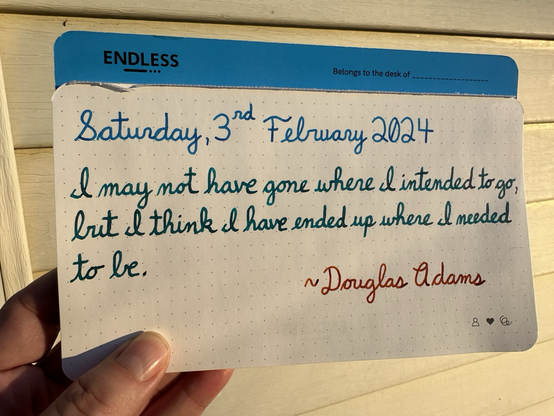
    #PenQuote #February3 #AGoodLegacy #WeShouldAllBeSoLucky

    Happy birthday to our featured celebrity guests:
    Morgan Fairchild and Elmo

    #birthday #celebritybirthday #February3 #SidewalksEntertainment #MorganFairchild #actress #Elmo #SesameStreet

    TikTok - Make Your Day

    Sean Kingston - Wikipedia

    Sean Kingston - Wikipedia