!! Just so you know! There is no #CRIME in FIXING half baked broken shit ! https://youtu.be/ltgPu1hXkPc?si=3L4zdL4cQyRmayZF
ultrasonic cleaner -- should I try to fix it?
My ultrasonic cleaner was in the middle of a job, started to get loud, then made a PFFFT sound. I know it was the sound of death. It still gets power and the timer still works but it does not vibrate anymore. So I guess the ultrasonic generator itself died. The most important component. I cannot think of a way to repurpose this thing. So I guess the question is, is it worth it to replace the ultrasonic generator? The answer to that likely depends on compatibility. What are the chances that another ultrasonic generator can be a drop-in replacement? Would they all generally take the same amount of DC or AC power, generally? I am tempted to say not worth it, because the tub is small. If I get my hands on the naked UG component, I wonder if it would make more sense to epoxy that to a bigger tub, like a spare metal sink that I have. BTW, it died under warranty and the vendor did not even want the dead unit back, so they apparently decided it’s not worth it for them to repair, and they would likely have the correct parts on hand.
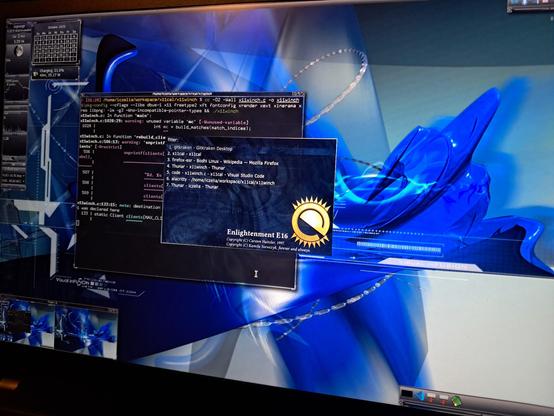
Fixing a 20-year-old bug in Enlightenment E16
https://iczelia.net/posts/e16-20-year-old-bug/
#HackerNews #Fixing #Bugs #Enlightenment #E16 #TechHistory #SoftwareDevelopment

The editor in chief of this blog was born in 2004. She uses the 1997 window manager, *Enlightenment E16*, daily. In this article, I describe the process of fixing a show-stopping, rare bug that dates back to 2006 in the codebase. Surprisingly, the issue has roots in a faulty implementation of Newton's algorithm!
#ToySwaps and the #CircularToyEconomy: How to Raise Waste-Free Kids
Ash Gregg, July 24, 2025
"Kids outgrow toys fast — sometimes faster than we can recycle the packaging. What starts as a sweet moment of play often ends up as clutter, then waste.
Behind those bright colors and fun shapes lies a hidden environmental truth: the toy industry is one of the most wasteful in the world. Most toys are made of plastic. Few are designed to last. And almost none are built with end-of-life reuse in mind.
But there’s a better way — and it doesn’t mean denying kids joy or imagination. In fact, it can inspire more of both.
Welcome to the circular toy economy: a movement built on #sharing, #reusing, #fixing, and reimagining play. It’s not just good for the planet — it’s good for your home, your budget, and your children’s values."
1. The Hidden Impact of the Toy Industry
2. What Is the Circular Toy Economy?
3. Host or Join a #ToySwap
4. Create a #ToyLibrary or #BorrowingCloset
5. Embrace #ToyRotation (Minimalist Parenting Hack)
6. Choose #Sustainable, Open-Ended Toys
7. #Repair or #Repurpose Before You Recycle
8. Talk to Kids About Waste and Sharing
Final Thoughts: Raising Planet-Protectors
#SolarPunkSunday #CircularEconomy #ToySharing #ReduceReuseRecycle
@cazabon Welcome to the world of #fixing things. For me it started as "well I I've fixed a few of my own things", to "I once fixed my grandfather's clock" to "you know about clocks", to "you're the clock man".
Learned things and done things I wouldn't have dreamed of a few years ago. Still learning which is what I like.
I like #fixing things and have since I was a kid. Friends and relatives give me #broken things, I mostly try to give them back #working things. It's fun, it can be a challenge, and sometimes you learn something new, which is exciting.
I #volunteer at my local #Repair Cafe. It started up a year or so ago, and I joined it when I heard about it a few months later. Now I get to fix things in "real time", no advance planning, and an audience! Well, 90% of the time it's fine.
Over the years I've heard numerous comments from people that "Oh, I'd like to be able to fix things" or "I don't know how to do that" or the more direct question "How do you learn to fix stuff?"
There isn't a big "secret" to it. It's simple.
1. Take something that's broken, and take it apart.
2. Look at the bits and see if you can guess at why it isn't doing what it's supposed to be doing, or why it is doing something that it shouldn't.
3. If you have an idea from (2), try fixing it. Maybe it's "lube this" or "un-jam that" or "that hidden fuse looks burnt".
4. Put it back together. Even if you didn't find anything to try fixing it. You learn a lot from this.
(You can repeat 2 and 3 multiple times if you want.)
At the end of this, you either have a working thing, or a broken thing. If it's working, congratulations, you fixed your first thing!
And if it's broken, well, it was already broken. Nothing lost. No need to feel ashamed or embarrassed or like you failed.
1/2
二月的時候加州認定 Amazon 的壟斷行為需要申請初步禁制令阻止
Fixing our own problems in the Rust compiler
In our data compression projects, we use Rust where C is traditionally used. During the work, we've hit limitations in Rust itself and in the surrounding tooling. Over the years, we've become increasingly comfortable with fixing these issues ourselves. […]
— by @trifectatech
🦀 https://trifectatech.org/blog/fixing-our-own-problems-in-the-rust-compiler/
#rust #rustlang #zlib #coding #during #compiler #tooling #issues #codeissues #fixing #fix #code